Serving Shelton, CT & nearby
(475) 203-3827
Shelton, CT

Shelton's Garage Doors Are Older Than You Think

Shelton homes date mostly from 1952 to 2013, with many torsion-spring doors from the 1960s and 70s. We fix what cold winters do to aging garage door hardware.

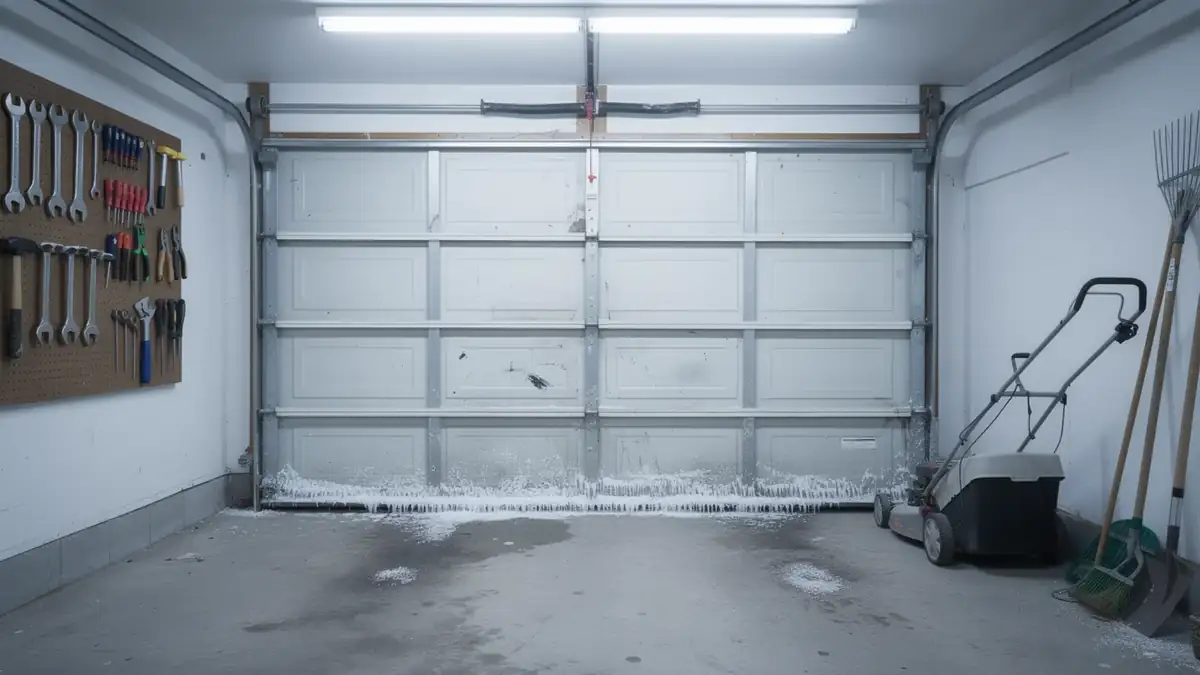
The white garage door has icicles and ice along its bottom edge.

What Local Conditions Do

Most of Shelton's housing stock went up between 1952 and 2013, with the median build year landing around 1972. That means a huge share of the doors we open are original torsion-spring setups from the 1960s and 70s, installed when galvanized coatings and steel gauges were thinner than what gets sold today. Add a cold-severe climate zone and you get a specific kind of wear: steel contracts hard in deep cold, lubricant thickens, and a spring wound to spec in 1971 doesn't flex the way it did when it was new. Torsion springs lose a measurable amount of tension every winter they sit in an unheated garage, and in this town that's been happening for five decades on a lot of doors. The same goes for the tracks - old roll-formed steel narrows slightly as it cools, which is why a door that rolled fine in September starts binding in January. None of this is dramatic. It's slow metal fatigue, compounded winter after winter, on hardware that was never built to last 50-plus years in the first place. Houses built later in that 1952-2013 range, especially anything from the 90s or 2000s, tend to have galvanized torsion springs and steel rollers that hold up better - but they're still subject to the same cold.

The Problem

The failure pattern we see in Shelton tracks the age of the housing almost exactly. On the older end of that 1952-1972 range, the common call is a torsion spring that finally lets go on a cold morning - usually the first real cold snap of the season, when the steel is stiffest and the extra load catches a spring that was already near its limit. On doors from the 70s and 80s, it's often the opener: aging gear-driven units weren't built with today's cold-rated lubricants, and the motor strains harder in low temperatures, which burns out the drive gear faster than it would in a mild climate. Panel damage shows up differently - older doors are heavier, single-layer steel without the foam-core insulation that later builds added, so a hard knock dents rather than flexes. None of this is unique to one street or one subdivision; it's a function of when the house was built and how many winters that hardware has absorbed. A door installed in 2005 behaves differently from one installed in 1968, even on the same block, because the underlying stock spans six decades.

When It Stops Being a DIY Job

A torsion spring under load is not a safe weekend project, full stop - that's true everywhere, not just here, but it matters more on Shelton's older doors because the springs are frequently original and have never been serviced, so nobody knows their actual remaining tension. If the door is from the earlier end of the 1952-1972 build window and the springs look original, we'd rather replace both than wind down a decades-old spring that might be close to failing anyway. Opener gear replacement is usually a reasonable DIY swap on newer units with accessible manuals, but on older chain-drive openers common in this town's 1960s-70s stock, parts for the exact model are often discontinued, which turns a simple gear job into a full opener swap. Here's the honest limit: if a panel section is bent but the door still runs true on the track, we won't talk you into full replacement just because the door is old. Sometimes a single panel swap on an older door is cheaper and holds up fine, even though it won't match perfectly. We'll tell you when it's a $40 part and when it's not worth chasing.

Where People Go Wrong

The most common mistake we see locally is treating a 50-year-old torsion spring the same as a 10-year-old one - spraying it with lubricant and assuming that solves a binding problem that's actually metal fatigue. Lubricant doesn't restore lost spring tension. Another pattern: homeowners on the newer side of the 1952-2013 range, with mid-2000s doors, sometimes assume their hardware is too new to need attention, but a 20-year-old spring in a cold garage is still 20 years of cycling. With median household income in the service area around $130,180, a lot of owners can afford to replace rather than patch, but default to patching anyway out of habit - when the better call, on an old original spring system, is often full replacement of both springs at once rather than one at a time. Springs are would in pairs for a reason; replacing only the failed one leaves a mismatched set that wears unevenly and fails again within a year or two, which costs more in the long run than doing both up front.
How it works

From “it’s stuck” to “it’s fixed”

A quick, honest process - no guesswork and no surprises, start to finish.

  1. 1
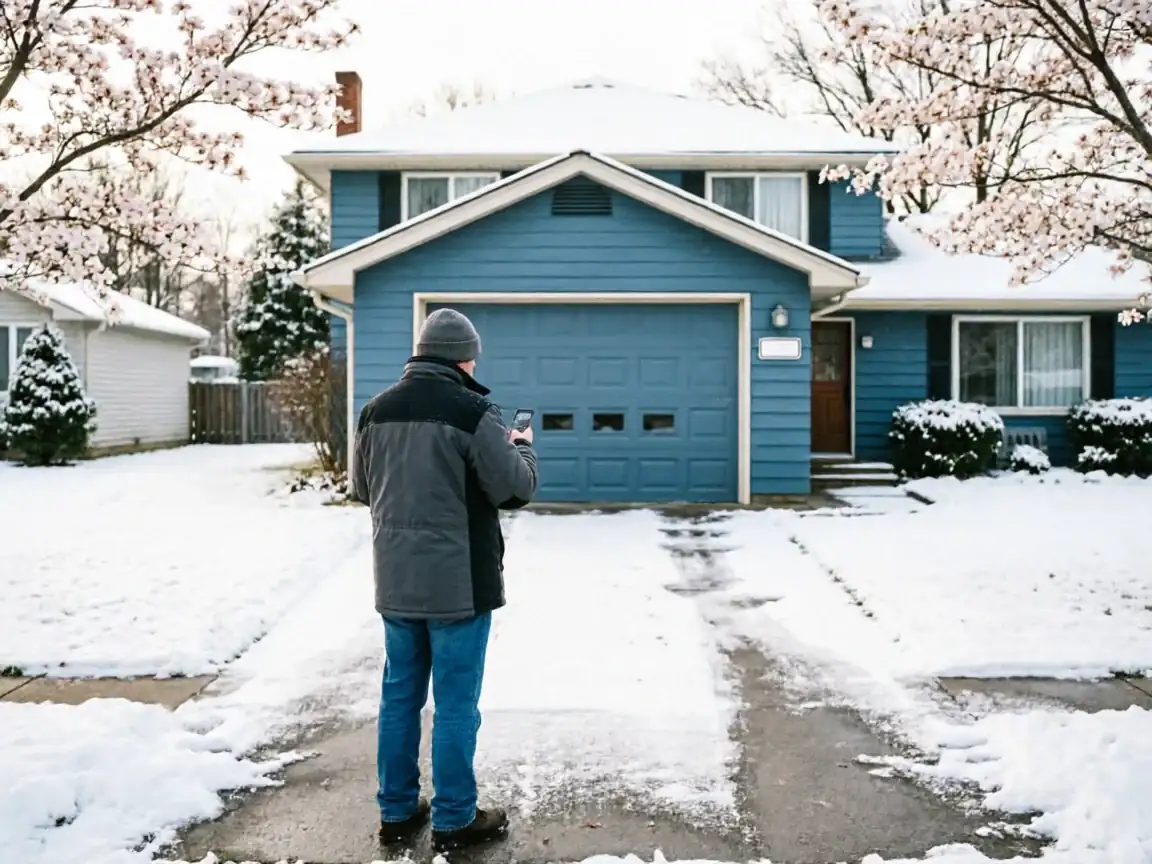
    A technician stands in a snowy driveway, looking at a blue house with a garage.

    Tell us what’s wrong

    Describe the symptom - won’t open, loud bang, opener runs but the door won’t move.

  2. 2
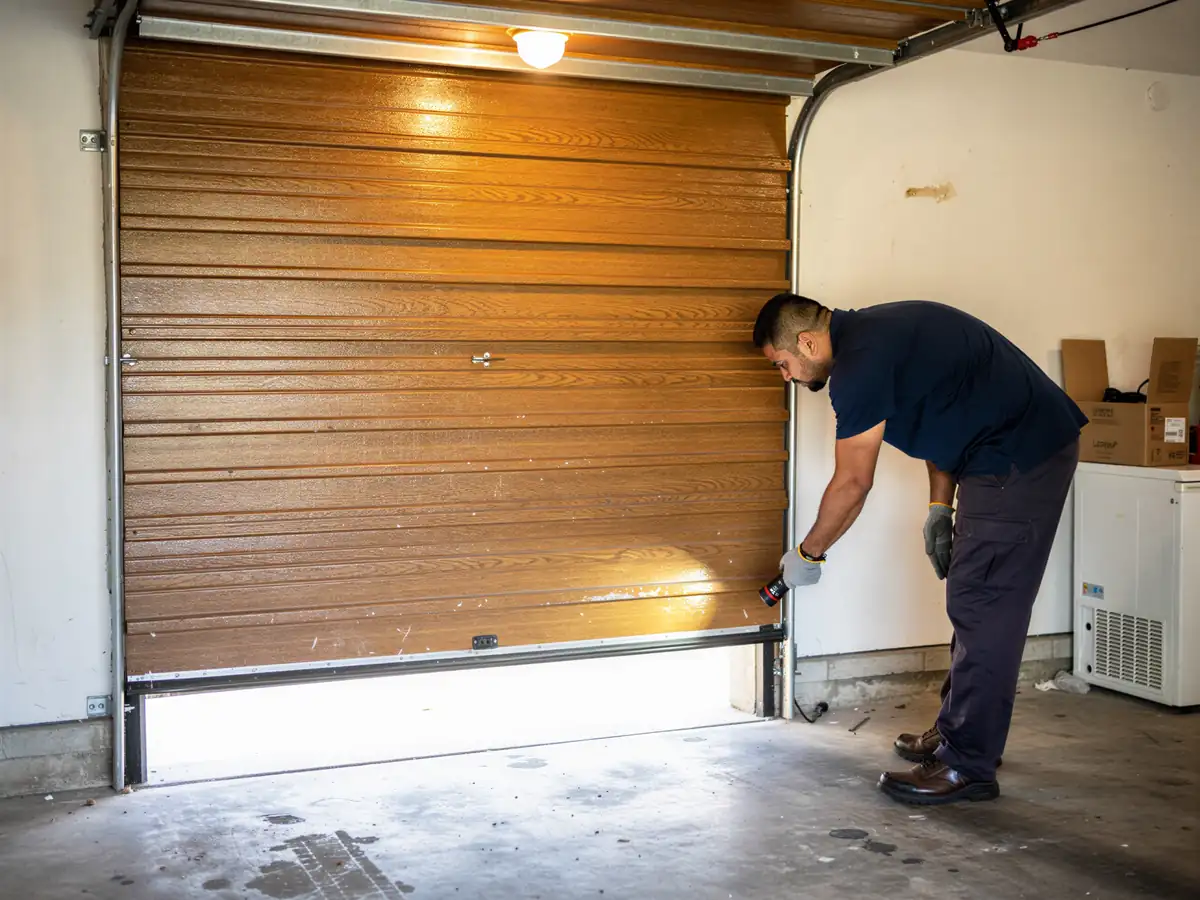
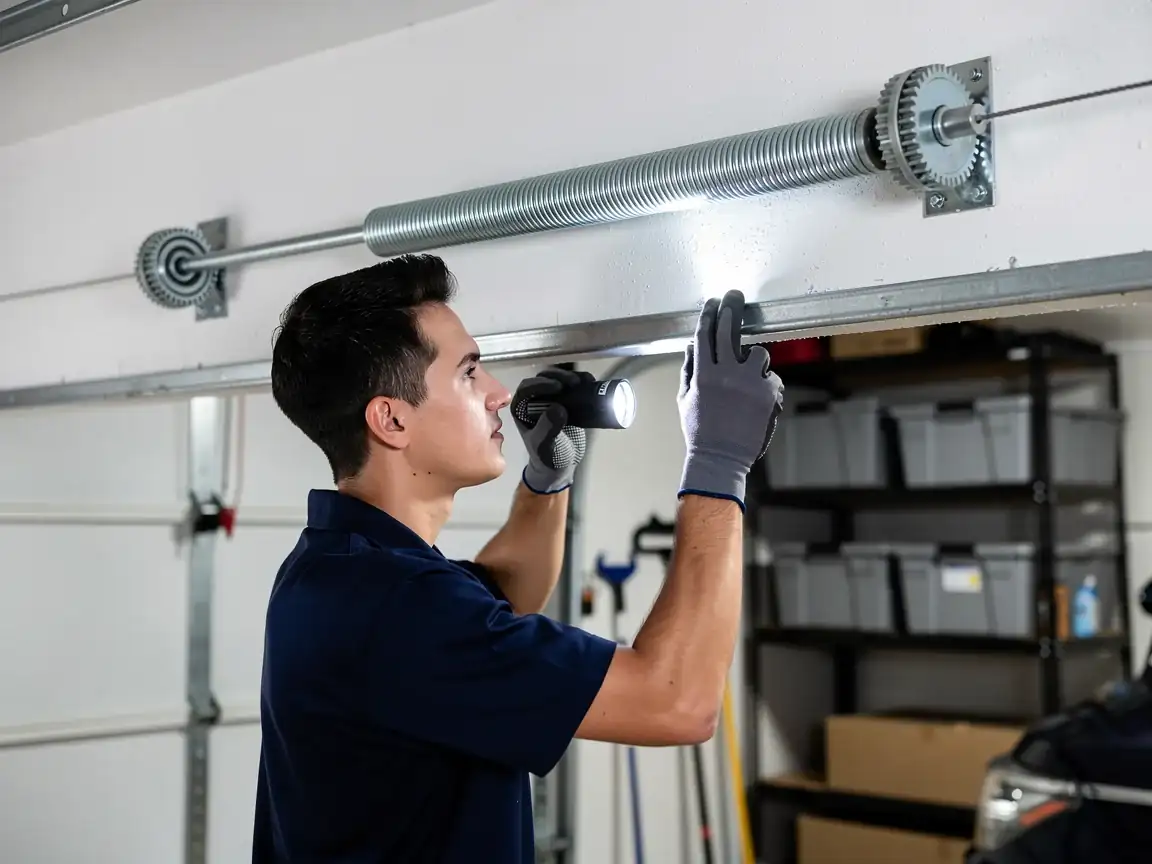
    A technician in a blue shirt and gloves inspects a garage door track with a flashlight.

    On-site diagnosis

    A technician tests the door under power and by hand and finds what actually failed.

  3. 3
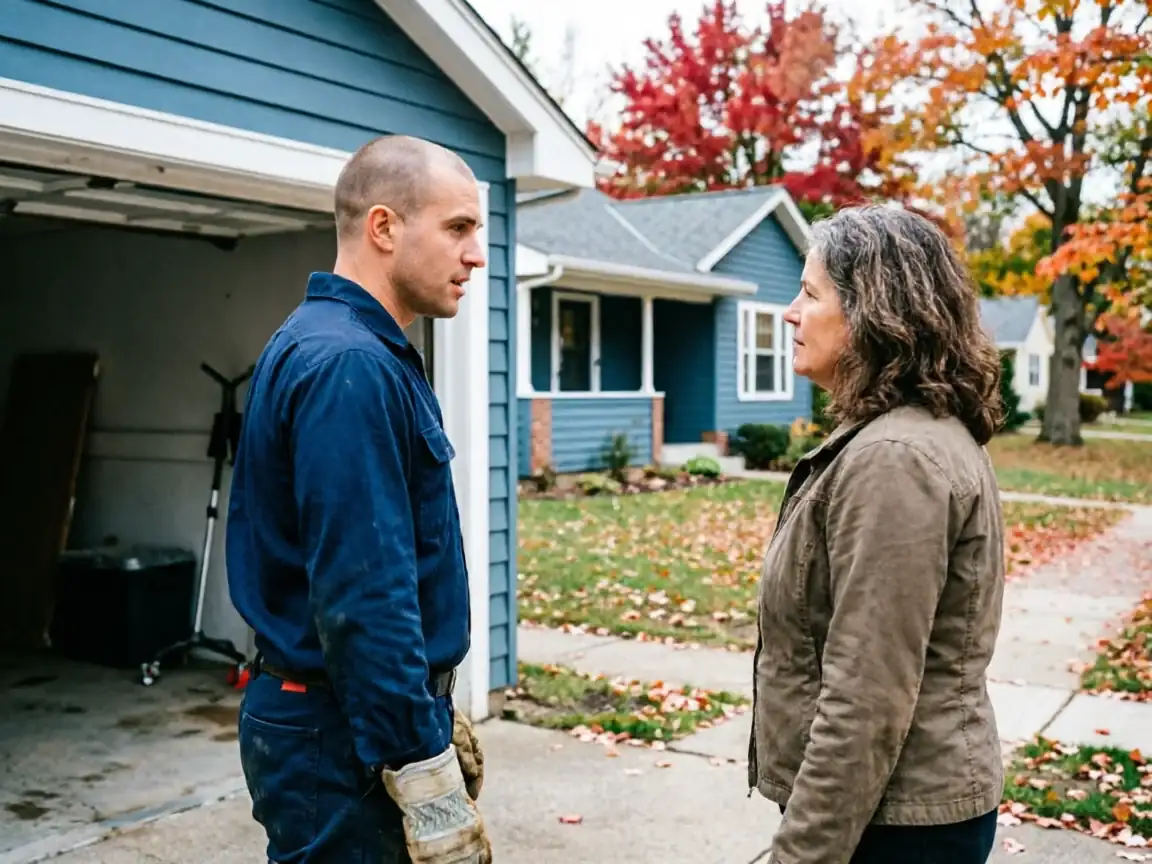
    A technician in a blue uniform talks to a woman in a brown jacket.

    Clear, up-front plan

    You get the fix that’s needed and what drives the cost - before any work starts.

  4. 4
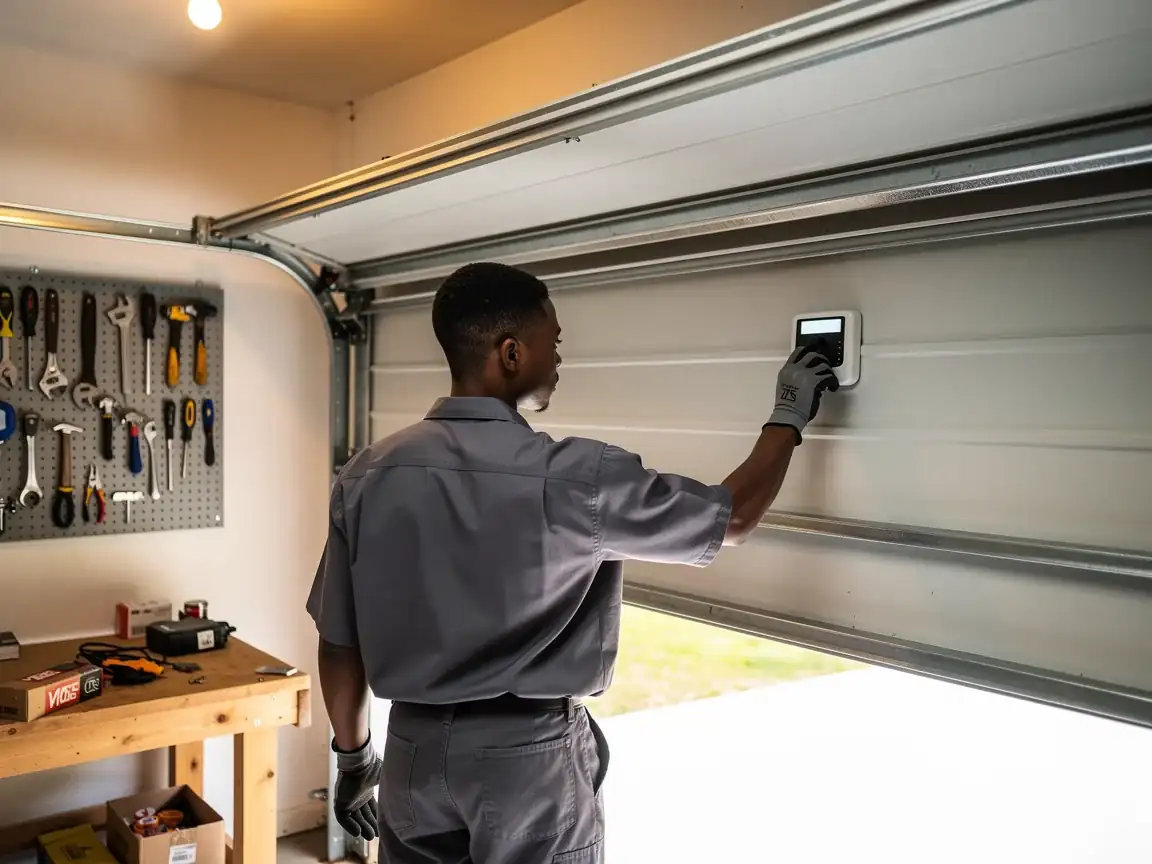
    A technician in a gray uniform adjusts a white control panel on a garage door.

    Repaired & tested

    The repair is done, the door is set true and tested, and the work area left clean.

Not sure which repair your door needs in Shelton, CT? Describe what it’s doing - every job starts with a diagnosis.

How we work

What to expect

Diagnosis firstEvery visit starts by finding what actually failed - not a pre-written parts list.
The right part for the doorSprings and openers matched to the door’s weight and age, so the fix holds up.
Straight answersWhen a repair makes more sense than a replacement - or the reverse - you hear it plainly.
Clean, careful workTension released safely, hardware set true, the door tested under power before we leave.
What we do

Garage Door Services

Repair and installation work for Shelton homes and businesses.

Questions

Frequently asked

Straight answers about garage door repair in Shelton. Still unsure? Ask us directly.

Why do garage door springs fail more in winter here?

Steel contracts in cold, and this area sits in a cold-severe climate band. A torsion spring that's already lost tension from decades of cycling has less margin left when the metal stiffens in a January cold snap, which is why failures cluster in the coldest weeks rather than spreading evenly through the year.

My house was built in the 1960s - is my door original?

It's common. A large share of Shelton housing dates to the 1952-2013 range with a median build year around 1972, and a lot of those original torsion-spring systems and openers are still in place. If yours has never been serviced, we'd check spring tension and roller wear before assuming it just needs a tune-up.

Is it ever cheaper to replace one spring instead of both?

Short term, yes - but torsion springs are wound as a matched pair, and replacing only the failed one leaves the other side carrying different tension. On older systems that's usually original hardware anyway, so we replace both at once rather than leave a mismatched pair that fails again within a year or so.

Ready to get your garage door sorted?

Request a QuoteCall