Serving Shelton, CT & nearby
(475) 203-3827
Shelton, CT

What a Service Call Actually Covers in Shelton

In Shelton, CT, most homes date to the 1960s-70s and sit in a cold climate zone - here's what a garage door service call actually checks, fixes, and skips.

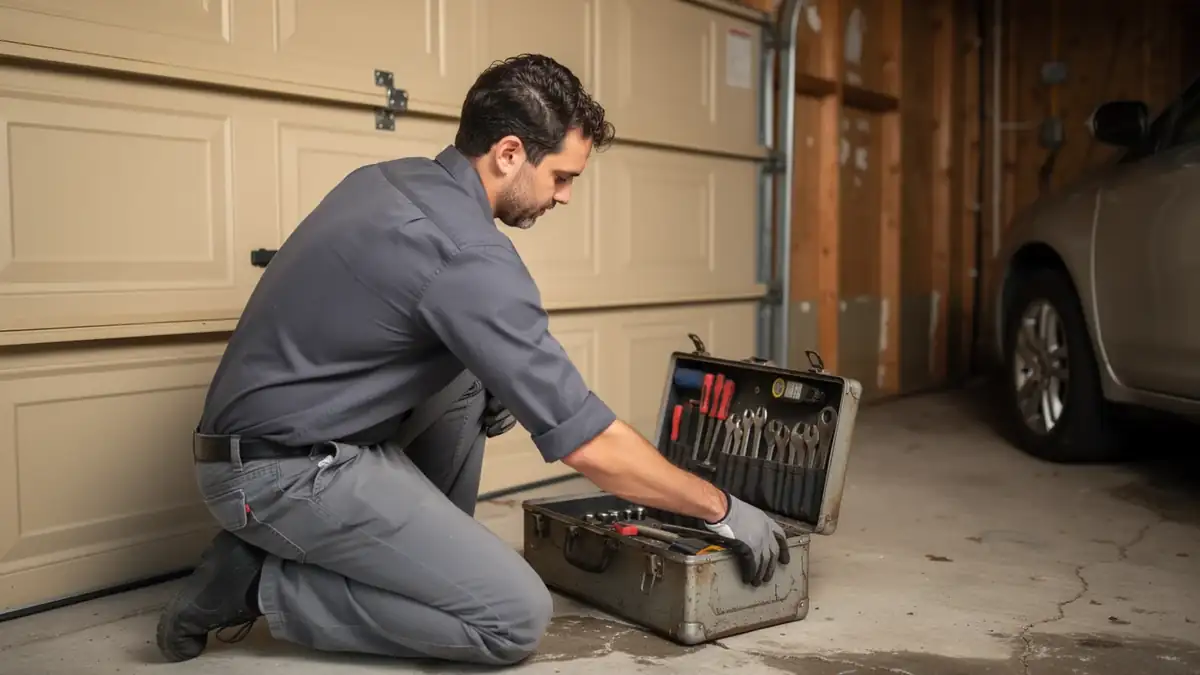
A technician kneels in a garage, reaching into an open toolbox with various tools.

What Local Conditions Do

Shelton sits in a cold-severe climate band, and that single fact shapes almost every service call we run here. Steel contracts in deep cold, which tightens tolerances on tracks and rollers that were already set decades ago. Ground under a slab-mounted track heaves with freeze-thaw cycles every winter, and a door that rolled smooth in October can bind by January because the track shifted a quarter inch at the base plate. Torsion springs lose a little tension in cold air too - not enough to snap, but enough that an opener built for a lighter pull starts straining, grinding gears it wouldn't otherwise touch. None of this is damage you can see from the driveway. A tech has to put a level on the track, check the spring's coil gap, and watch the door travel a full cycle before saying what's actually wrong. On a call here, we're not guessing at generic wear - we're checking for the specific things cold and slab movement do to a door that's already old by national standards. That's the baseline every visit starts from.

The Problem

Housing in Shelton was built mostly in the 1960s and 70s, with the broader stock running from 1952 up through 2013 and a median build year around 1972. A door installed with a house from that era was almost never insulated to today's standard, and the opener - if it's been swapped at all - is probably a second or third unit bolted to original rail. That combination means panels flex more than they should in cold weather, seams gap, and the single largest moving part in the house runs on hardware nobody manufactures anymore in the original spec. We see the same failure pattern across the 45 named areas in this service territory: a torsion spring sized for a lighter, older door, paired with a heavier insulated replacement panel put in at some point without re-rating the spring. The door lifts hard, the opener strains to compensate, and eventually either the spring goes or the opener's gear strips. It's not a defect in any one part - it's a mismatch built up over fifty years of partial upgrades on a house that was never wired for what's on the door now.

When It Stops Being a DIY Job

A torsion spring under tension can put someone in the emergency room - that's true everywhere, not just here, but it matters more on doors this old because the springs were often installed before current winding-bar standards and nobody documented the wind count. If a cable's frayed, if the door's off-track, or if a panel's been replaced without the spring recalculated for the new weight, that's a call, not a project. Lubricating hinges and checking the photo-eye sensors - that's reasonable DIY territory on any door. Replacing a spring on a 1960s-era track system where the hardware doesn't match current parts is not, and we'll say so plainly: we won't walk someone through that over the phone. One honest limit on our end - if the opener is old enough that replacement parts for that exact model aren't stocked anywhere, we'll tell you straight that a new opener costs less than hunting down obsolete parts, rather than stringing out a repair that won't hold.

Where People Go Wrong

The most common mistake we see in this area is spraying standard WD-40 on a track and calling it maintenance - it strips what lubricant was there and attracts grit, which is worse than doing nothing on an older roller system. The second is ignoring a door that's started dragging on one side after a hard winter, assuming it'll loosen up by spring. It usually doesn't; the track stayed bent where the frost pushed it, and running the opener against that resistance wears the gear train faster than the misalignment itself would. Third, homeowners here sometimes replace a damaged panel with a heavier insulated one - sensible, given the climate - but skip having the spring re-rated for the new weight, which leaves the opener doing work the spring should be doing. With median household income in this service area around $130,180, most people here can afford to fix things right the first time; the issue isn't money, it's that a door problem on a 1970s-built house rarely has a single cause, and treating it like it does means you fix the symptom and pay for the same call again next winter.
How it works

From “it’s stuck” to “it’s fixed”

A quick, honest process - no guesswork and no surprises, start to finish.

  1. 1
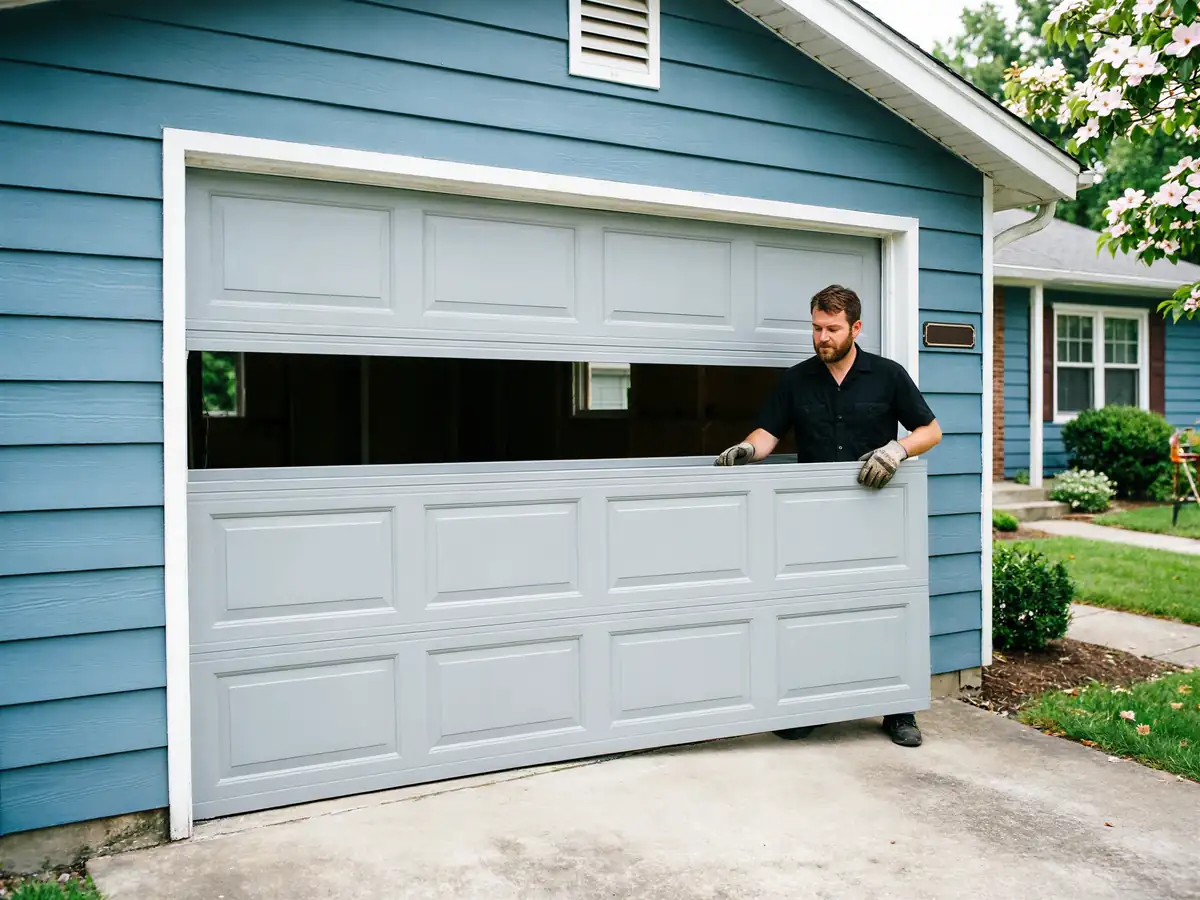
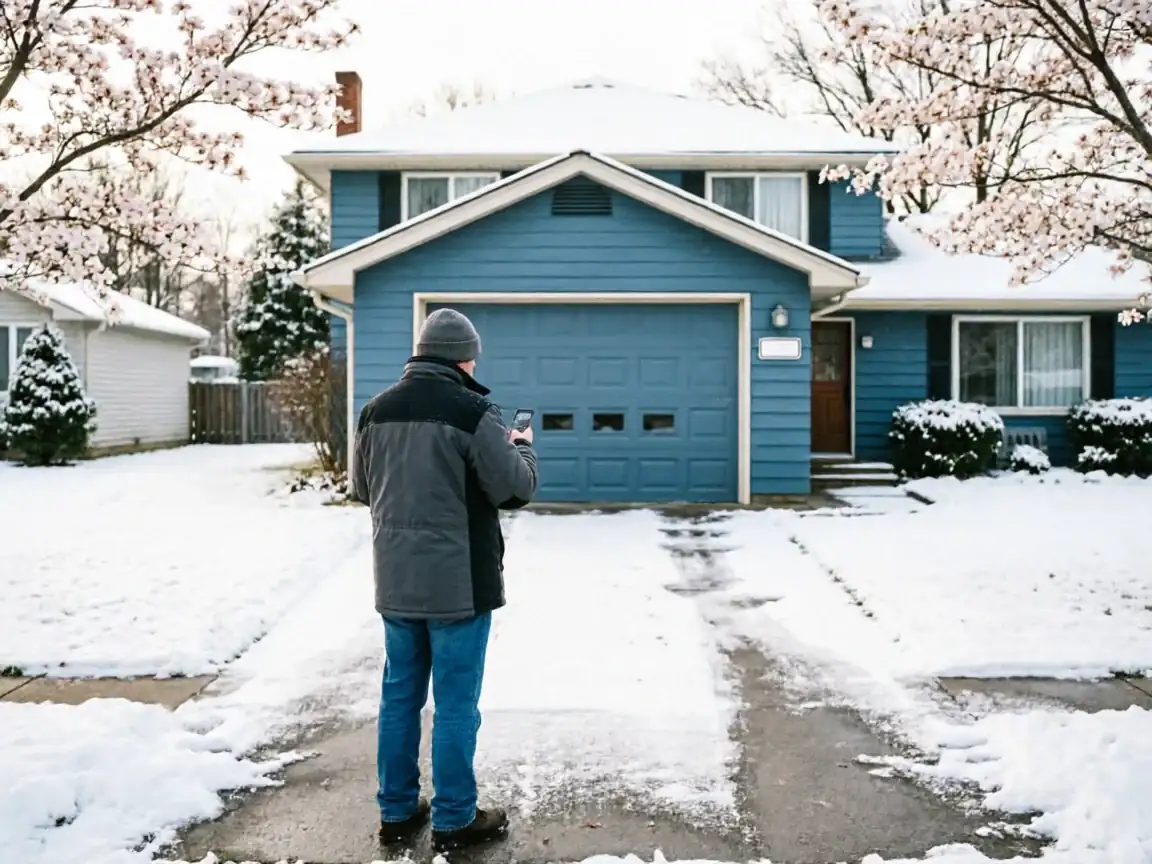
    A technician stands in a snowy driveway, looking at a blue house with a garage.

    Tell us what’s wrong

    Describe the symptom - won’t open, loud bang, opener runs but the door won’t move.

  2. 2
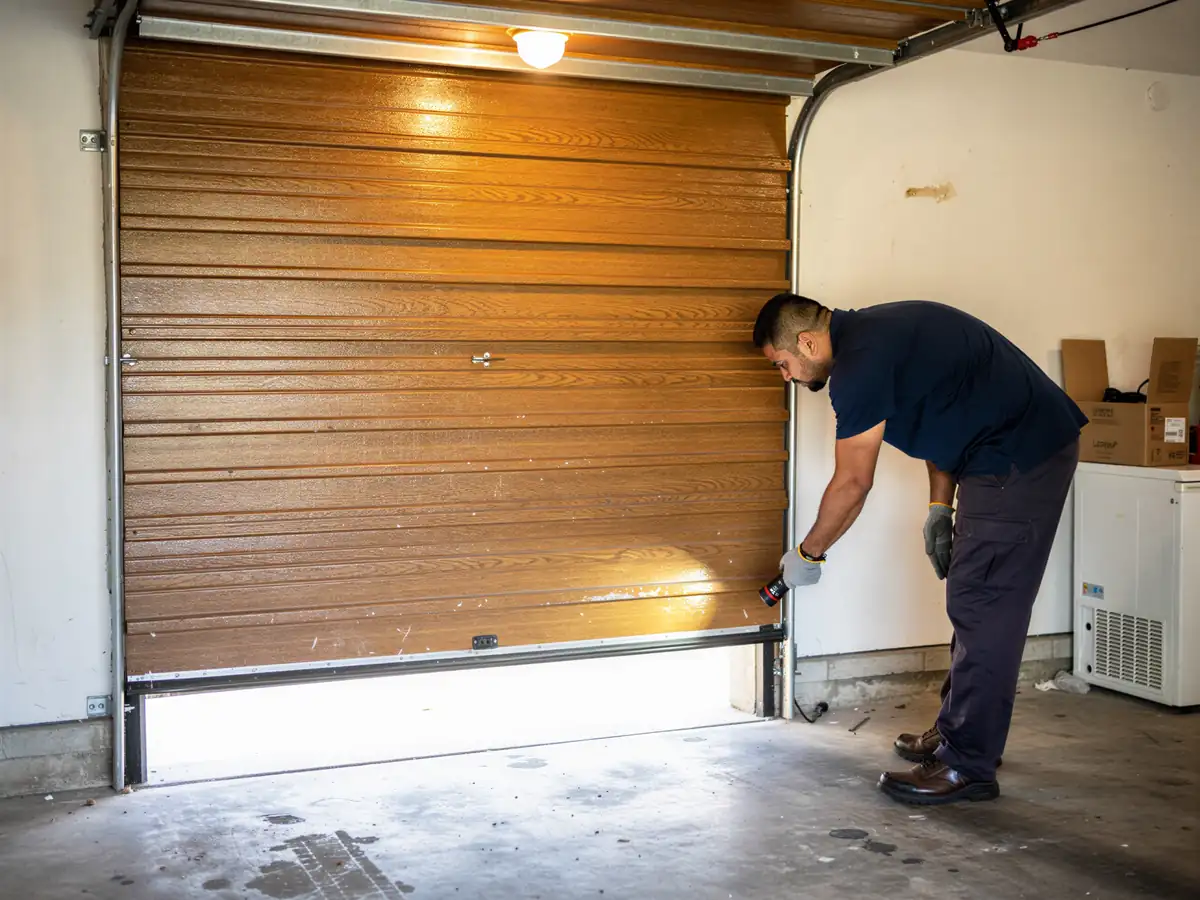
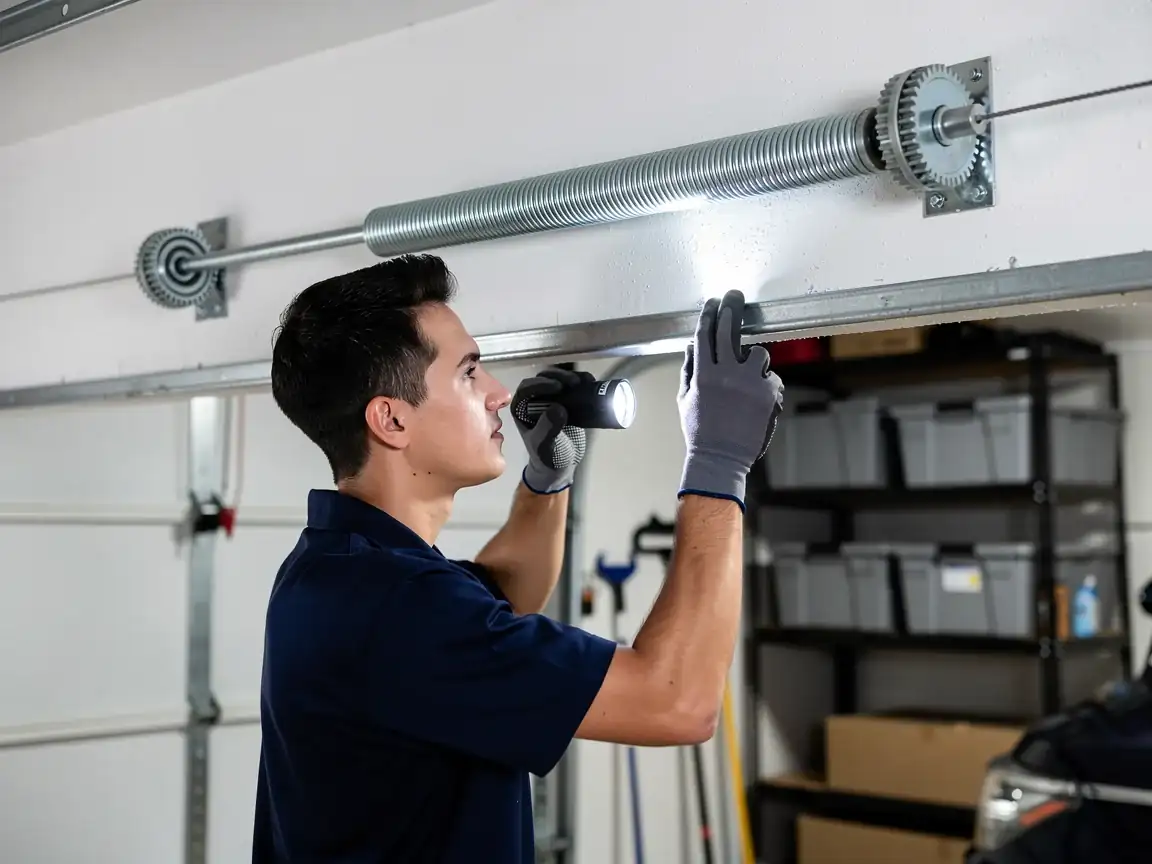
    A technician in a blue shirt and gloves inspects a garage door track with a flashlight.

    On-site diagnosis

    A technician tests the door under power and by hand and finds what actually failed.

  3. 3
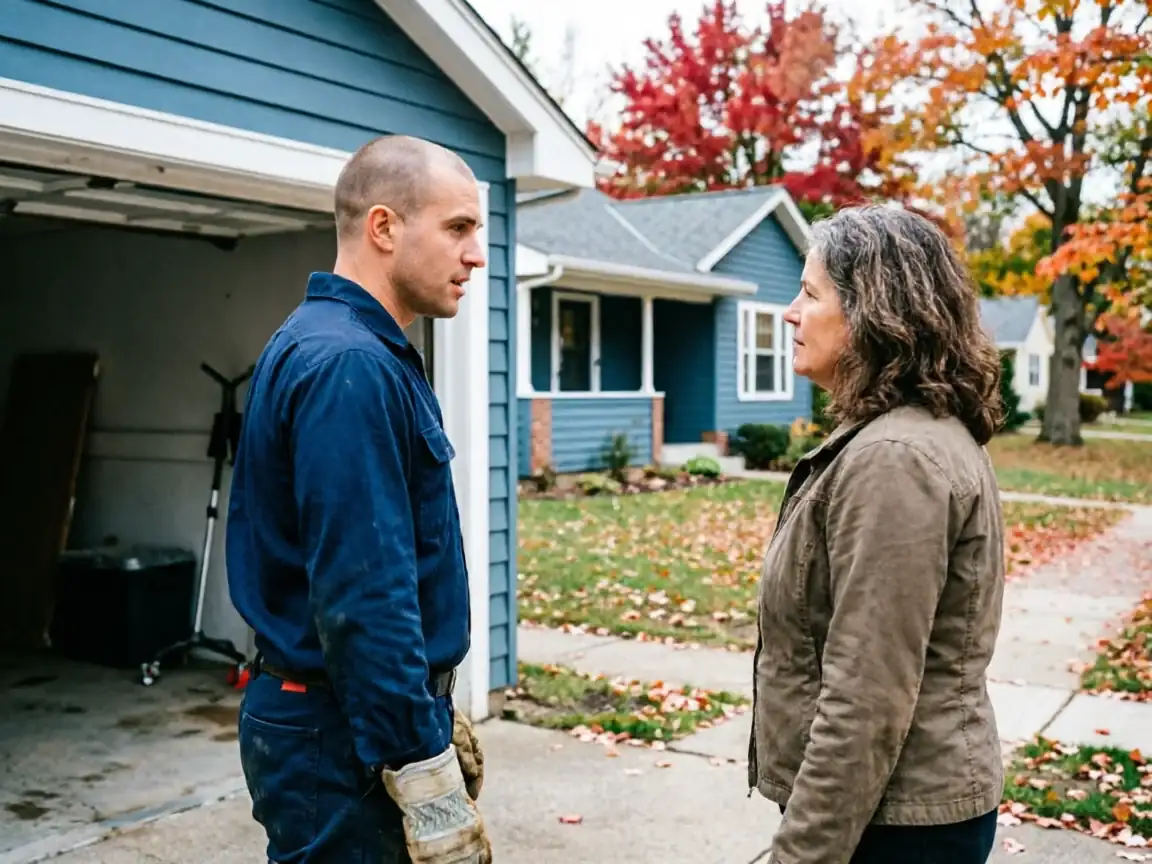
    A technician in a blue uniform talks to a woman in a brown jacket.

    Clear, up-front plan

    You get the fix that’s needed and what drives the cost - before any work starts.

  4. 4
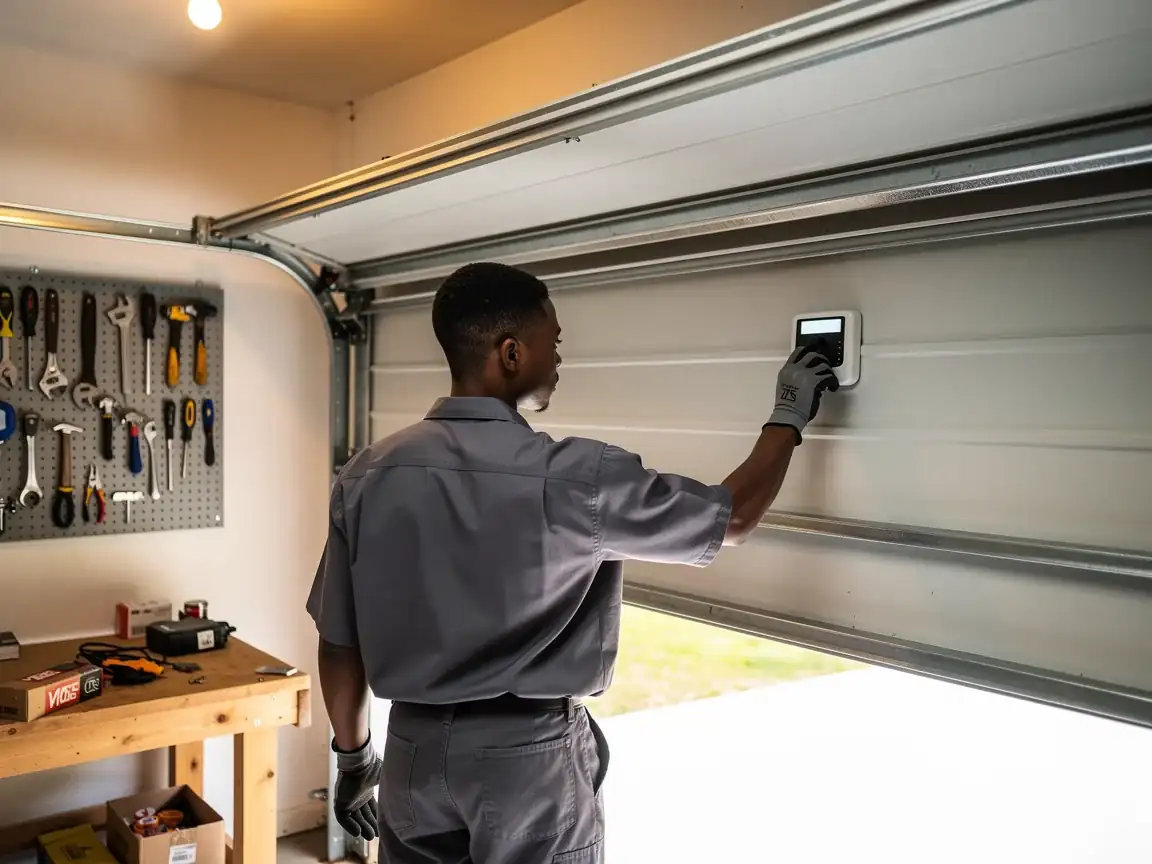
    A technician in a gray uniform adjusts a white control panel on a garage door.

    Repaired & tested

    The repair is done, the door is set true and tested, and the work area left clean.

Not sure which repair your door needs in Shelton, CT? Describe what it’s doing - every job starts with a diagnosis.

How we work

What to expect

Diagnosis firstEvery visit starts by finding what actually failed - not a pre-written parts list.
The right part for the doorSprings and openers matched to the door’s weight and age, so the fix holds up.
Straight answersWhen a repair makes more sense than a replacement - or the reverse - you hear it plainly.
Clean, careful workTension released safely, hardware set true, the door tested under power before we leave.
What we do

Garage Door Services

Repair and installation work for Shelton homes and businesses.

Questions

Frequently asked

Straight answers about garage door repair in Shelton. Still unsure? Ask us directly.

Why does my garage door stick worse in winter here than it did in fall?

Shelton's cold-severe climate band means the slab under your track can shift slightly with freeze-thaw cycles, and steel track contracts in deep cold too. A door that ran smooth in October can bind in January from a combination of both - not a new problem, just the old alignment issue showing up under colder conditions.

Is my garage door opener too old to repair?

Depends on the model and whether parts are still made for it. A lot of homes in this area still run openers installed decades after the house itself, which was likely built sometime between 1952 and the early 2010s. If a part's been discontinued, replacing the opener usually costs less than the labor to track down an obsolete gear.

Can I replace a garage door panel myself?

Swapping a single damaged panel is doable for some owners, but if the new panel is heavier or more insulated than the original - common when upgrading an older door - the torsion spring needs to be re-rated for that weight. Skipping that step is the single most common mistake we see on service calls in this area.

Ready to get your garage door sorted?

Request a QuoteCall