What Local Conditions Do
Most houses in Shelton went up between 1952 and 2013, with the bulk of the stock clustered in the 1960s and 70s across the town's 45 named areas. That matters for track alignment because the original hardware in those houses is steel track bolted to wood jambs that have had fifty-plus years to move. Wood shrinks and swells with the seasons, and when a jamb shifts even a quarter inch, the vertical track bolted to it shifts with it.
Shelton sits in a severe cold climate band, and that's the other half of the problem. Steel track contracts in deep cold and expands again in a thaw, winter after winter. Each cycle works the lag screws in the jamb a little looser. On a house built when Johnson was president, that's five decades of expansion and contraction on hardware nobody has touched since it went in. The track doesn't snap off the wall all at once - it walks off true a sixteenth of an inch at a time until the rollers start fighting it instead of rolling through it.
The Problem
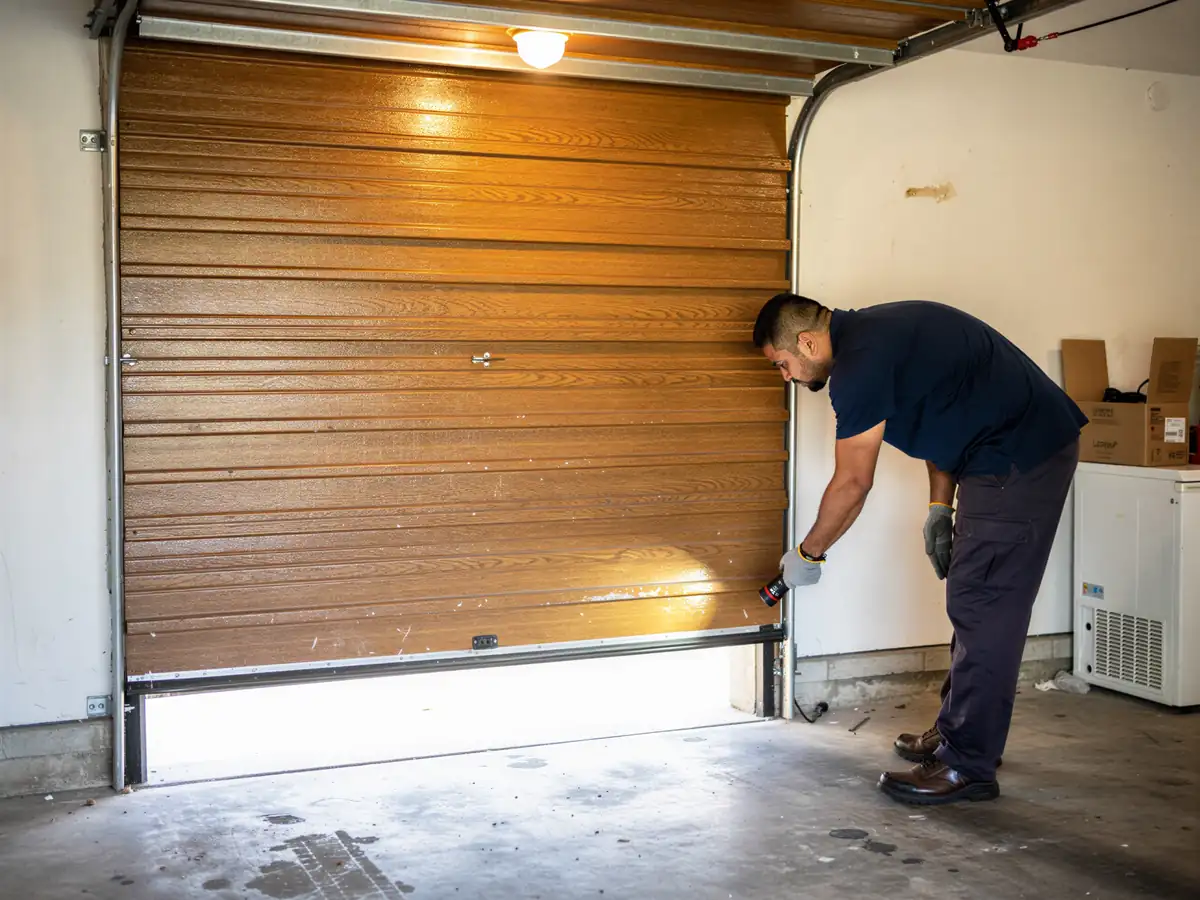
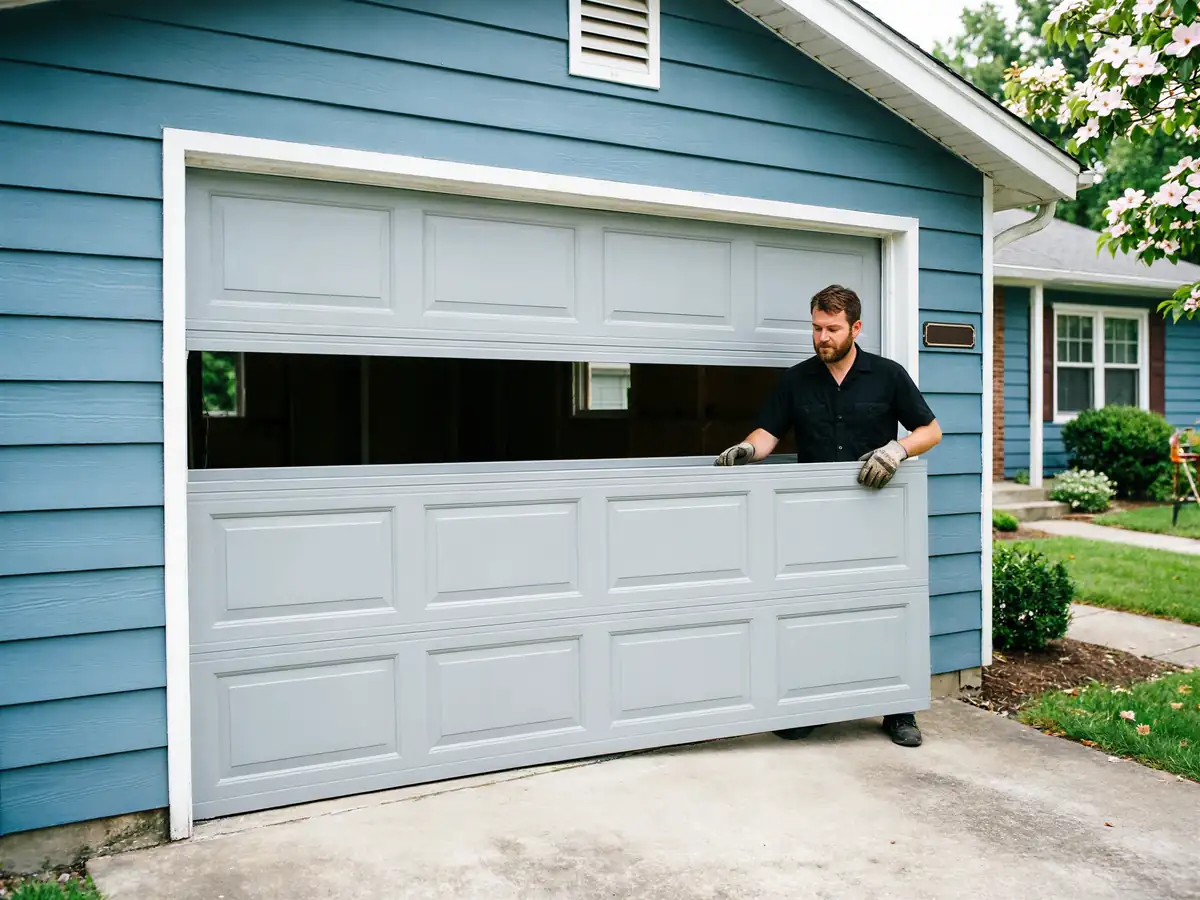
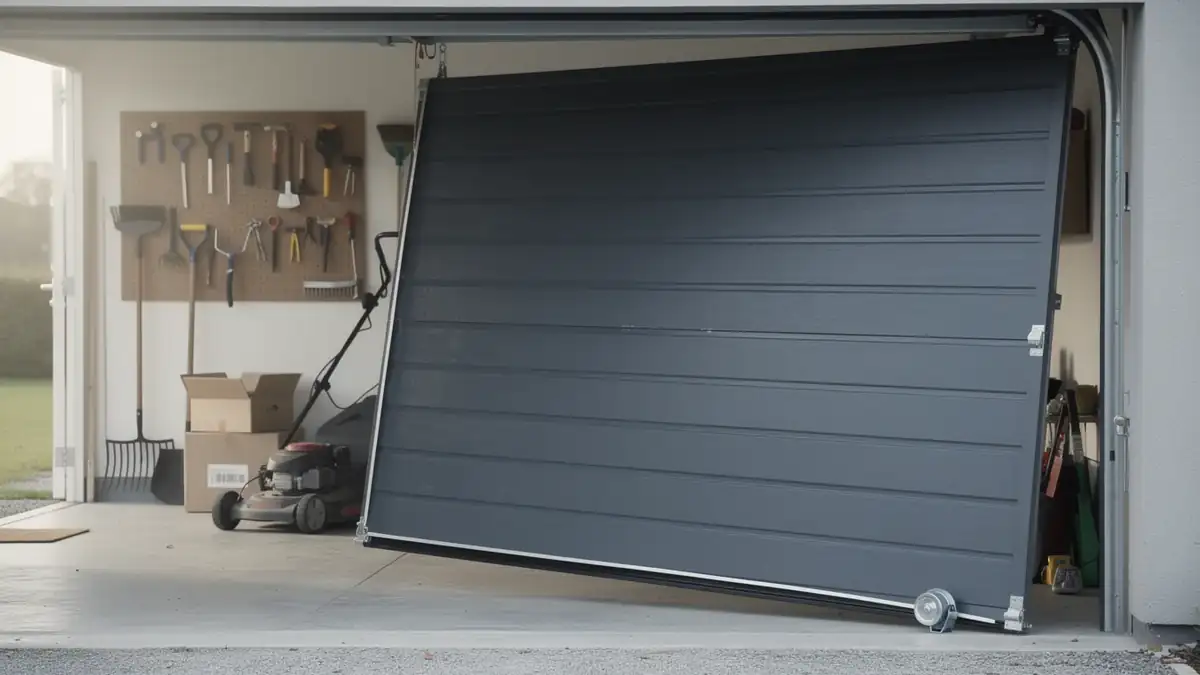
In a house from this era, the symptom shows up as a door that binds on one side, or rollers that pop out of the track on the way up. Original installs from the 60s and 70s usually ran steel rollers, not nylon, and steel rollers wear a groove into aging track over the decades. Once that groove is uneven, the roller rides it like a train wheel on a bent rail - fine most of the time, until cold tightens every clearance in the system and the roller jumps.
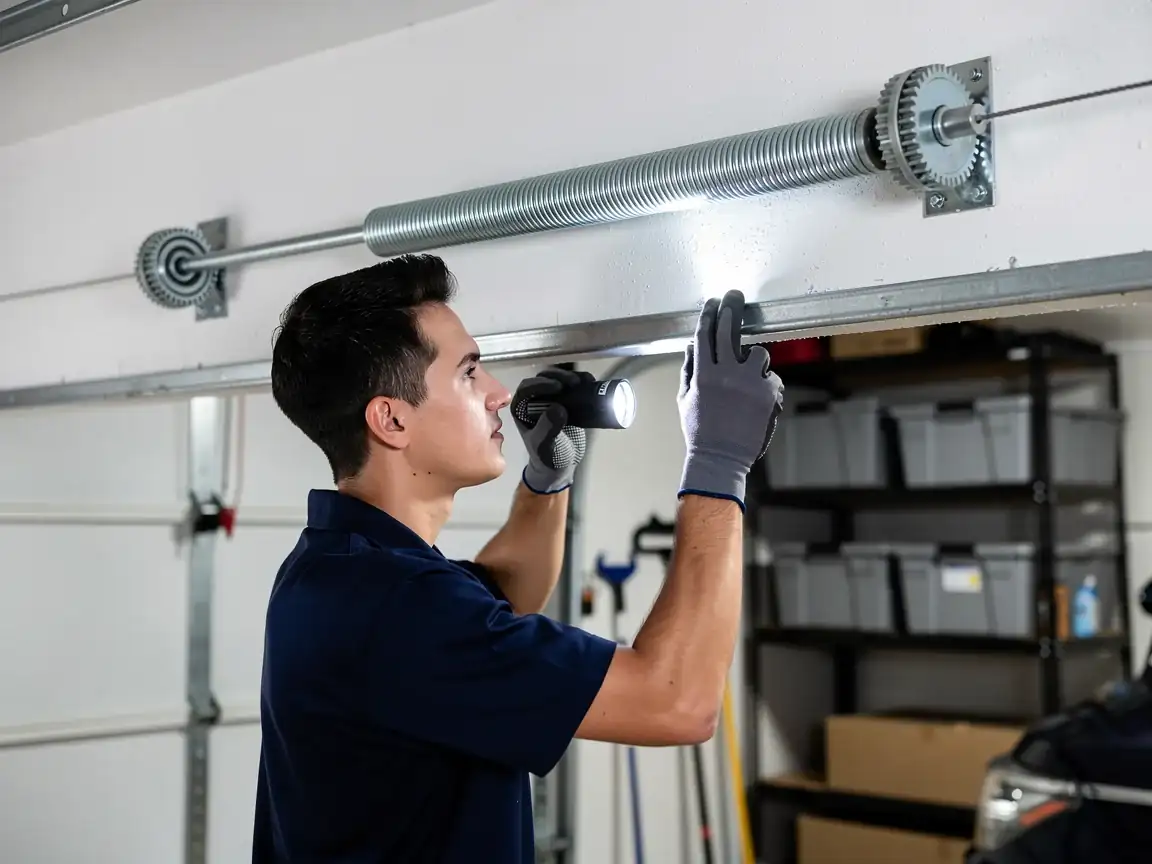
The other pattern specific to this housing stock is the horizontal track pulling away from the ceiling brackets. Those brackets were set once, when the garage was framed, and in a cold-climate town the framing above an unheated garage moves more than framing in a heated room. Add a slab that's settled unevenly over fifty years - common in houses this old - and the two vertical tracks are no longer parallel. A door that's slightly out of square will always want to walk off one side first.
When It Stops Being a DIY Job
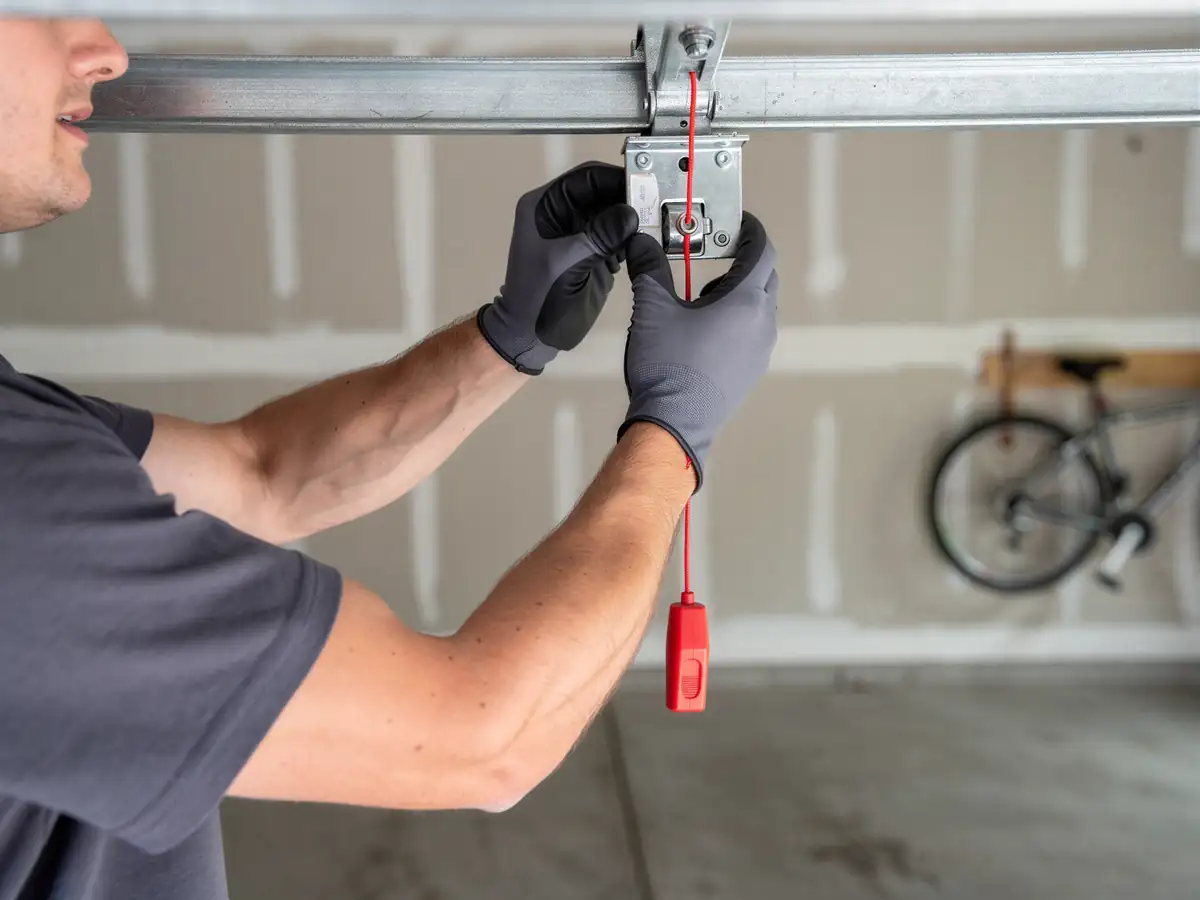
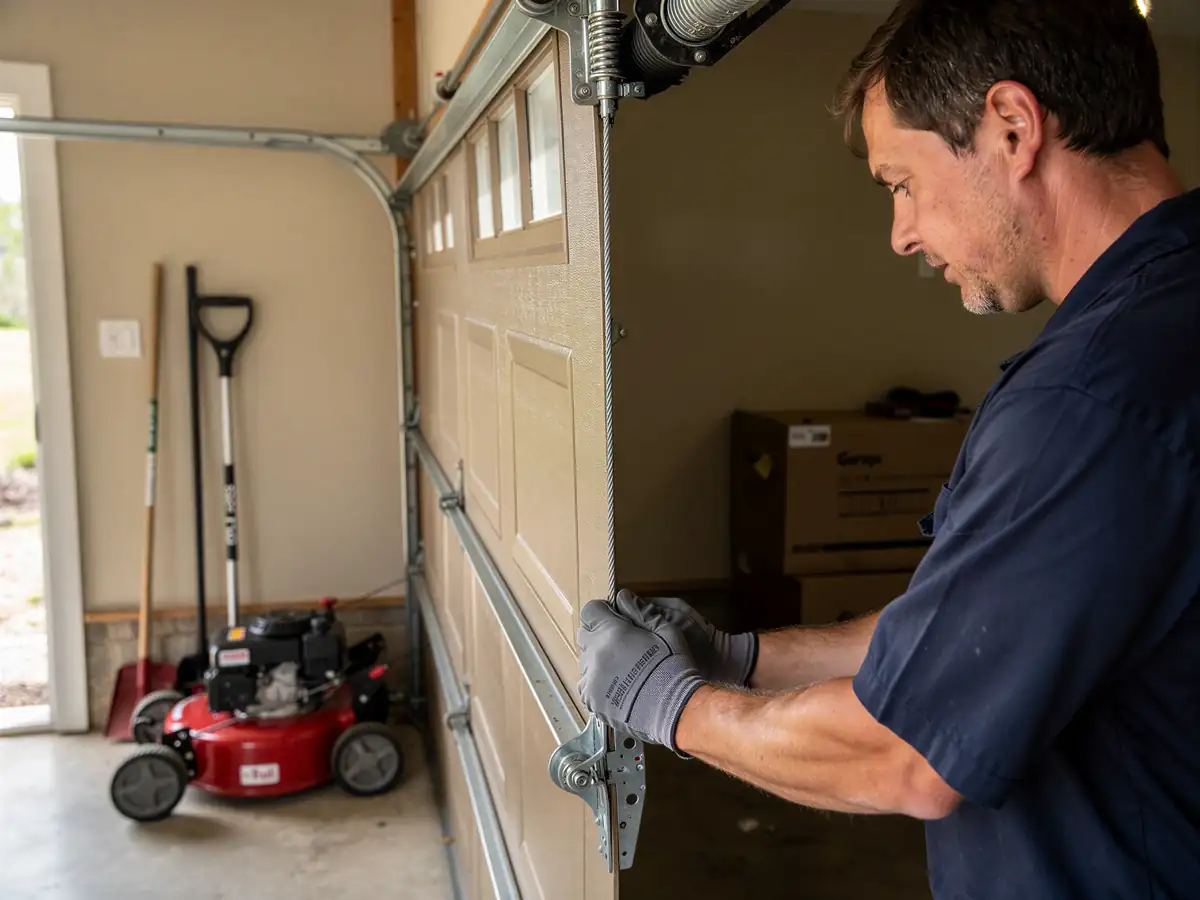
Tightening a loose roller bracket or re-squaring a track that's drifted a little is reasonable work for an owner with a ladder and a level
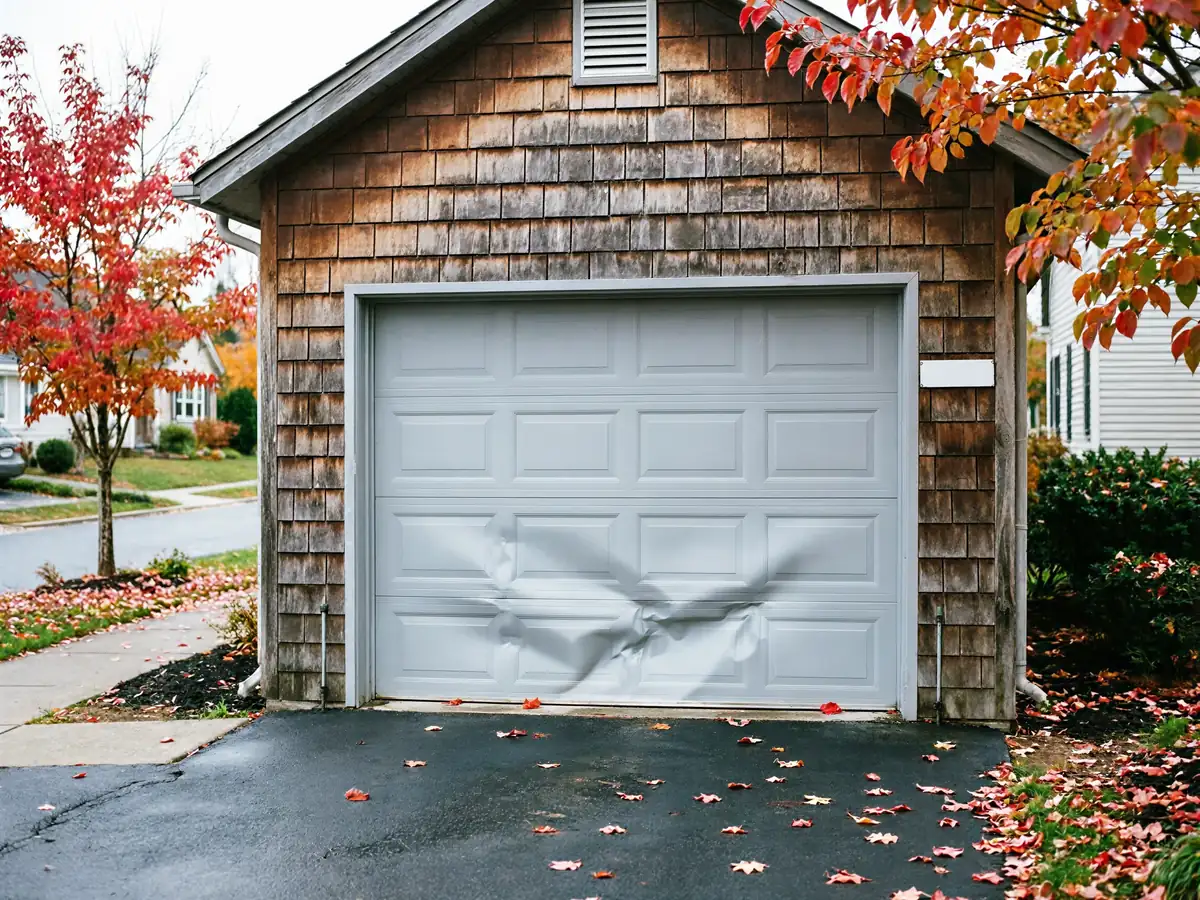
A bent track is not. Once horizontal track has kinked - usually from a door forced past the point where it was binding - the geometry is gone, and no amount of loosening and re-tightening fixes a rail that's no longer straight. At that point you're replacing track, not adjusting it.
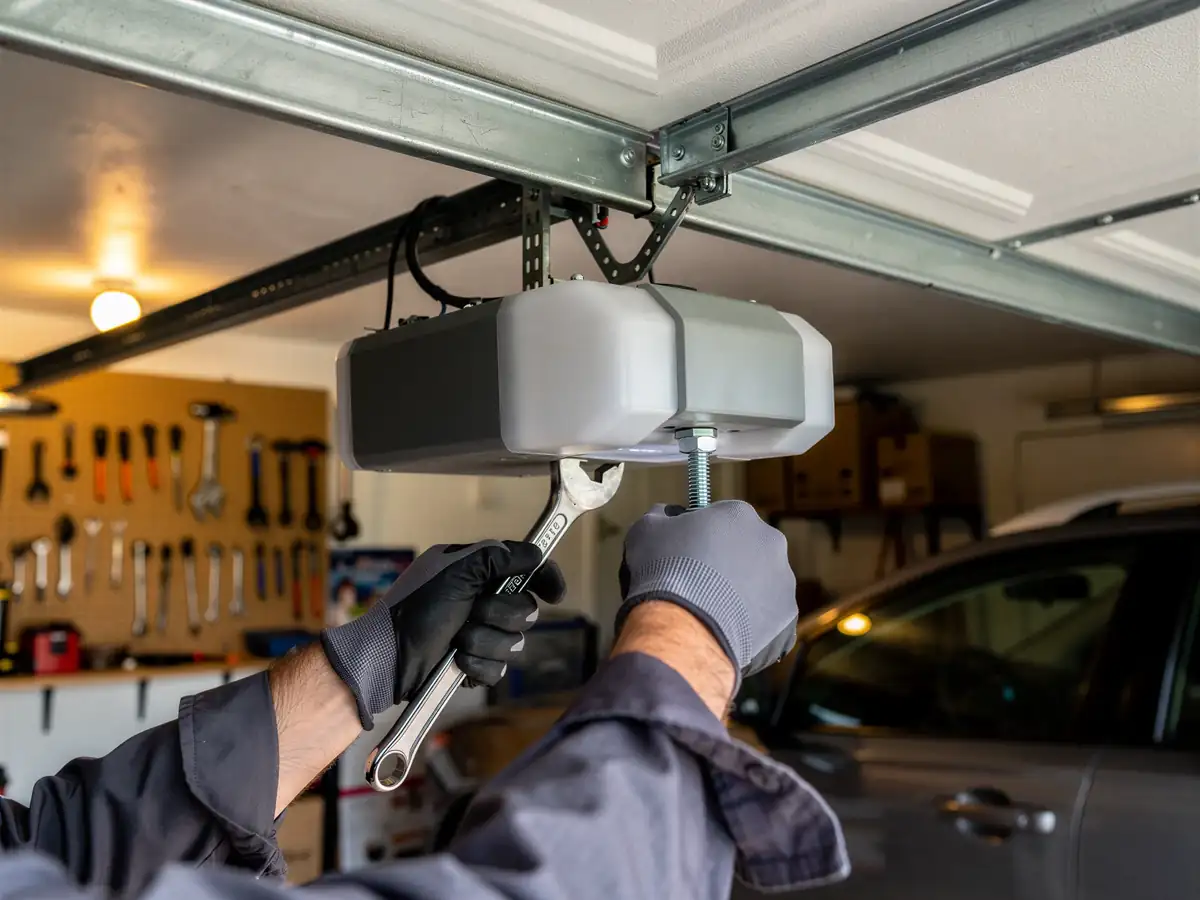
Here's the honest limit: we don't try to straighten bent track in the field
It looks fixable with a pipe wrench and sometimes it even holds for a week, but cold-weather contraction finds the weak spot again and the door comes off worse the second time. If the track is bent, the right call is a new section, not a repair. That's a judgment call that's hard to make accurately from photos, which is the main reason this one is worth a look in person rather than a guess over the phone.
Where People Go Wrong
The most common mistake in houses this age is treating a binding door as a lubrication problem. WD-40 on a dry roller buys a few smoother cycles, but it does nothing for a track that's pulled off a loosened bracket, and in cold weather it can gum up and attract grit that makes the roller bind worse by spring.
The second mistake is forcing the door through a jump instead of stopping. A roller that's already riding a worn groove will pop again the next time it hits that same spot, and every forced cycle bends the track a little further out of true. By the time it's visibly bent, what started as a fifteen-minute bracket tightening has become a track replacement.
The third is assuming newer hardware behaves like the original steel-roller systems this town is full of. Houses built in the 1960s and 70s were fitted with hardware rated for that era's doors, and retrofitting a heavier insulated door onto fifty-year-old track and brackets - without upgrading the brackets to carry the added weight - is a quiet, common cause of the exact misalignment described above.