What Local Conditions Do
Shelton's housing stock runs from 1952 up through 2013, with a median build year around 1972, and most of that stock across the roughly 45 named areas in the service territory dates to the 1960s and 70s. Doors from that era were built to the standards of their day, not to a cold-severe climate rating. Vinyl bottom seals and the thin foam gasketing used on steel sections back then weren't engineered for decades of freeze-thaw cycling.
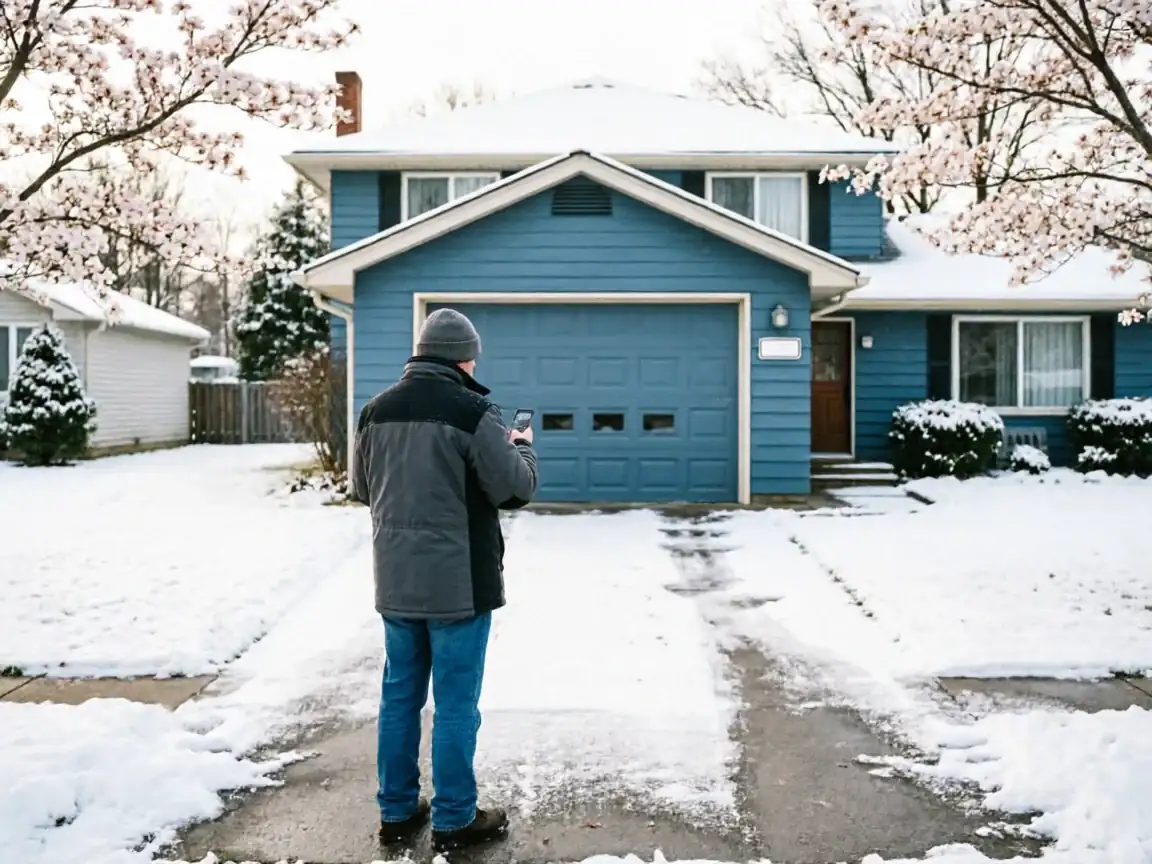
Shelton sits in a cold-severe climate band, which matters more than people think. It's not just that winters are cold here - it's the repeated swing through freezing and thawing that does the damage. A seal that's pliable in October gets brittle by February, and every contraction cycle opens a little more daylight at the bottom of the door and along the side jambs. On a house built in 1965 that's never had the seals touched, that daylight has usually been widening for years before anyone notices the cold coming through the garage wall into an attached mudroom or laundry.
This is the mechanical reality behind a draught complaint. It's not mysterious and it's not random - it's the predictable result of original-era rubber meeting fifty-plus winters.
The Problem
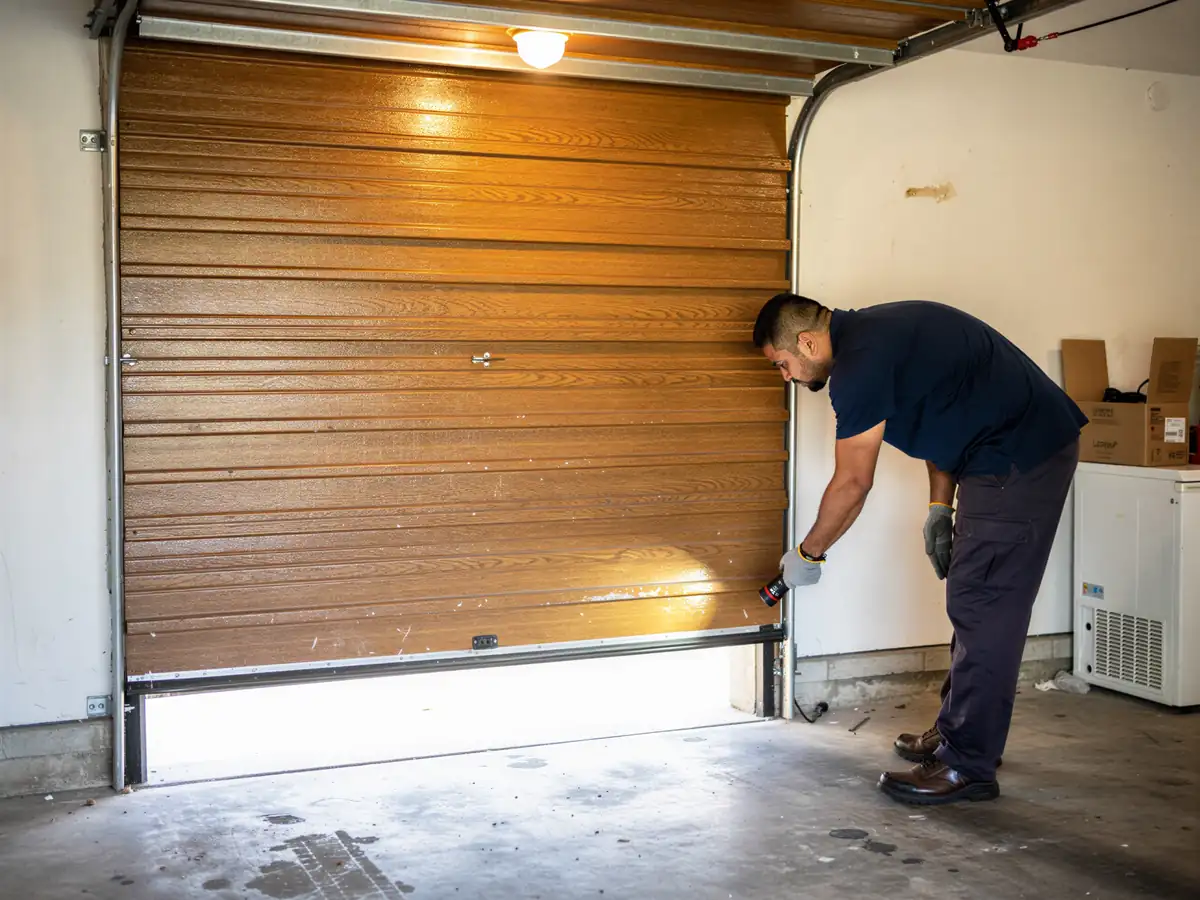
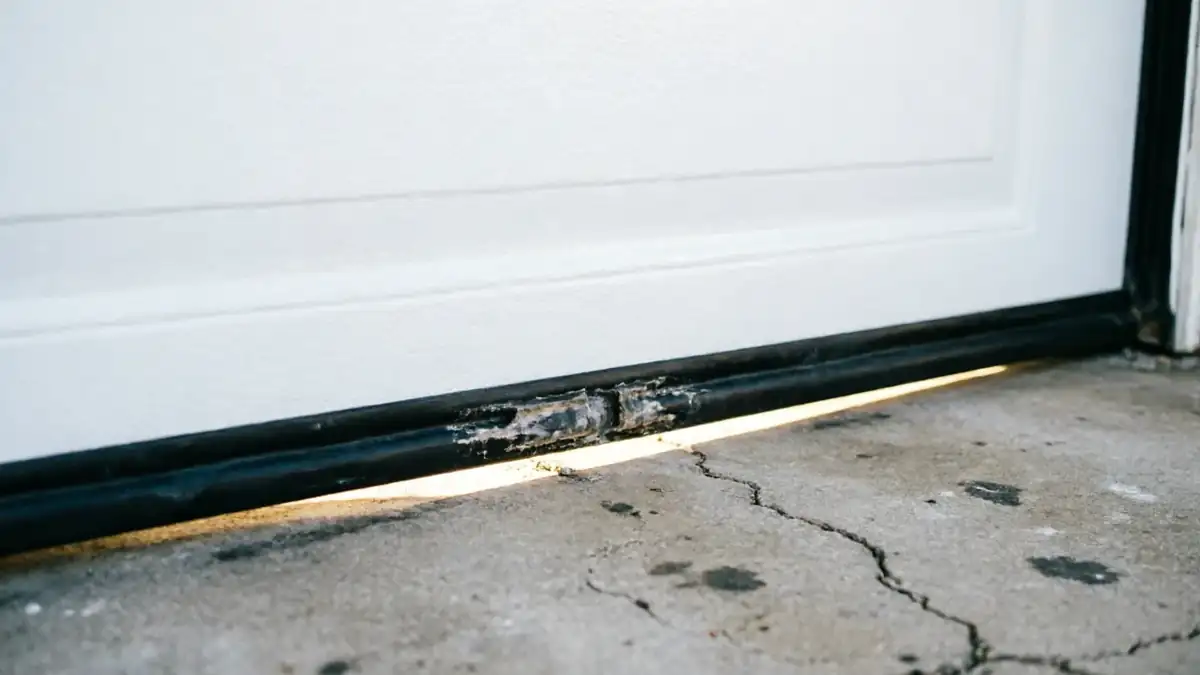
The draught itself is rarely the whole issue. On the older stock common across Shelton, the bottom seal hardens first, usually losing its flex along the section that sits lowest in the track where water and road salt track in during winter. Once it's hard, it stops conforming to the slab, and you get a visible gap you can see daylight through on a sunny afternoon.
The side and top seals go next, and on 1960s-70s steel doors they're often a different profile than what's sold today - thinner track channel, narrower retainer bead. A seal bought off a shelf without checking the track width can look installed but not actually seat, which means the draught comes right back within a season.
The astragal - the seal strip at the bottom of the door itself, not the threshold - cracks at the corners first on older doors because that's where it flexes most every time the door cycles. A cracked astragal on a cold-severe climate door lets in more cold air than most owners expect from something that small, and it's usually the actual source of a draught people blame on the door panels or the opener.
When It Stops Being a DIY Job
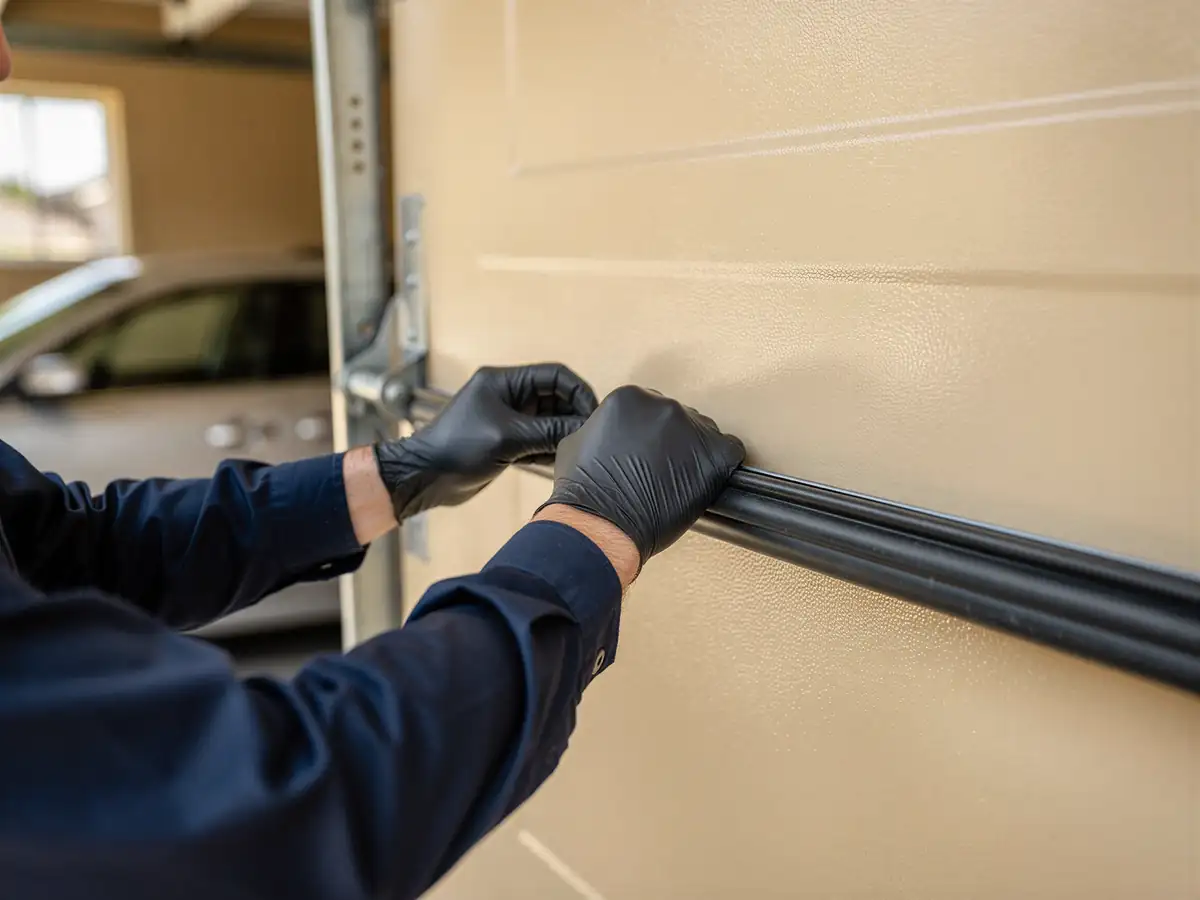
Swapping a bottom seal is a reasonable weekend job on most doors
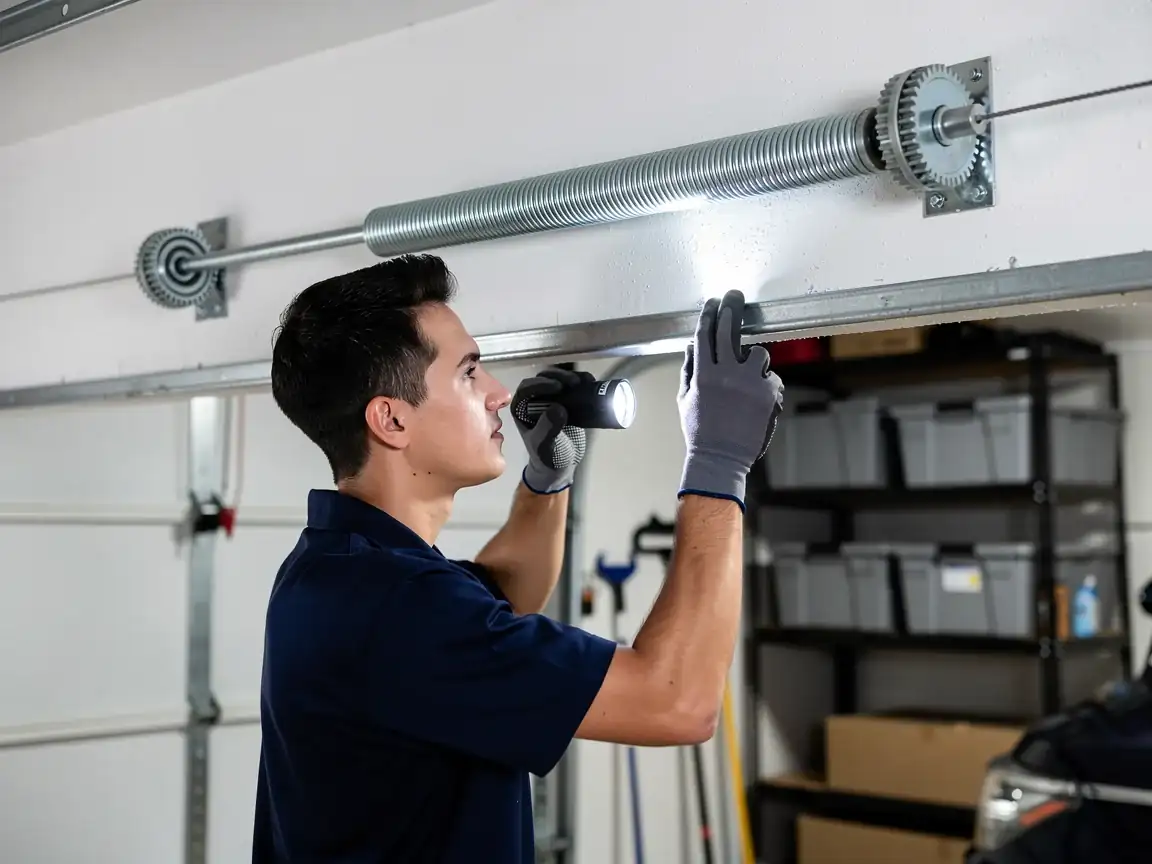
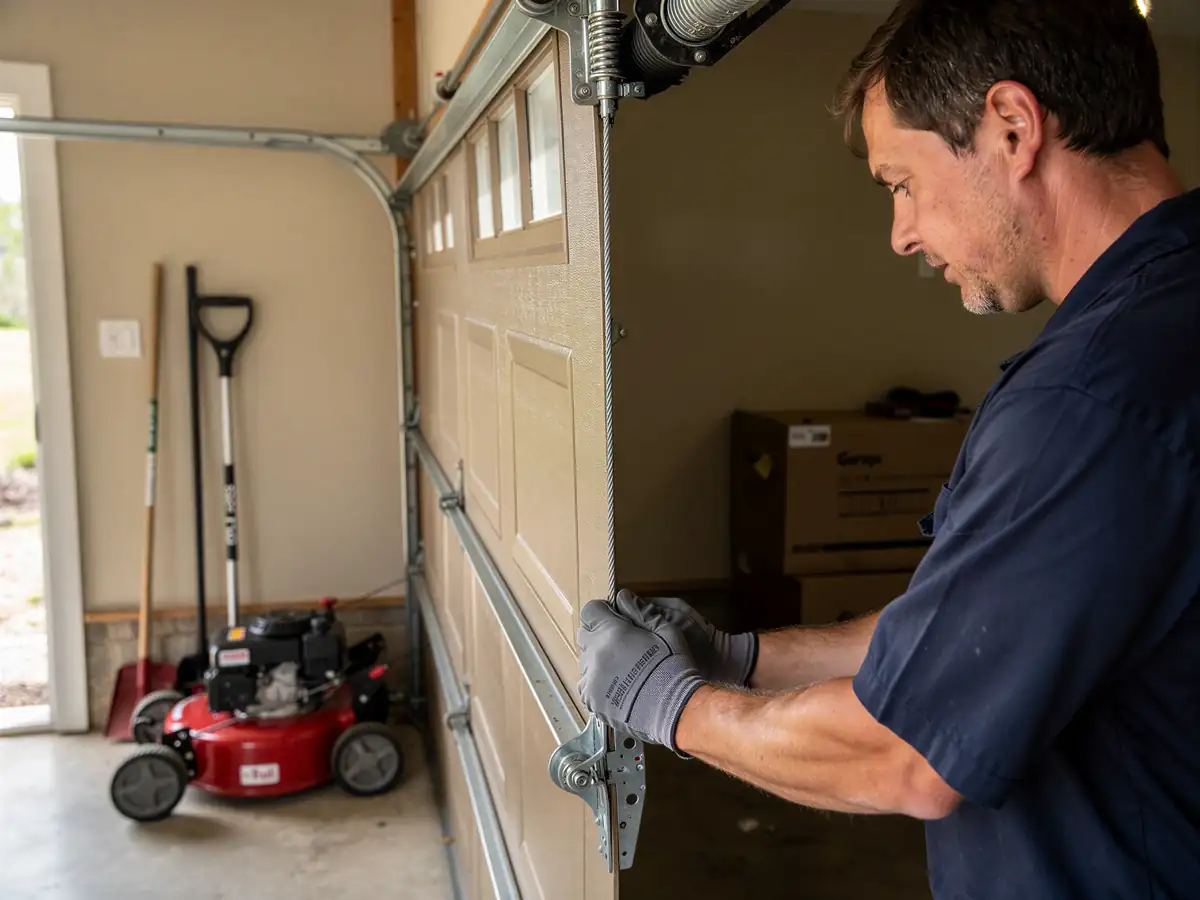
Where it stops being that simple is when the track itself has shifted - and on houses built in the 1952-2013 range, track brackets fastened into original framing have had a long time to work loose from seasonal wood movement. If the new seal won't seat evenly along the full width of the door even after you've centered it, that's a track alignment problem, not a seal problem, and forcing a thicker seal to compensate just strains the opener on every cycle.
It's also not a DIY job once a panel itself has warped
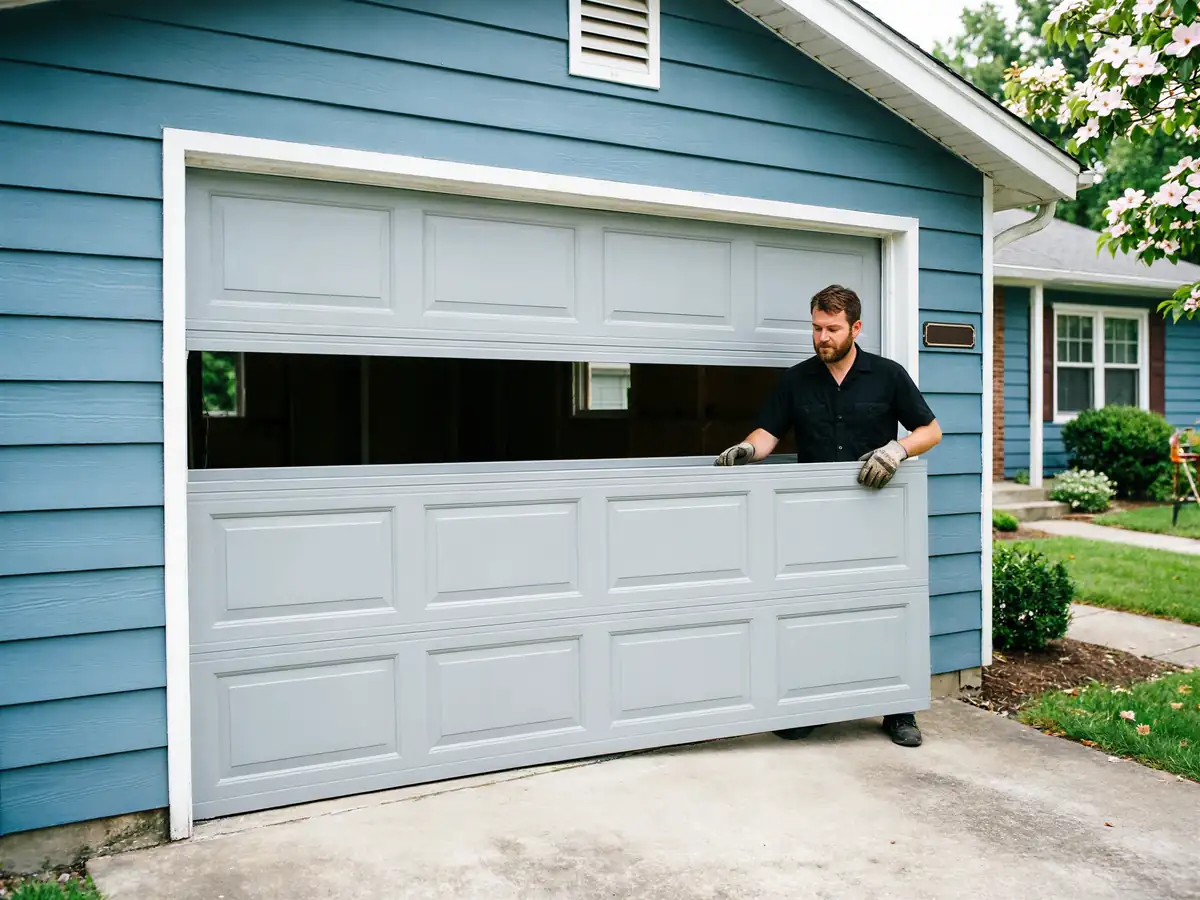
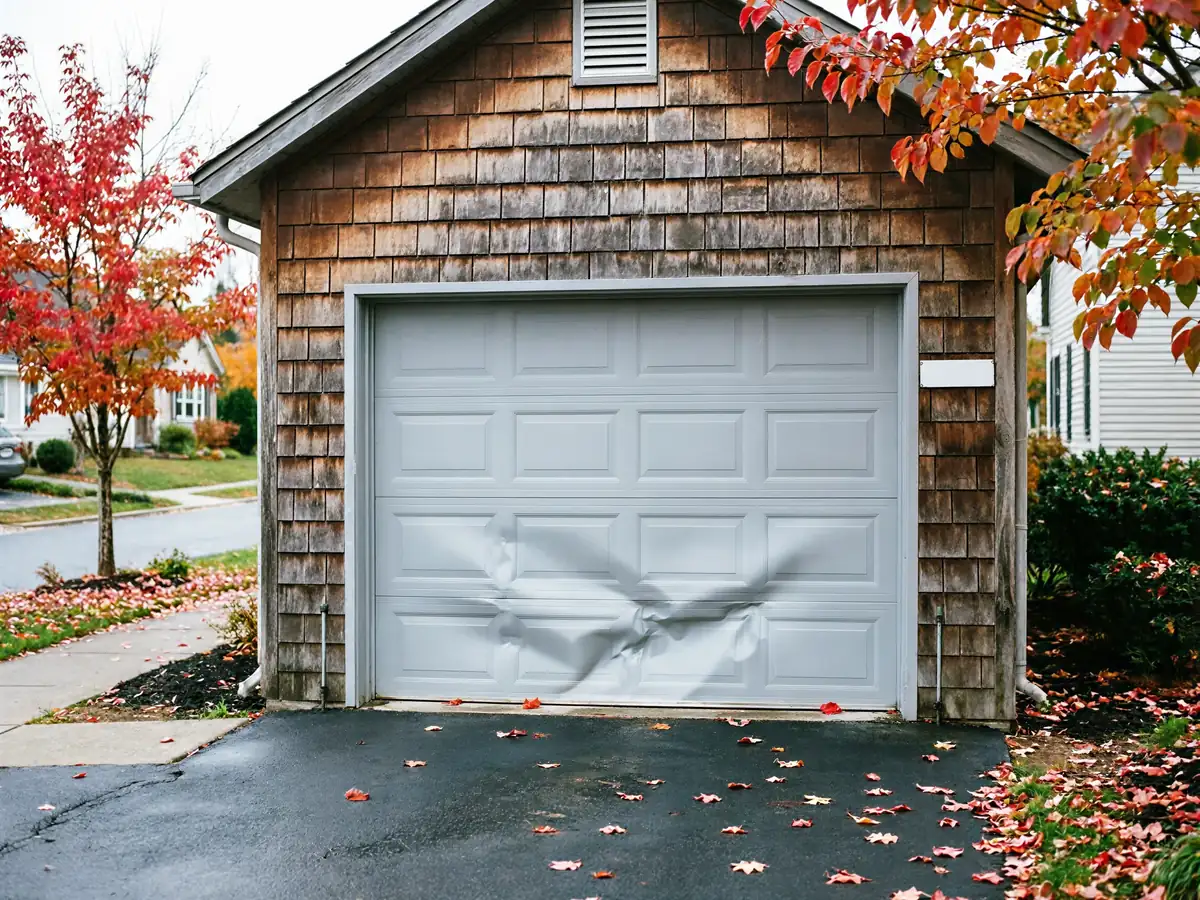
Older steel doors, especially the single-skin sections common on 1960s and 70s builds, can bow slightly over decades, and a bowed panel won't hold a seal tight no matter how many times you replace it. At that point you're not weatherproofing a door, you're trying to weatherproof a shape that isn't flat anymore, and that's a panel or door replacement conversation, not a $20 part.
Honestly, if your door is original to a house built before the 1970s and the bottom section is visibly bowed
A new seal will buy you a season at most. We'll say that upfront rather than sell a seal job that won't hold.
Where People Go Wrong
The most common mistake we see on Shelton's older housing stock is caulking instead of replacing. Caulk along the bottom of a steel door looks like a fix and even stops a draught for a month or two, but it doesn't flex with the door's daily cycling, so it cracks and peels within one cold season - and now you've got old hardened rubber under new caulk failing in two directions.
The second mistake is buying a universal seal kit without measuring the track retainer first. The 1960s-70s steel doors common across this area often used a narrower channel than what's standard in seal kits sold today, and a seal that doesn't fully seat in the retainer will pop loose the first time the door is run in freezing temperatures, right when you need it most.
The third is treating every draught as a seal problem. On a cold-severe climate door, a draught can come from the seal, the astragal, a shifted track, or a panel that's lost its flatness - and swapping the same part twice because it didn't fix things the first time usually means the diagnosis was wrong, not the part.