What Local Conditions Do
Most garages on this side of the Housatonic went up between 1952 and 2013, with the thick of that stock dating to the 1960s and 70s. A lot of those openers were not original to the house. Safety sensors got added or swapped out later, often bolted onto brackets that were never quite plumb to the slab edge, because the garage wasn't built with sensor eyes in mind in the first place.
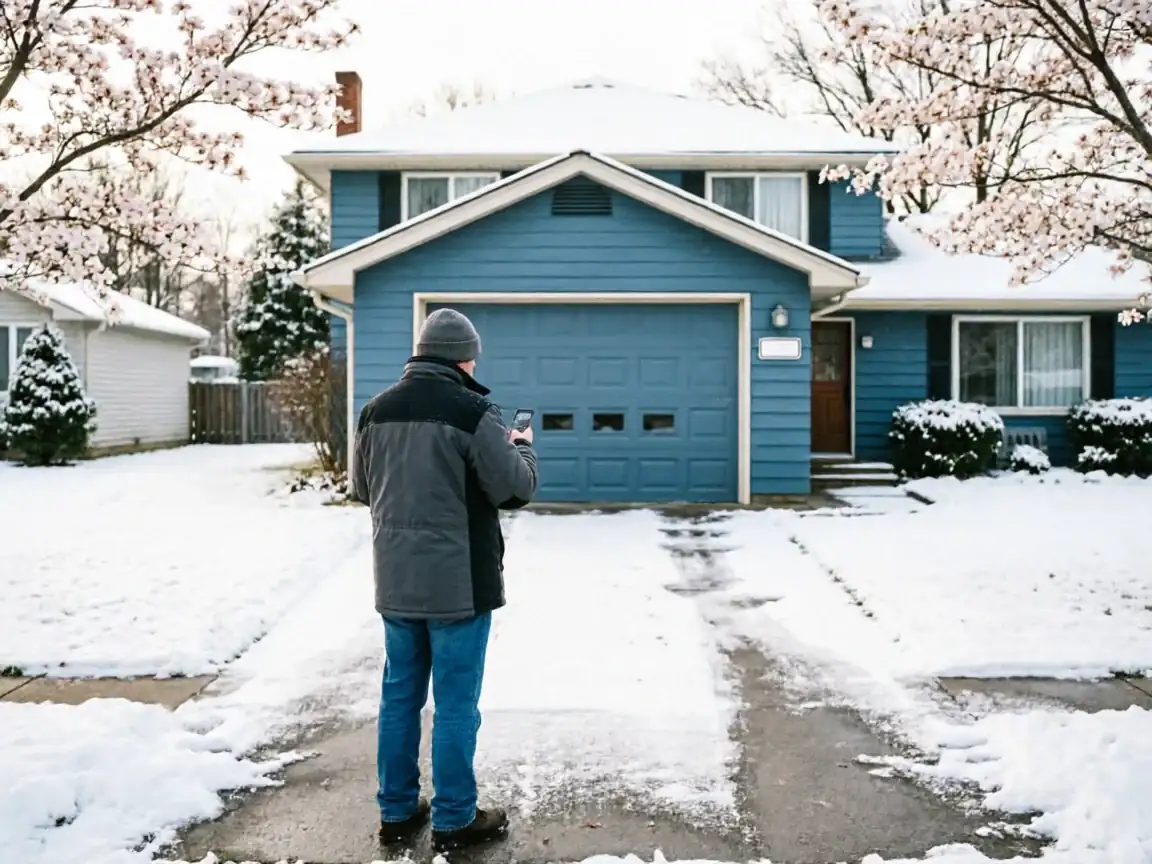
Shelton sits in a cold, severe climate band, and that matters more than people think. The concrete slab under your door moves. Freeze-thaw cycles through a Connecticut winter push and settle the slab a little every year, and that slow heave is enough to tip a sensor eyebrow a few degrees off its mate across the opening. You won't see it happen. You'll just notice the door starts reversing for no reason, or refuses to close at all some mornings and works fine by afternoon once the slab warms a touch.
The Problem
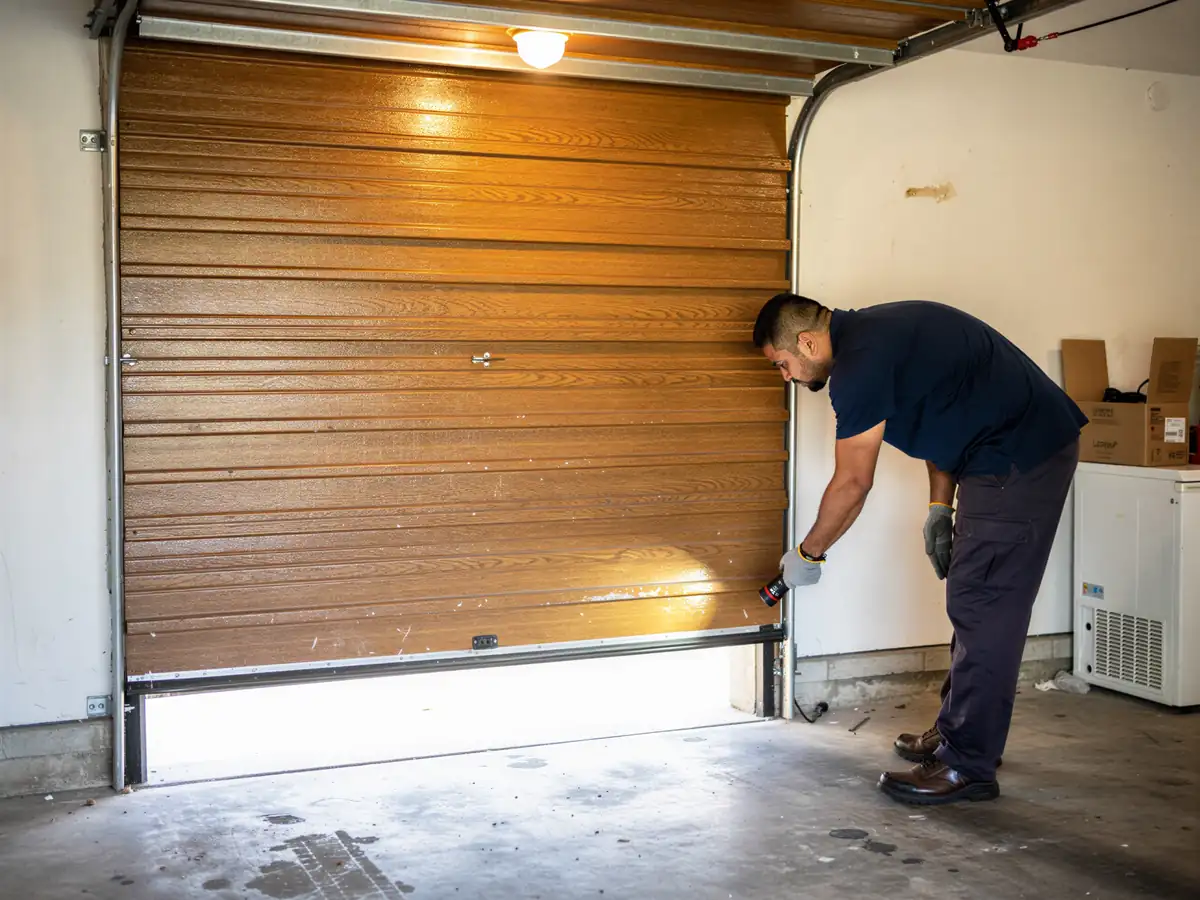
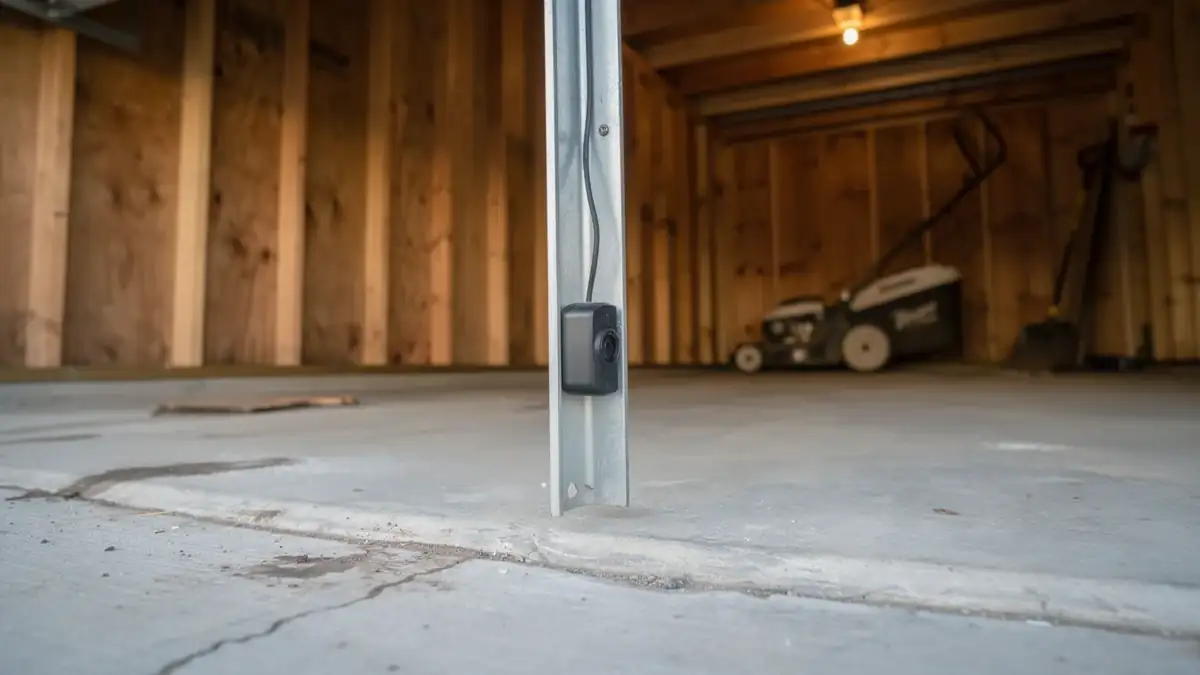
The two sensors have to aim at each other within a narrow tolerance, low to the ground, six inches up on each side of the track. On a house from the 1960s or 70s, those brackets are often held with a single sheet-metal screw into wood that's dried and shrunk over fifty-plus years. Add a slab that heaves with the frost line each winter, and the geometry between the two eyes changes season to season even if nobody ever touches them.
In homes where the opener itself was replaced but the original mounting points were reused, you get an extra layer: the new sensor housing doesn't match the old bracket angle, so it was never truly aligned to begin with. It just happened to work the day it was installed, in whatever position it landed. Cold tightens plastic housings and shifts wire runs too, which is why a lot of these complaints cluster in December through February rather than July.
When It Stops Being a DIY Job
If the LED on one sensor blinks instead of holding steady, that's usually alignment
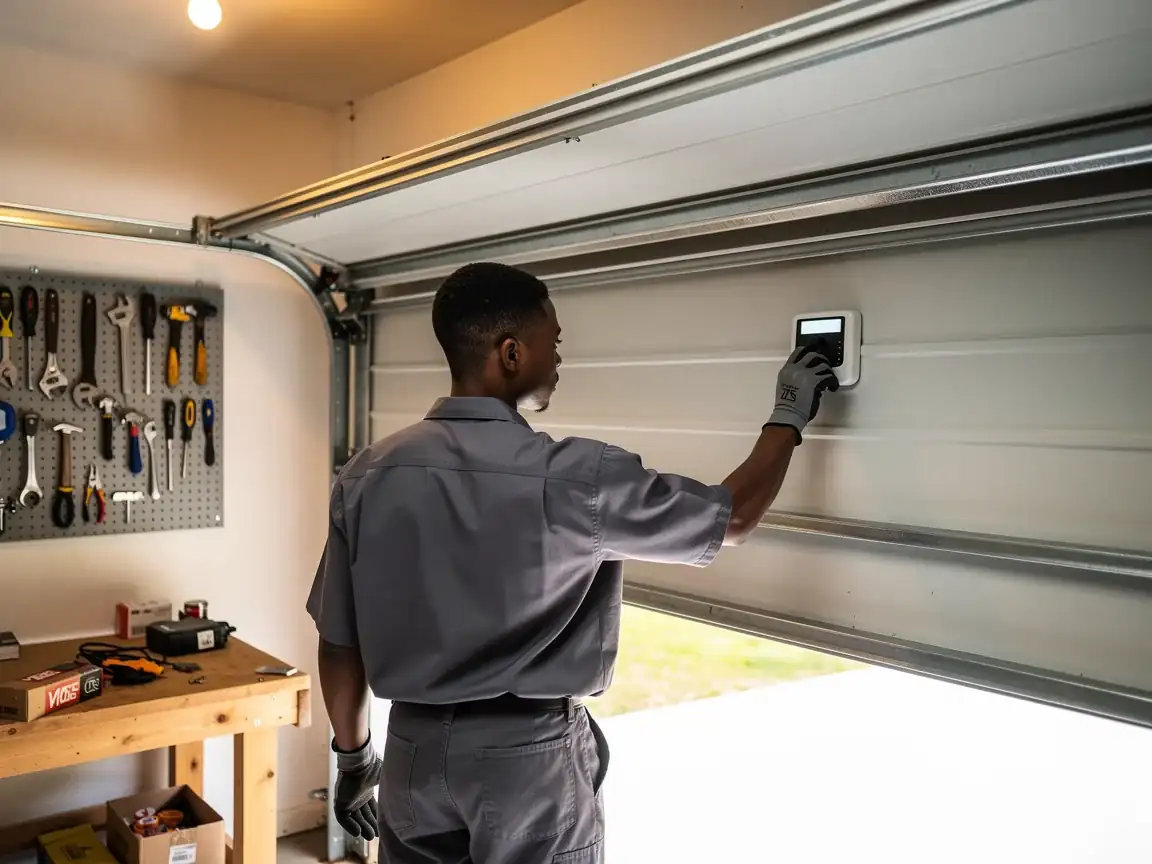
And a homeowner can often fix it with a level and a few minutes - loosen the wing nut, nudge the bracket, retest. That's a fair DIY job on most of the housing stock here.
It stops being a DIY job when the bracket itself has pulled loose from the framing, when the wire has been chewed, pinched under the track, or nicked during an old renovation, or when the door reverses even with both lights solid green
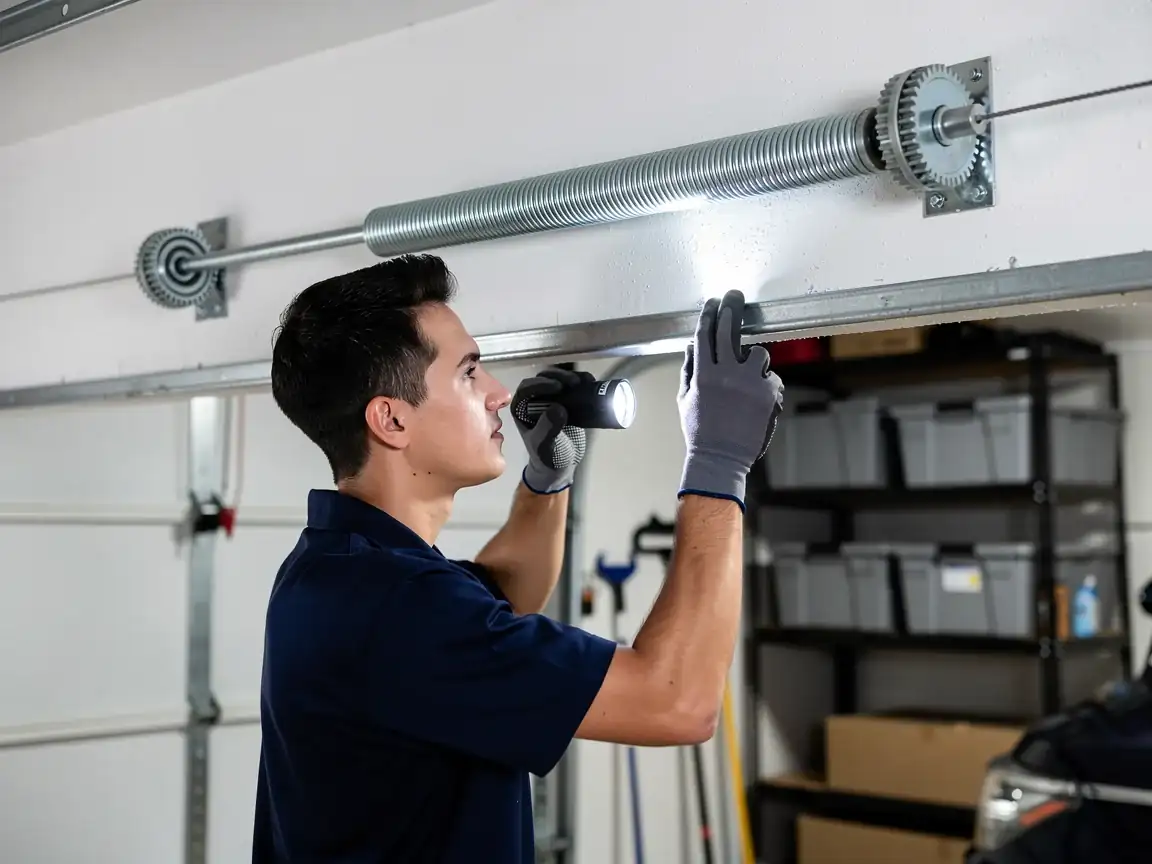
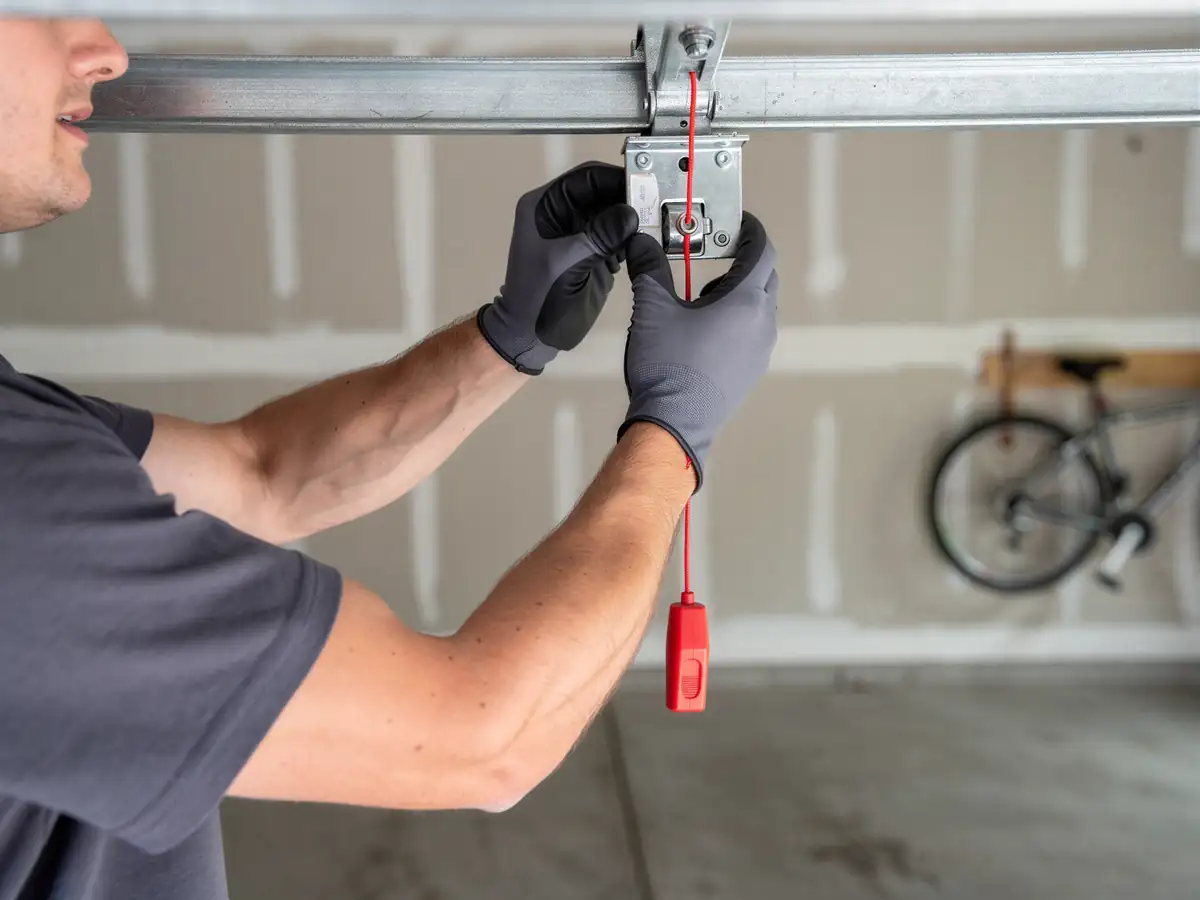
At that point you're not aligning anything, you're troubleshooting a wiring fault or a cracked circuit board in the opener's logic board, and guessing at that without a meter wastes more time than it saves. We don't recommend homeowners pull an opener logic board apart to chase an intermittent fault - that's a call, not a weekend project.
Where People Go Wrong
The most common mistake we see in this area is treating a one-time realignment as a permanent fix on a house where the slab is still moving. People nudge the sensor, it works for a month, and they assume the problem's solved rather than seasonal. On the 1960s and 70s stock that makes up most of Shelton's garages, that cycle repeats every winter unless the brackets get remounted to something more rigid than the original screw-and-wood-trim setup.
The other mistake is swapping the whole sensor pair when the real issue is a loose or corroded wire connection at the terminal - cheaper part, same symptom. And some owners assume a reversing door means a bad sensor when it's actually a slab-heave problem pushing the whole bracket out of plane, which no amount of sensor replacement will solve. Check the simple stuff first: wipe the lenses, check for a loose screw, confirm nothing's blocking the beam before assuming electronics have failed.