Serving Shelton, CT & nearby
(475) 203-3827
Shelton, CT

Why Cold Snaps Break Garage Door Springs in Shelton Houses

Shelton homes built mostly 1952-2013 face COLD severe winters that snap aging torsion springs. Here's why this town's housing stock makes cold-weather breaks so common.

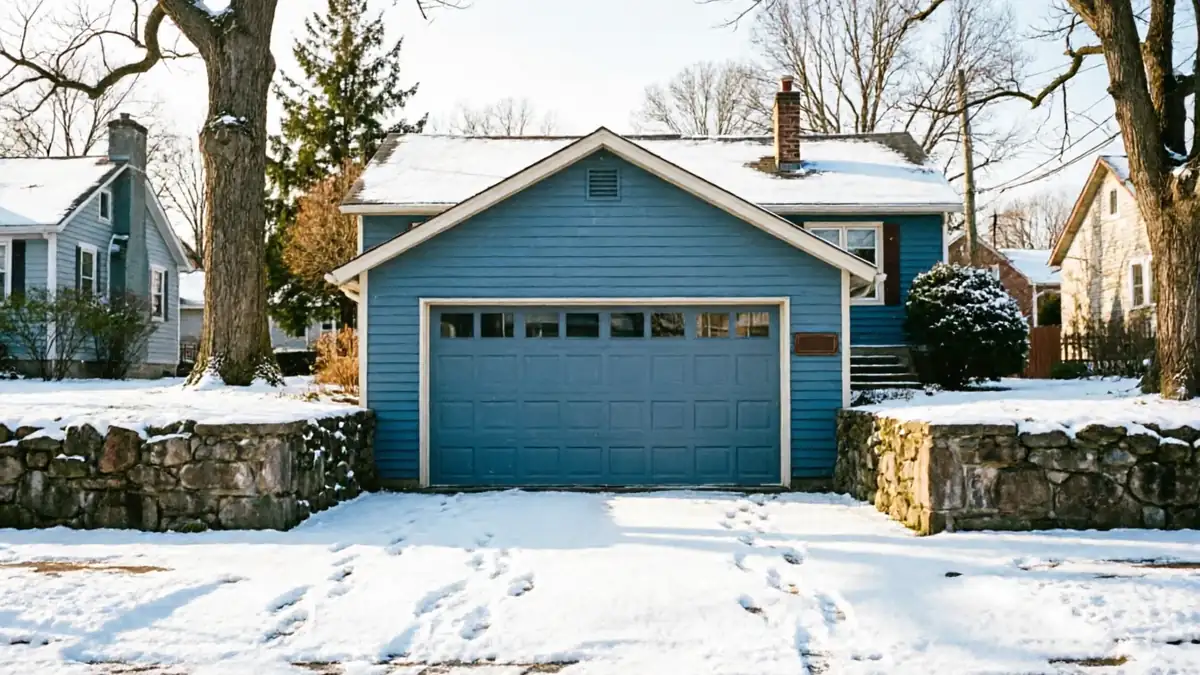
A blue house with a blue garage door and a snow-covered driveway.

What Local Conditions Do

Shelton's housing went up mostly between 1952 and 2013, with the median house dating to around 1972. That means a lot of the garages in this town still have the original torsion spring setup from that era, or a replacement installed decades ago using the same sizing. These springs are steel, and steel behaves differently depending on temperature. In a COLD severe climate band, which is what this region sits in, steel loses some of its flexibility as it gets colder. A spring that's already fifty-plus years into its duty cycle, wound for a door built to 1970s specs, doesn't have much give left when the temperature drops hard overnight. The spring doesn't know it's cold outside. It just knows it's being asked to do the same job it's done ten thousand times before, except now the metal is stiffer and the tolerance for one more hard pull is smaller. That's the mechanism. It's not bad luck, it's metal fatigue meeting a climate that stresses metal.

The Problem

Across the areas that make up this service territory - from Derby three miles off to Trumbull, Ansonia, and the dozens of named neighborhoods and towns within fifteen or so miles - the housing wave of the 1960s and 70s left a lot of garages with the same bones. Single torsion spring on a double door, sized for a lighter door than what's sometimes hanging there now after an insulated panel upgrade. When overnight temperatures drop hard in this COLD severe zone, a spring that was already fatigued from fifty-plus years of cycles is the one that lets go first. It usually happens in the morning, first lift of the day, cold garage, cold spring, and a loud bang. The door either won't move or drops fast. That's the spring, not the opener, even though the opener often gets blamed first since it's the part people hear straining.

When It Stops Being a DIY Job

A broken torsion spring on a double door is not a job to try with a ladder and a YouTube video, cold weather or not. These springs hold enough stored tension to cause a serious injury, and cold steel is more likely to snap unevenly than bend. If the spring broke clean, that's one thing to assess. If the door is sagging unevenly, if a cable has come off the drum, or if you hear a grinding sound from the opener trying to lift a door it can't move, stop there. A door built to the specs common in houses put up around 1972 wasn't engineered for the opener loads homeowners add today, and a mismatched replacement spring under a mismatched opener motor is how a second failure happens within a year. This is also where I'll be honest about a limit: if the torsion tube or the end bearing plate has cracked from age, that's not a same-day fix. Parts for older setups sometimes take longer to source than the spring itself.

Where People Go Wrong

The most common mistake isn't ignoring the door, it's treating the fix as a one-for-one spring swap without checking what's around it. A spring sized for the original 1960s or 70s door won't necessarily match a heavier insulated replacement panel installed later, and that mismatch is exactly what causes a second break the next time the temperature drops. The other mistake is waiting. Once a spring has gone in cold weather, the opposite spring on a double-spring setup is usually close behind, since it's seen the same number of cycles and the same winters. Replacing both at once costs less in total than two separate visits, and it means the door isn't left unbalanced on one side while the other spring is still original equipment from decades ago.
How it works

From “it’s stuck” to “it’s fixed”

A quick, honest process - no guesswork and no surprises, start to finish.

  1. 1
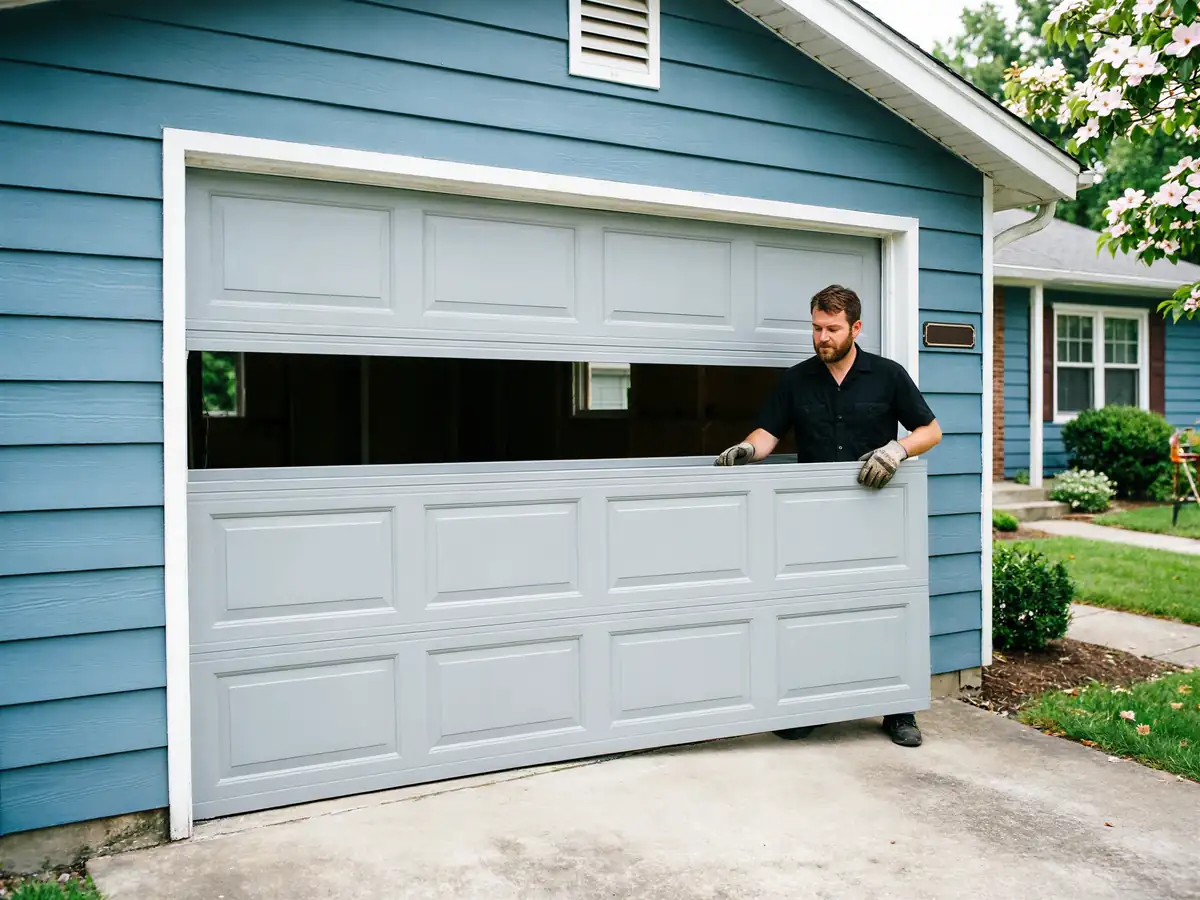
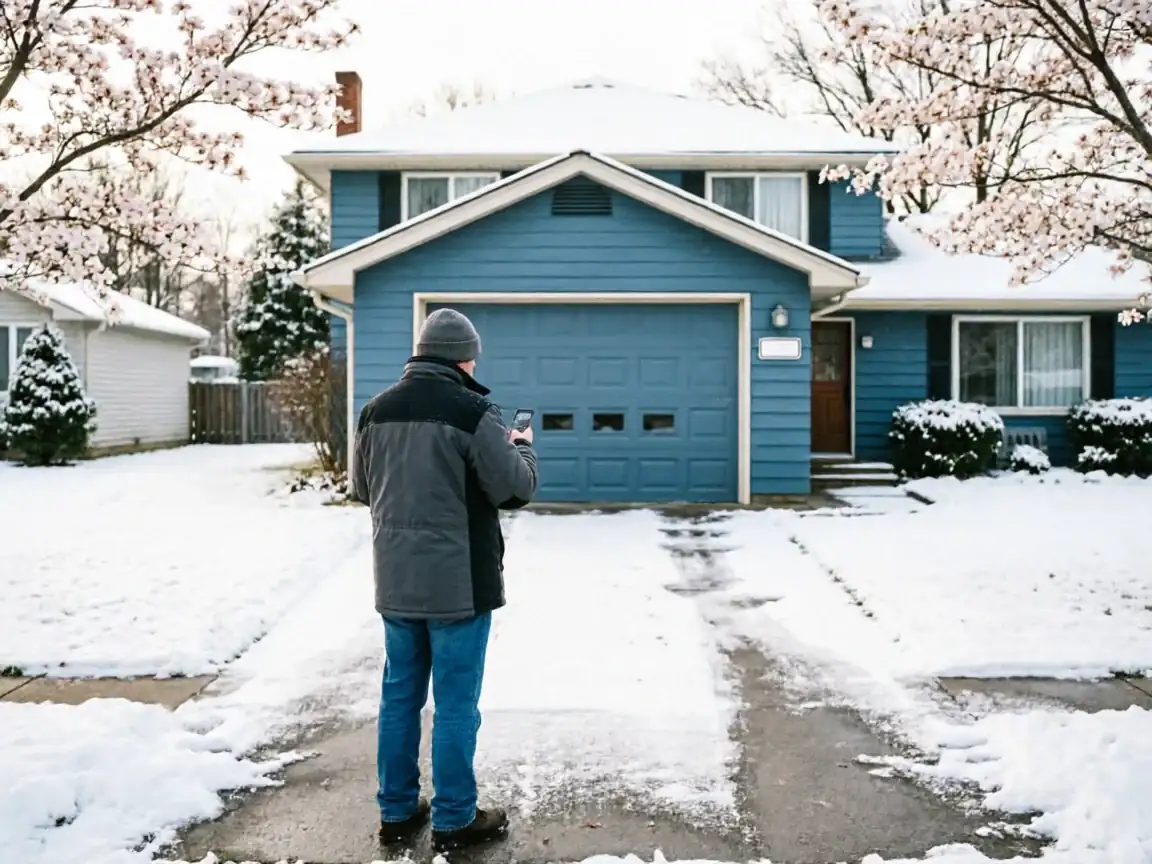
    A technician stands in a snowy driveway, looking at a blue house with a garage.

    Tell us what’s wrong

    Describe the symptom - won’t open, loud bang, opener runs but the door won’t move.

  2. 2
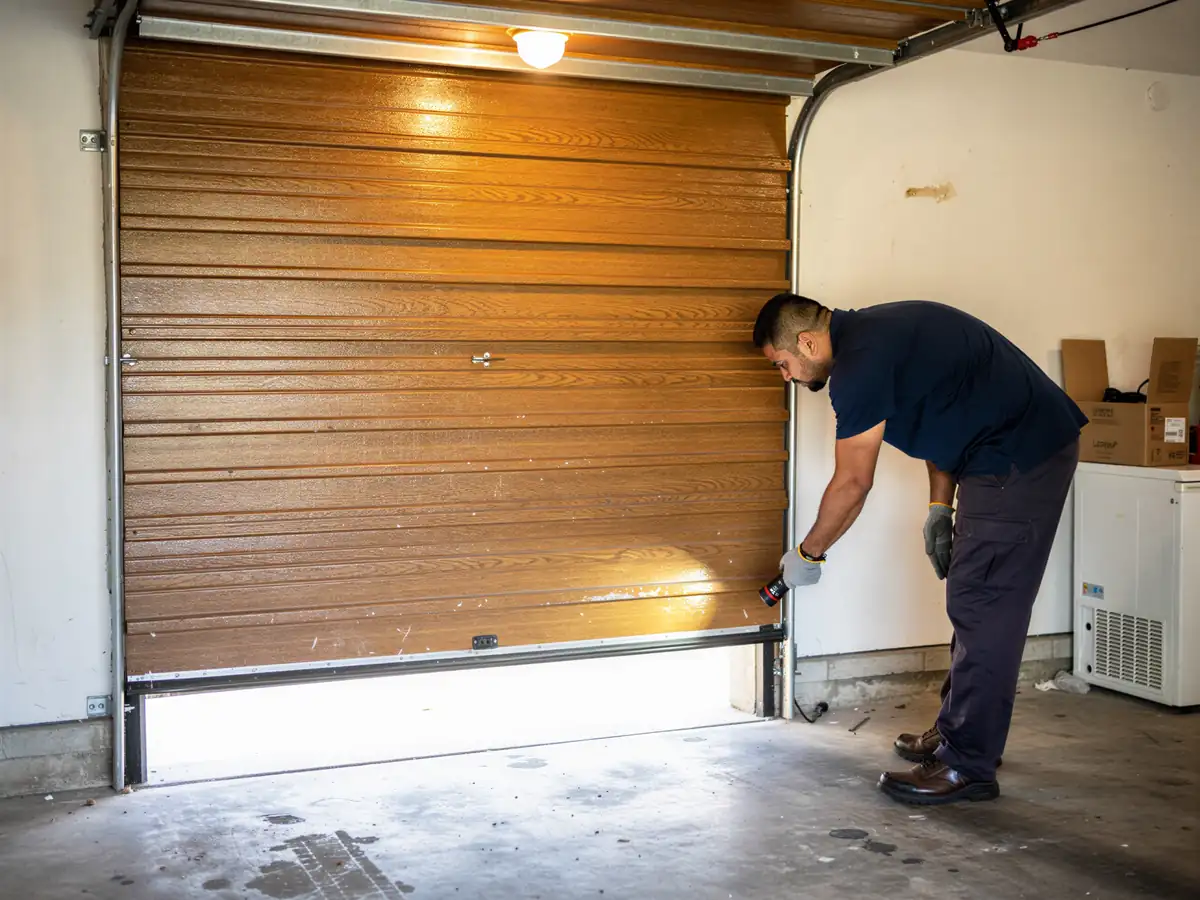
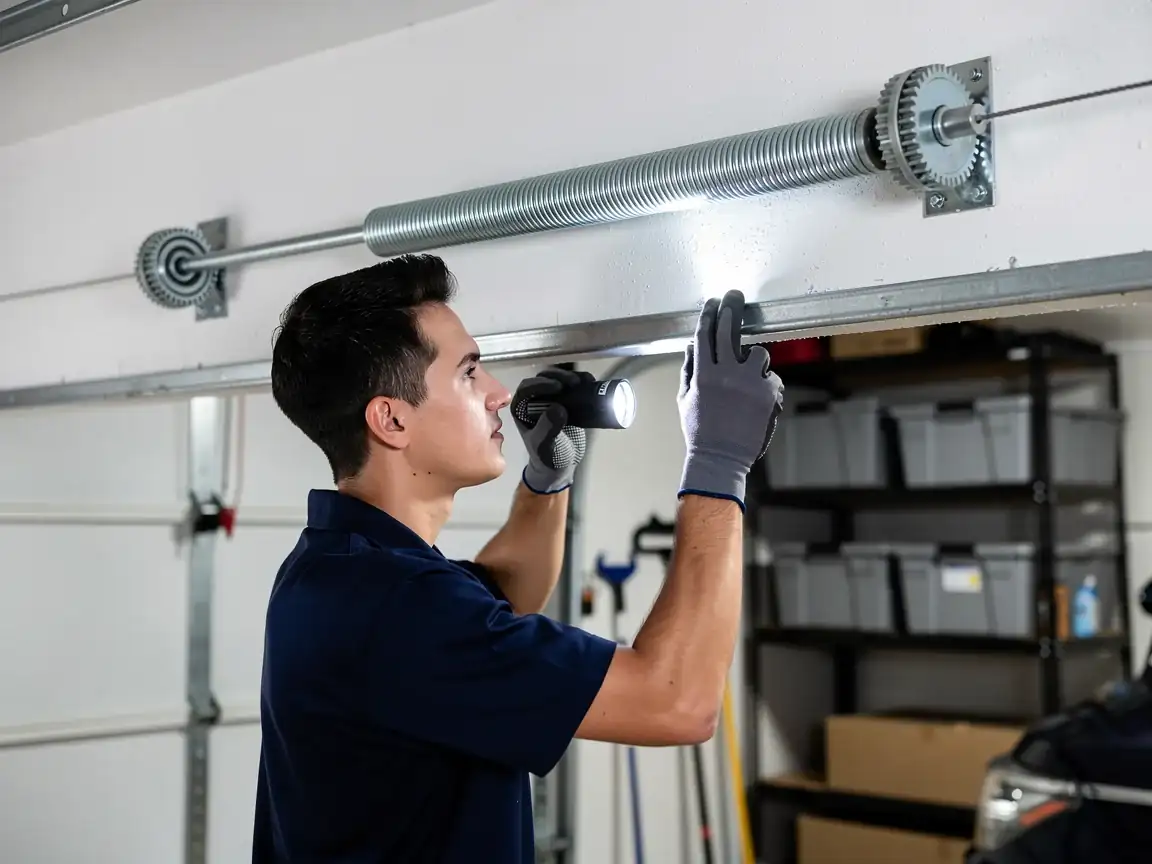
    A technician in a blue shirt and gloves inspects a garage door track with a flashlight.

    On-site diagnosis

    A technician tests the door under power and by hand and finds what actually failed.

  3. 3
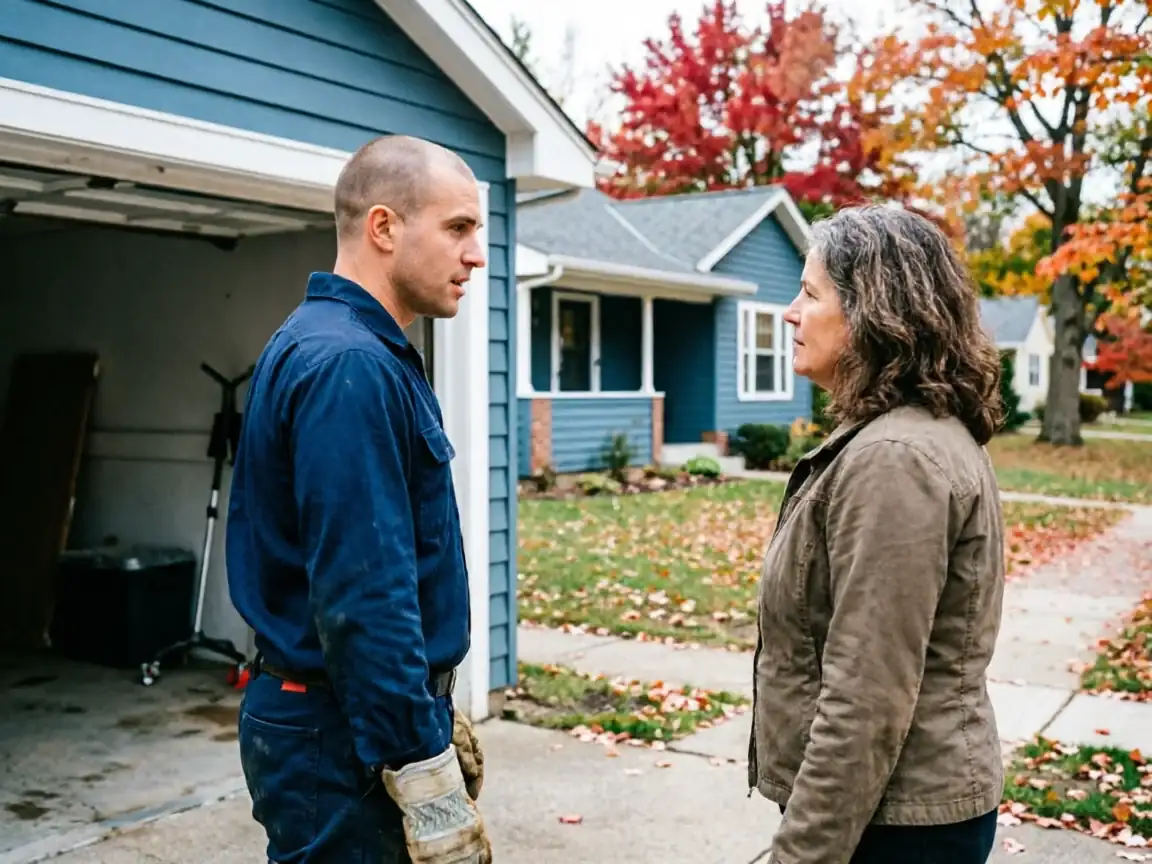
    A technician in a blue uniform talks to a woman in a brown jacket.

    Clear, up-front plan

    You get the fix that’s needed and what drives the cost - before any work starts.

  4. 4
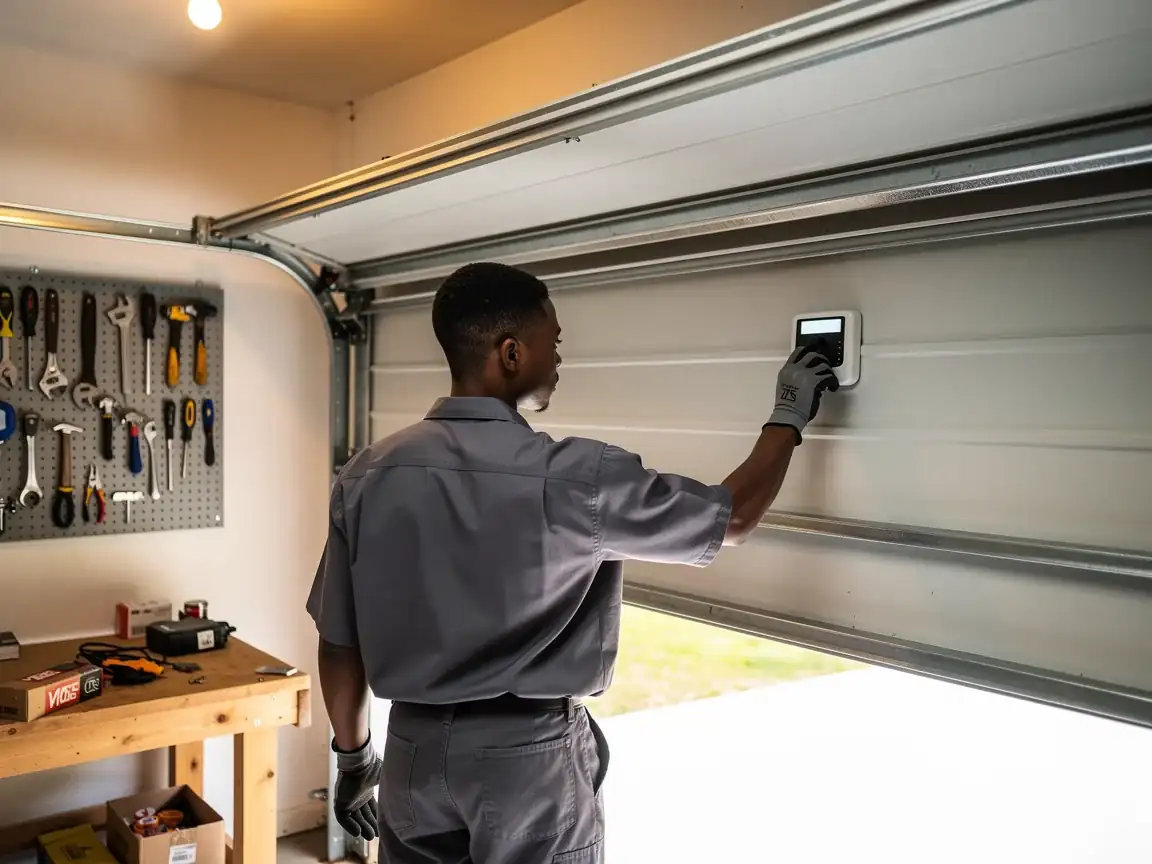
    A technician in a gray uniform adjusts a white control panel on a garage door.

    Repaired & tested

    The repair is done, the door is set true and tested, and the work area left clean.

Not sure which repair your door needs in Shelton, CT? Describe what it’s doing - every job starts with a diagnosis.

How we work

What to expect

Diagnosis firstEvery visit starts by finding what actually failed - not a pre-written parts list.
The right part for the doorSprings and openers matched to the door’s weight and age, so the fix holds up.
Straight answersWhen a repair makes more sense than a replacement - or the reverse - you hear it plainly.
Clean, careful workTension released safely, hardware set true, the door tested under power before we leave.
What we do

Garage Door Services

Repair and installation work for Shelton homes and businesses.

Questions

Frequently asked

Straight answers about garage door repair in Shelton. Still unsure? Ask us directly.

Why did my garage door spring break on a cold morning and not during the summer?

Steel springs get stiffer as temperature drops, and a spring with decades of cycles behind it has less flexibility left to absorb that change. The cold doesn't cause the failure by itself, but it's often the final stress on a spring that was already near the end of its life from age and daily use.

My house was built in the 1960s - does that matter for my garage door spring?

It can. A lot of Shelton-area houses from that building wave still have original torsion hardware sized for the lighter doors common at the time. If a heavier insulated door was installed later without resizing the spring, that mismatch adds extra strain, especially once cold weather stiffens the steel.

Should I replace one spring or both if only one broke?

If both springs are original or close in age, which is common on older doors here, replacing both at once usually makes sense. They've carried the same cycles and the same winters, so the second one is often close to failing too, and doing both in one visit avoids a repeat call.

Is a cracked bearing plate or torsion tube a quick fix?

Not always. Spring replacement is usually same-day, but if the torsion tube or end bearing plate has cracked from age or corrosion, parts for older hardware can take longer to source. It's worth getting it diagnosed rather than assuming it's a simple spring swap.

Ready to get your garage door sorted?

Request a QuoteCall