Parts We Carry
Seymour's housing stock centers on 1972, the same mid-century vintage as the rest of the area we cover out of Shelton. What's different here is the wallet behind the door: median household income in Seymour runs $103,682, well under the $130,180 average across the 215,330 households in our full coverage footprint. That gap matters for panel work, because it's usually the difference between replacing one damaged section and replacing the whole door.
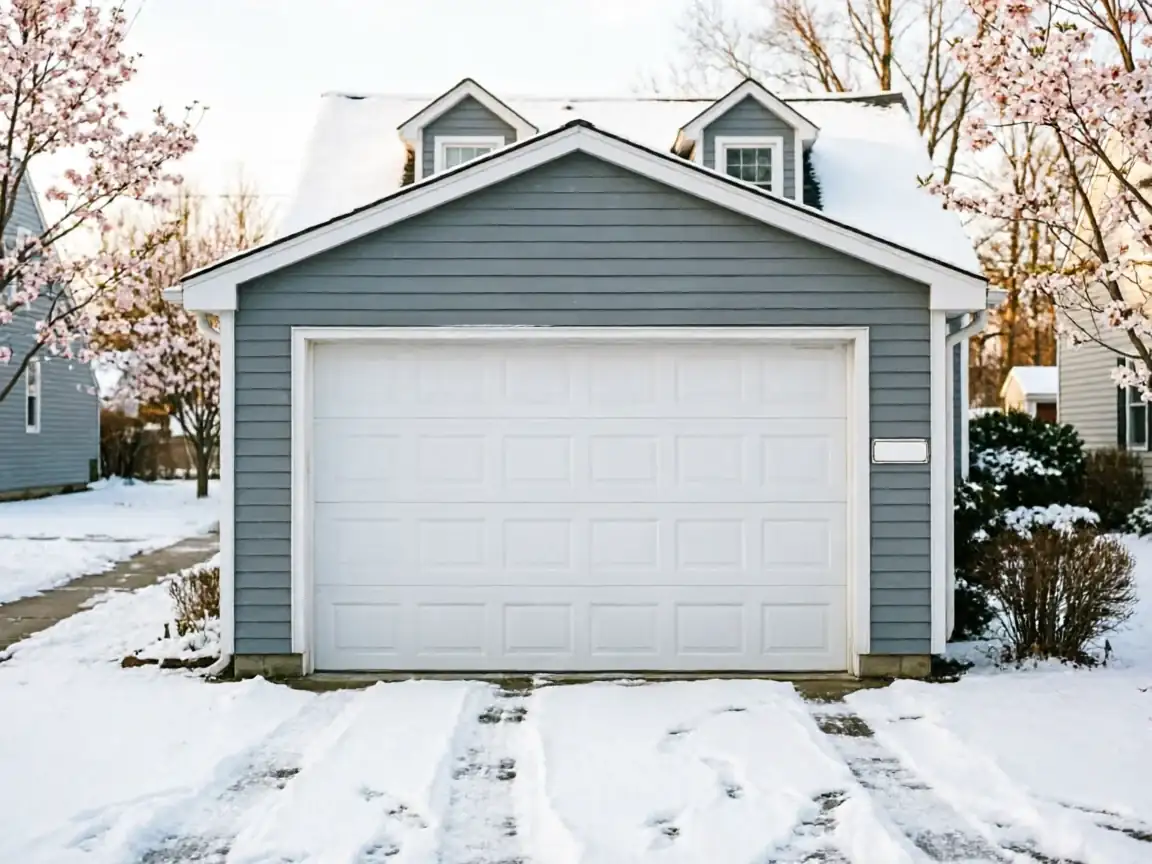
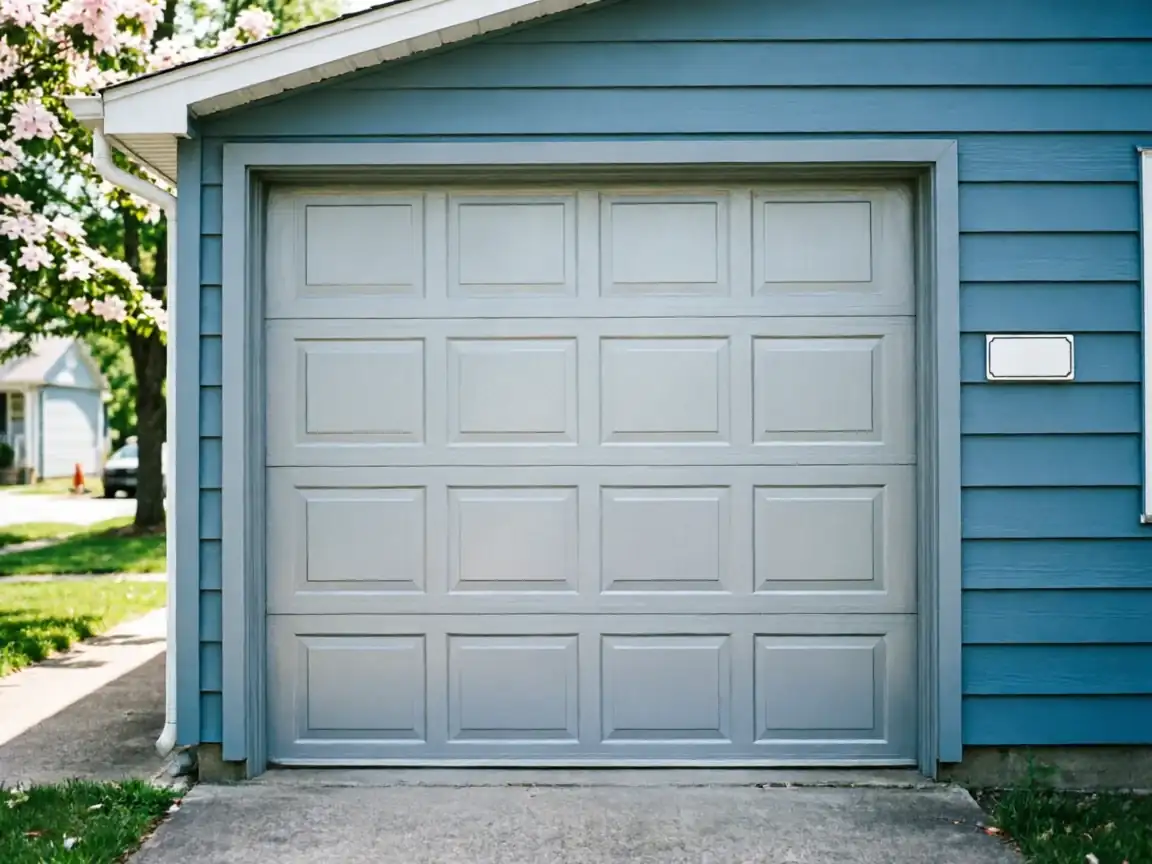
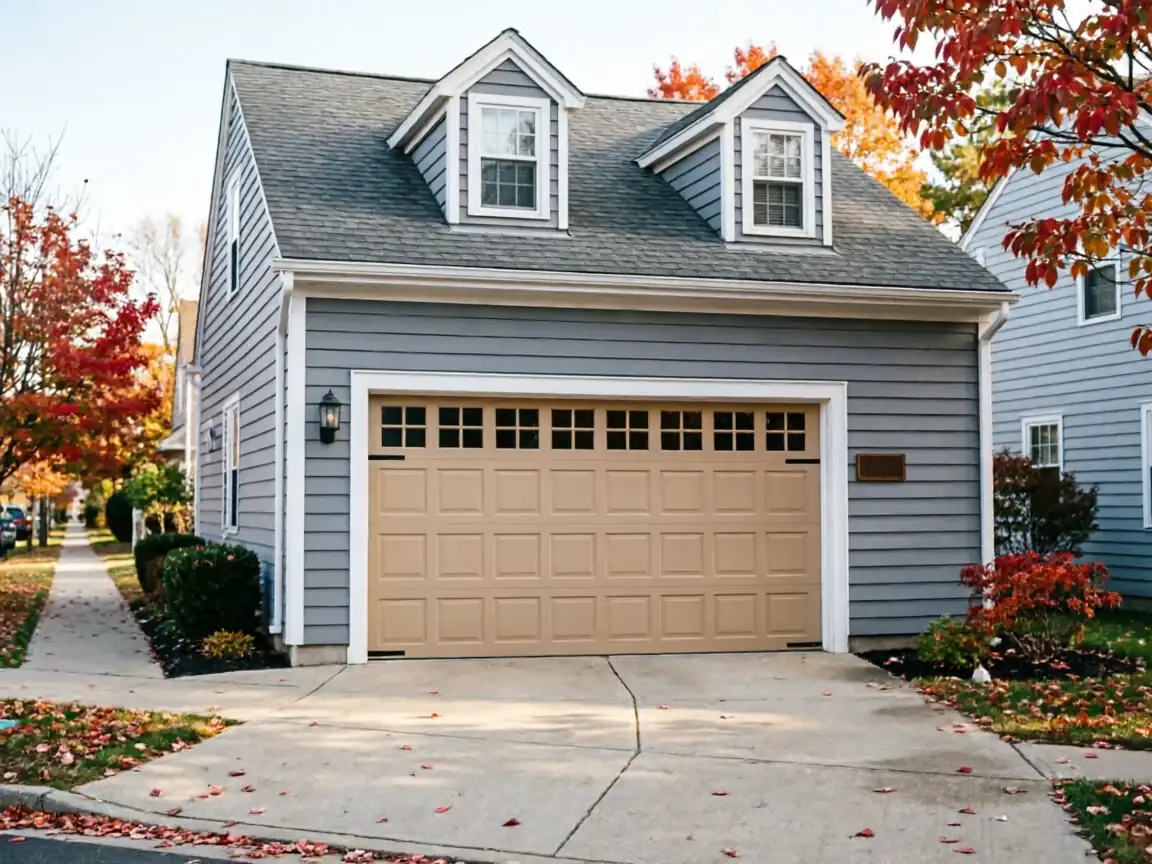
We stock steel sectional panels in the gauges and insulation values that match what went up here between 1952 and 2013, with most of that building happening in the 1960s and 70s boom that shaped 45 named areas across the region, Seymour included. If your door is a standard raised-panel steel sectional from that era, we almost always have a matching or close-match panel on the truck, or can get one fast. Wood doors, custom clad doors, or anything discontinued take longer to source, and we'll tell you that up front instead of guessing at a timeline.
We don't keep a depot in Seymour. Every job rolls from our Shelton base, 6 miles out, with the panel stock loaded before we leave.
What You Pay
We don't publish a flat number for panel replacement because the job itself varies more than people expect, and we'd rather tell you that than make up a figure. What we can tell you is how the math tends to run in Seymour specifically: with median household income here at $103,682, a lot of homeowners we talk to want the repair scoped tight, one bad panel swapped, not a full door replaced, if the rest of the sections and the track are sound.
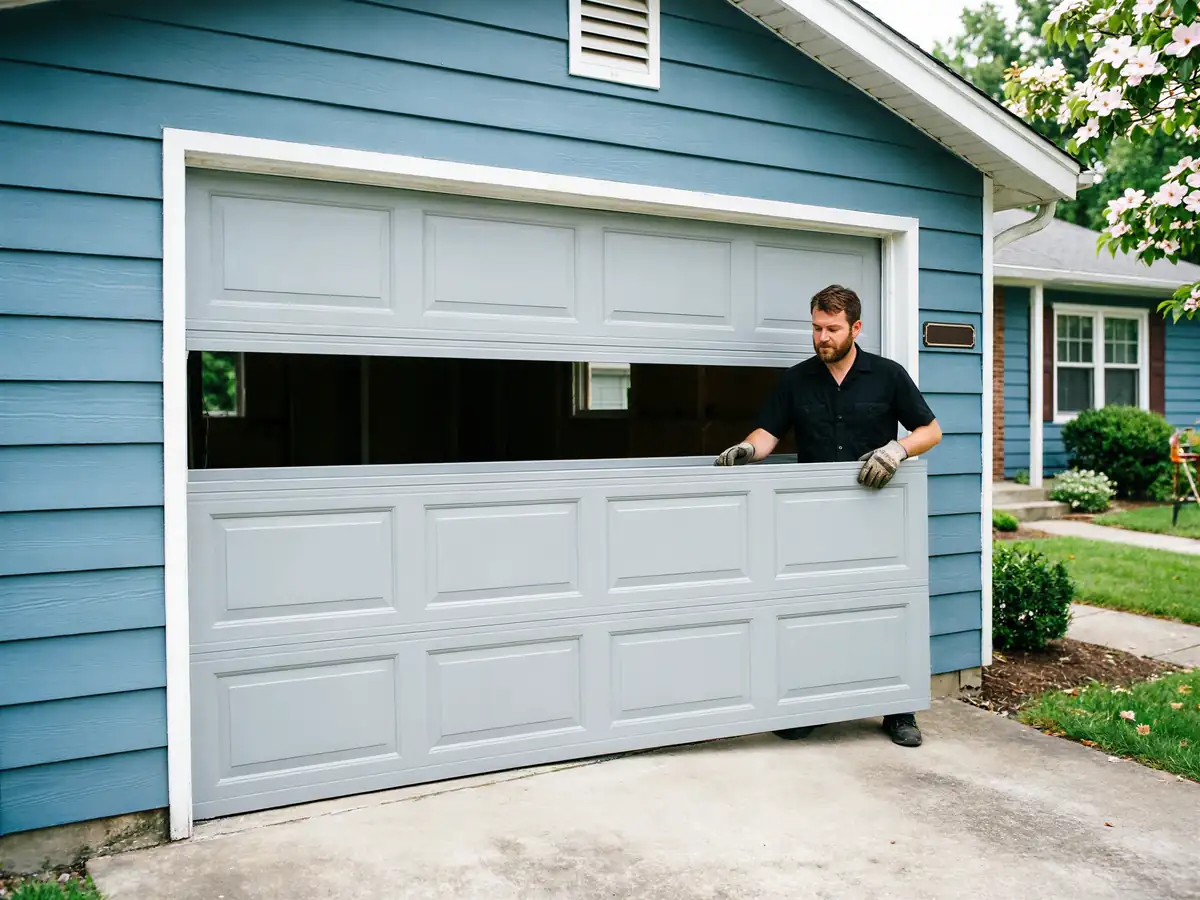
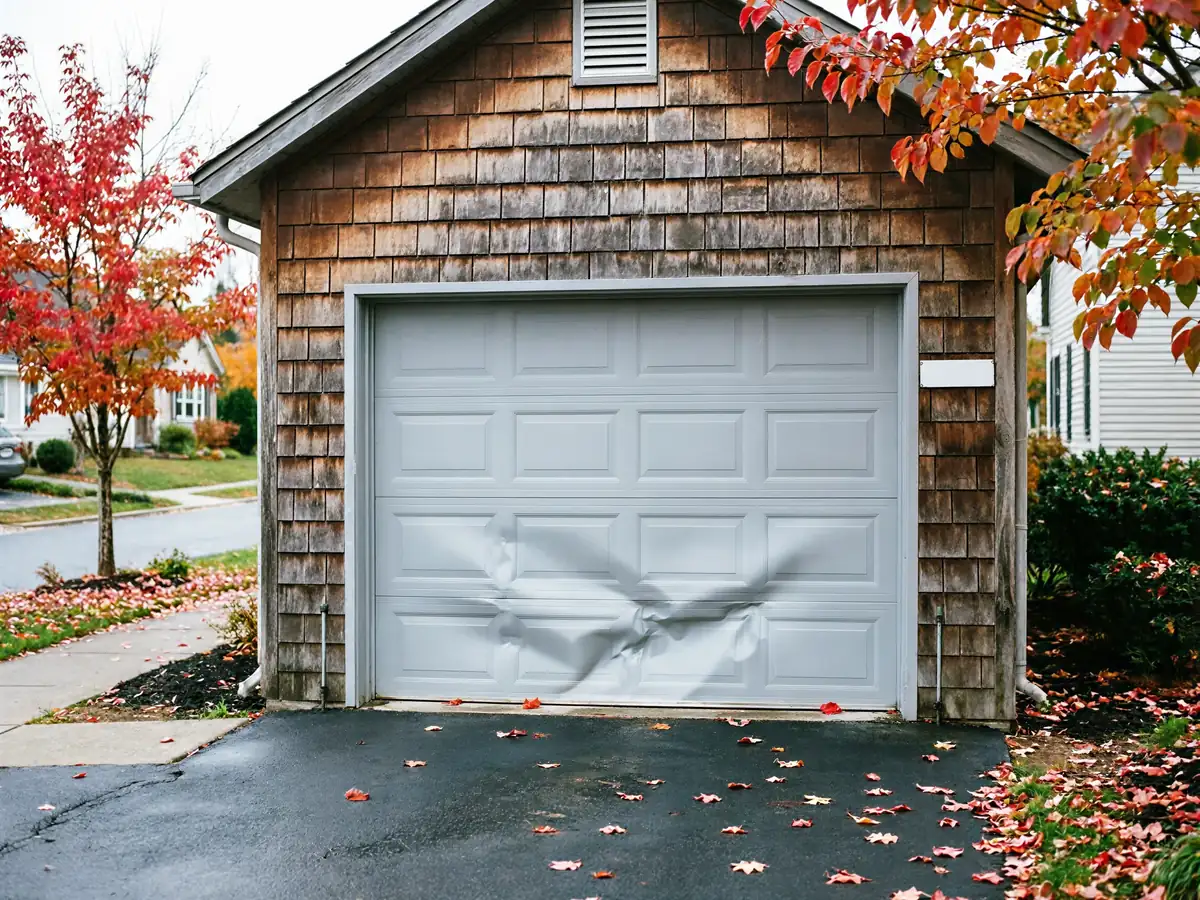
That's a reasonable ask on a door from this era. A single steel panel on a sectional door built in the 1960s-70s mold, which covers most of what's standing in Seymour, is usually the cheaper fix than a full door when only one section took the hit, say from a car backing into it or hail denting an upper panel.
Where it gets more expensive is color and insulation matching on an older door, or a panel style that's been phased out since the house was built. We'll quote the job after we see the door, not before, because panel pricing swings too much on model and condition to guess over the phone.
How Long It Takes
Because we travel from Shelton, 6 miles to reach Seymour, the drive isn't the bottleneck
The part is. If your door takes a common steel sectional panel from the mid-century stock that dominates this area, we typically have it on the truck already and the swap itself runs under an hour once we're on site.
- 6 miles
What slows things down is anything outside that common profile
A panel style no longer manufactured, a custom color match, or hardware specific to an older build that's been replaced twice over by code updates since. On those jobs we're waiting on a supplier, not standing in your driveway, and we'll give you a straight answer on lead time once we've identified the exact panel rather than a vague promise.
Winters here sit in the severe cold band for this region
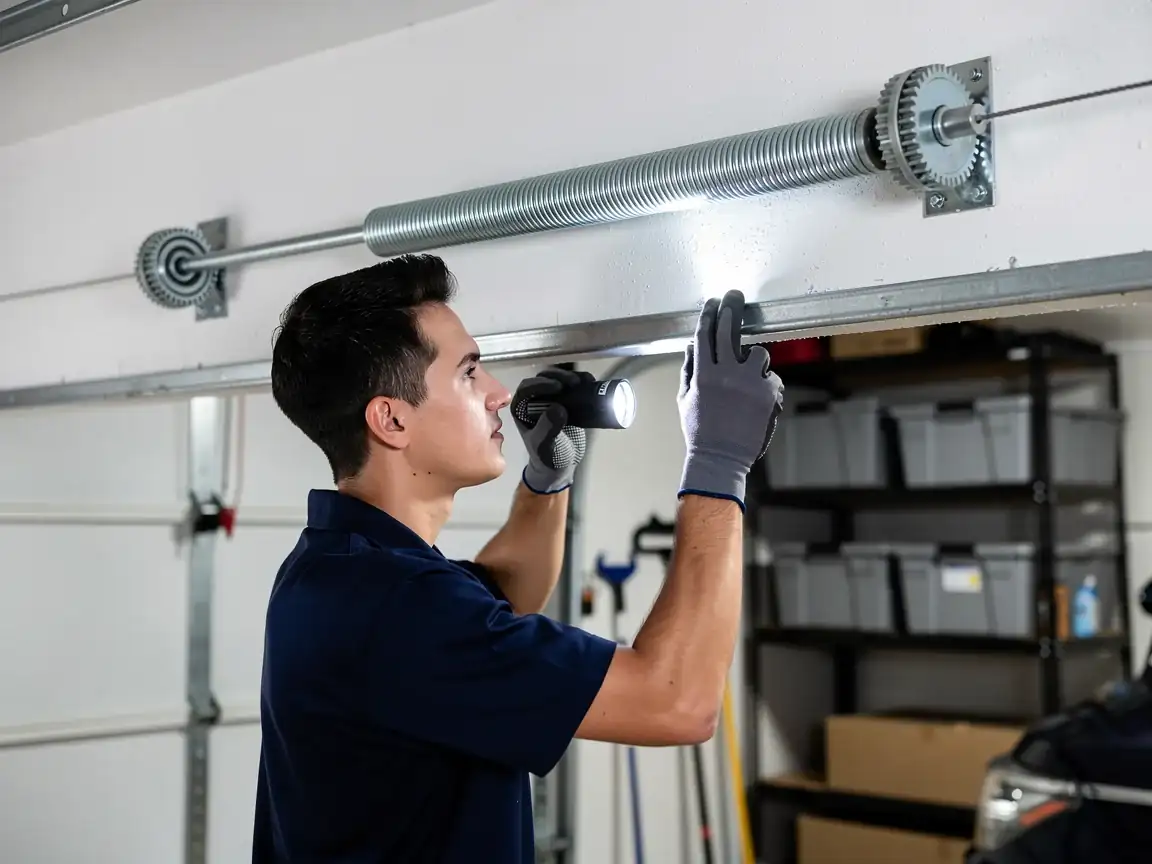
And that affects scheduling more than the job itself: ice and hard freezes can make torsion springs and tracks stiffer to work with safely, so a cold-weather job sometimes runs a little longer than the same repair in a mild month. We'd rather take the extra time than rush a spring under tension in freezing weather.
What the Fix Involves
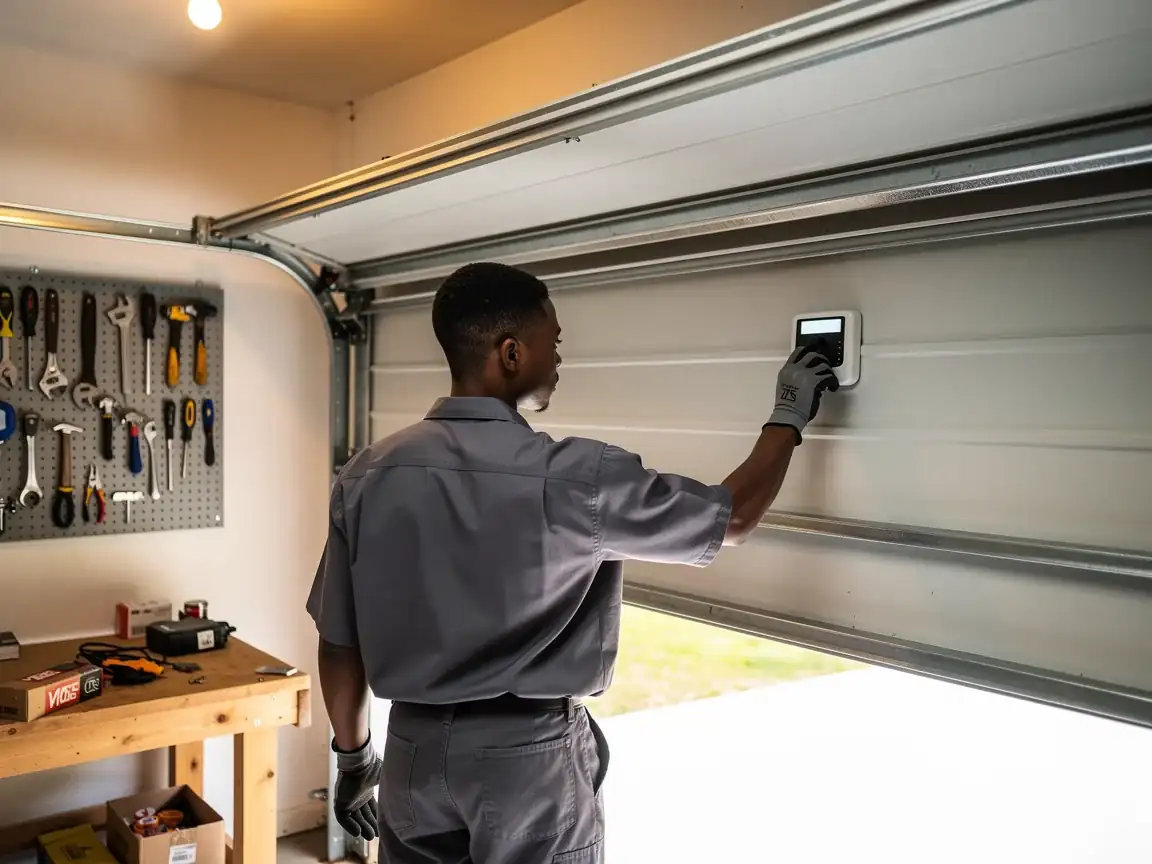
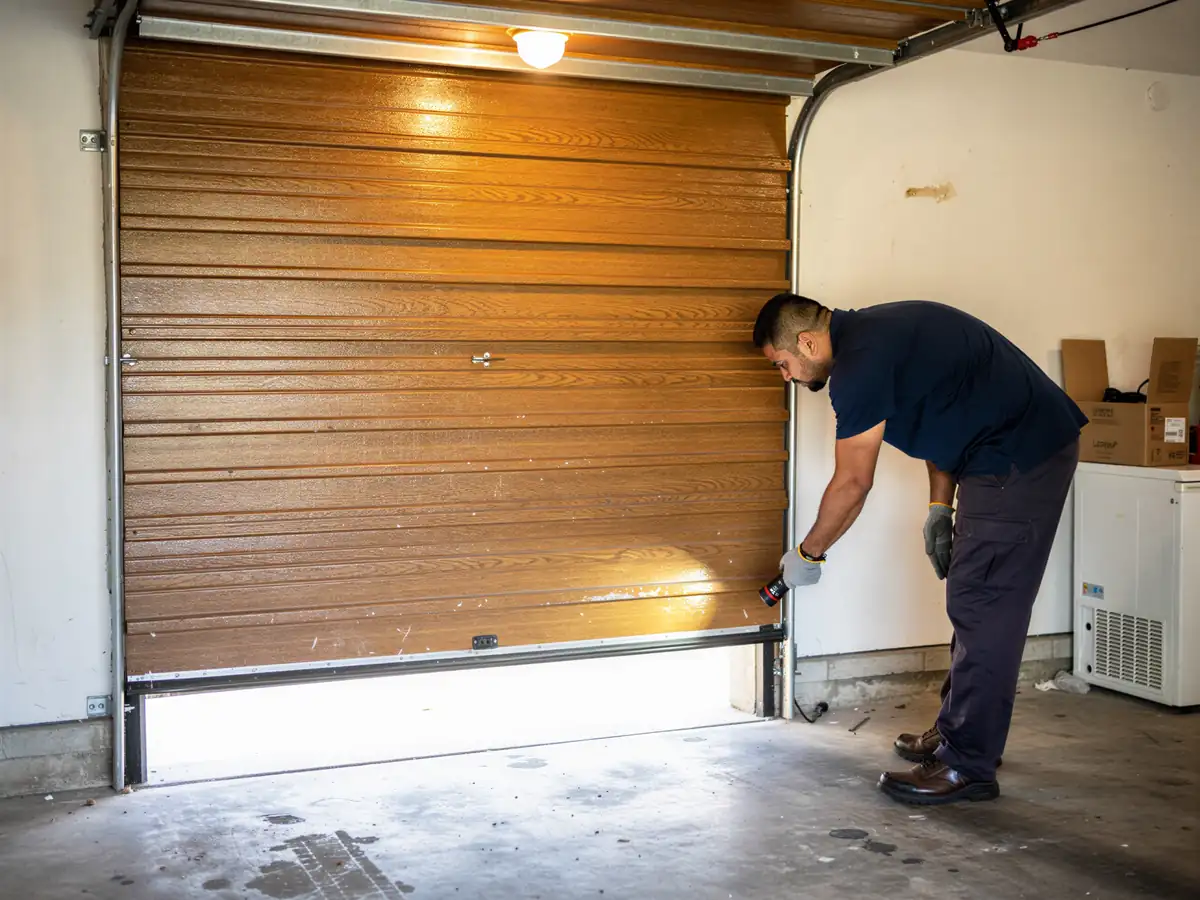
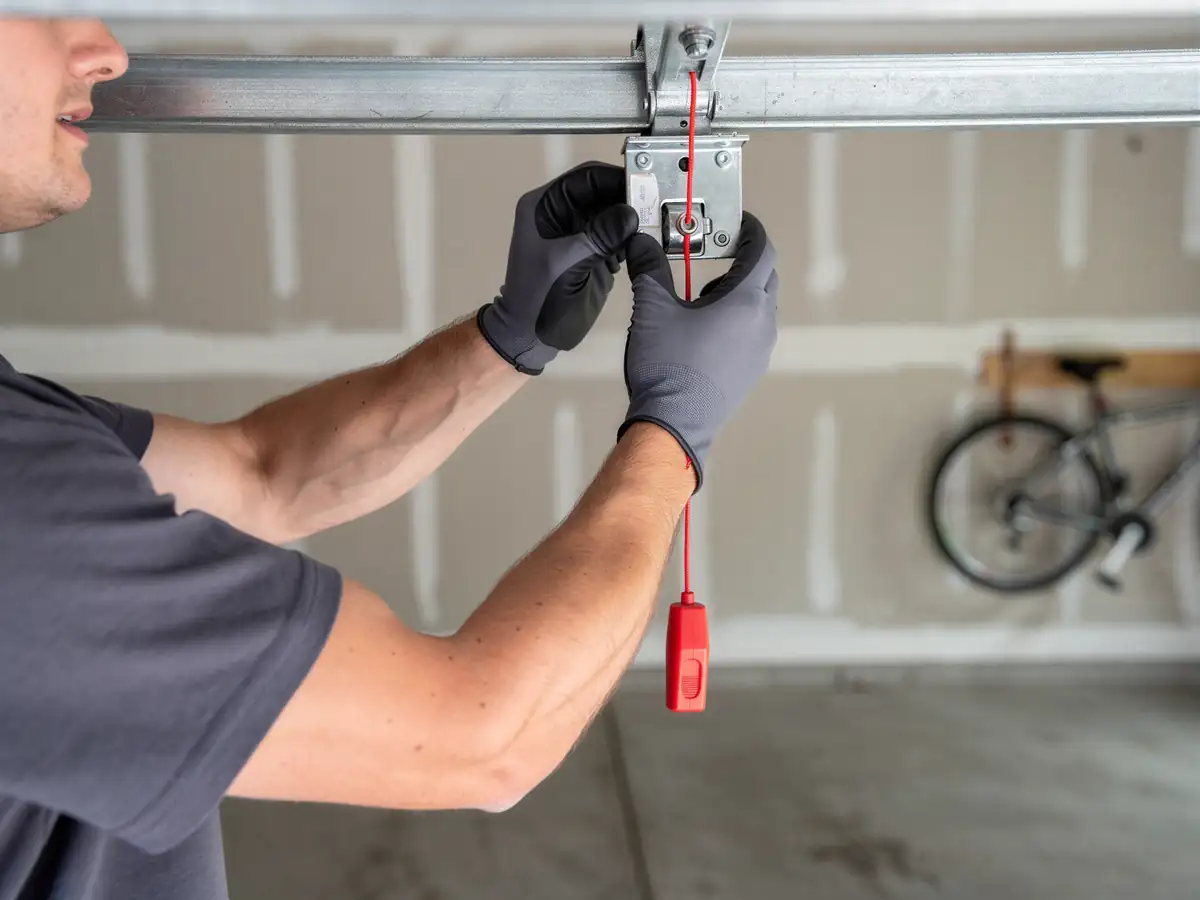
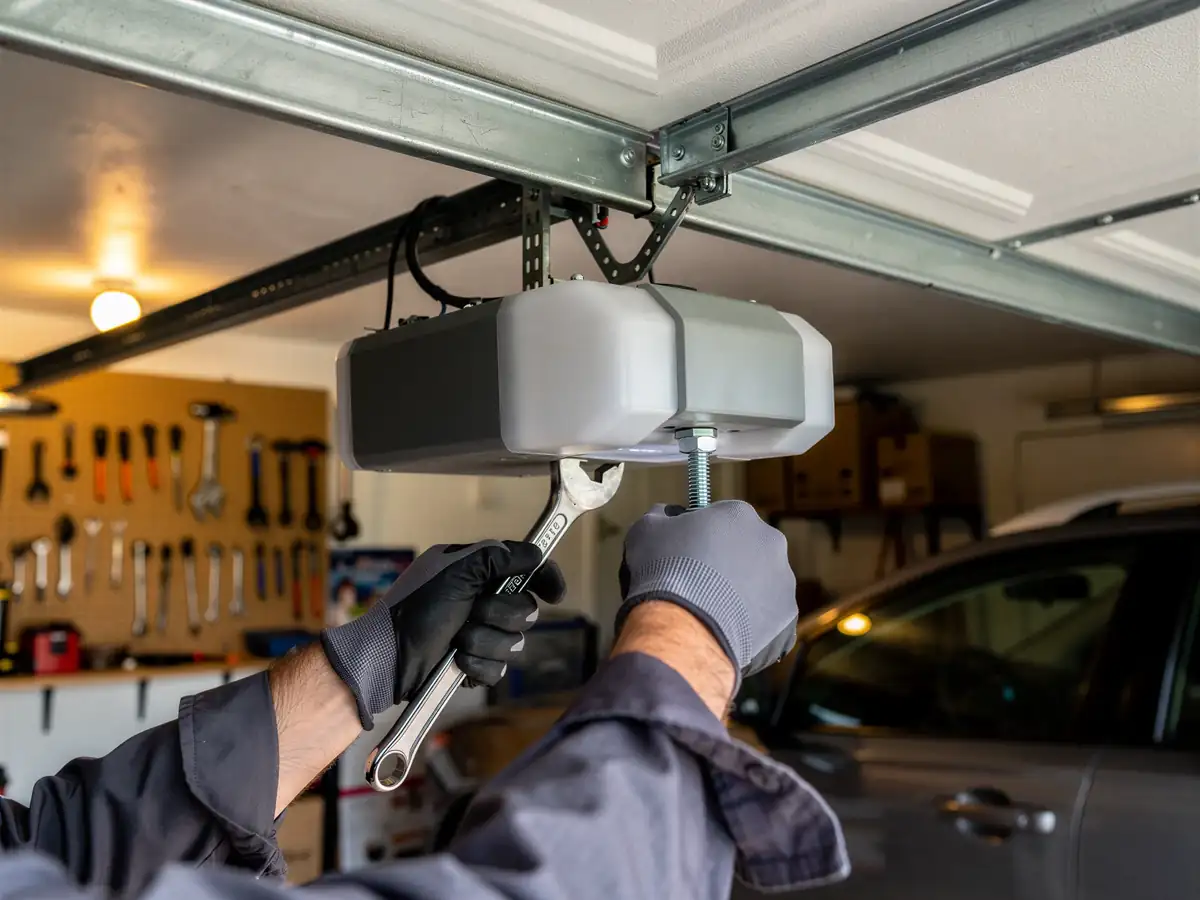
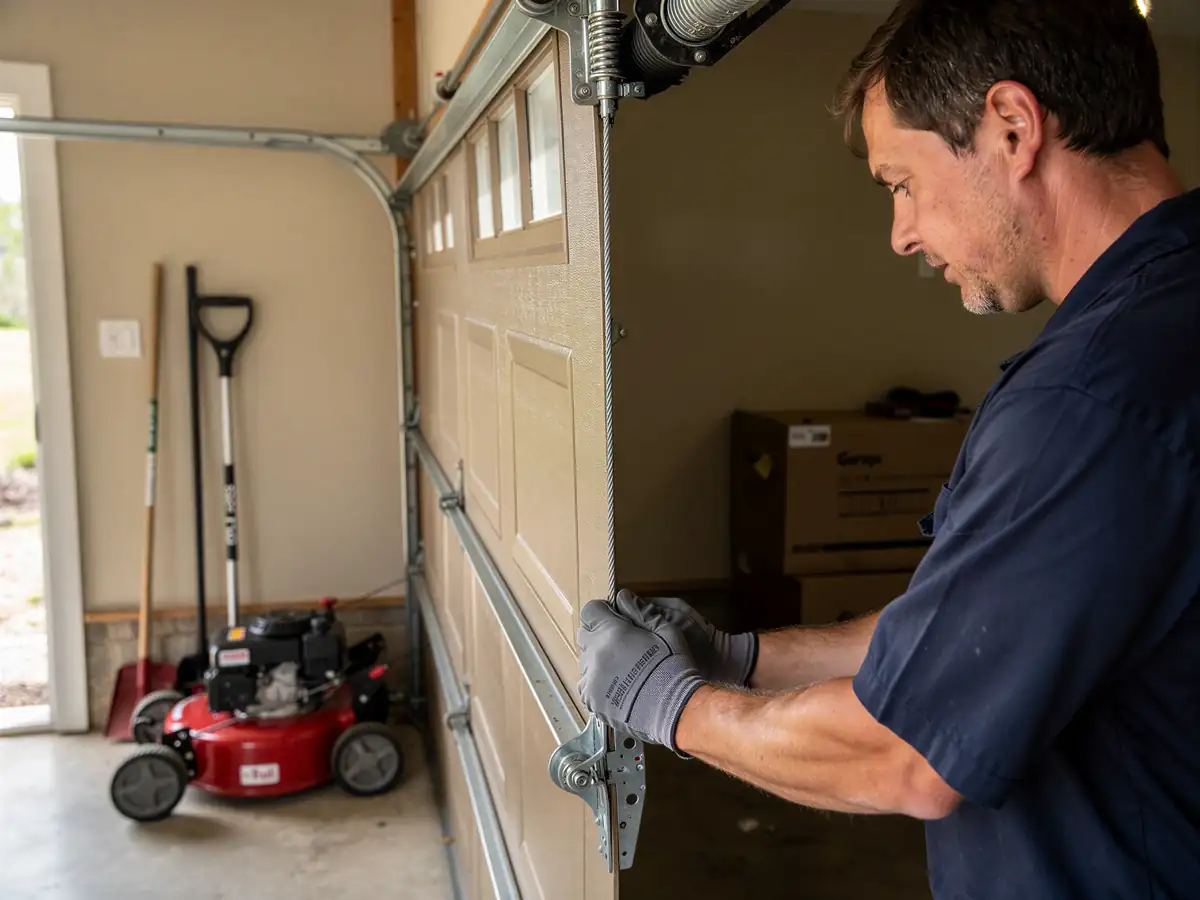
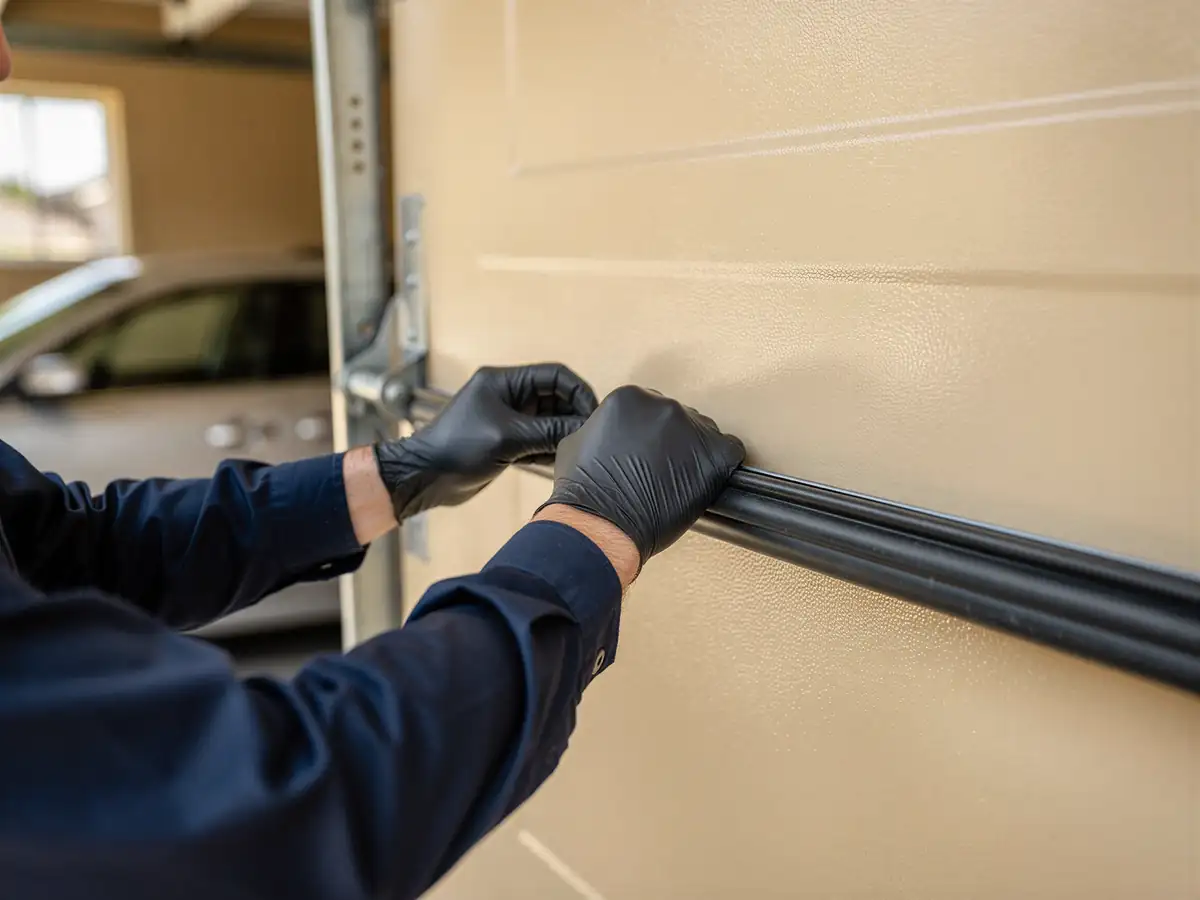
A panel swap on a sectional door isn't just unbolting one section and bolting in a new one, though that's the core of it. We disconnect the door from the opener and springs before pulling hinges and rollers off the damaged section, then transfer that hardware to the new panel so it matches wear on the rest of the door. Mismatched hardware is one honest limitation worth naming: if your door is old enough, we sometimes can't get an exact finish match on a single panel, and the repaired section will look slightly different in direct light even though it works the same.
We check alignment on the track afterward, since a dented panel often means the roller path took a hit too, not just the steel face. On doors from the 1952-2013 construction range common across this area, that's frequently where the real problem is hiding, not the dent you can see.
If more than two panels are damaged, or the door's insulation core has degraded on a house built early in that range, we'll say so and talk about full replacement instead of patching a door section by section.