How Long It Takes
Naugatuck's housing stock centers on 1971, almost identical to the 1972 median across the wider service area we cover out of Shelton. That matters for openers specifically: a unit installed when a house went up in the early 1970s is long past any reasonable service life, so what you've got now is rarely the original. Most of these homes are on their second or third opener, and that stacking of generations is what makes diagnosis take longer here than it would in a newer subdivision. We're coming from Shelton, roughly 13 miles out, so we don't give a same-hour window - we give you a realistic arrival estimate when you call, then work the job start to finish once we're on site. A straightforward sensor or logic board swap is usually done inside an hour. A gear-drive unit with a stripped sprocket, or one wired into an older circuit that needs attention first, runs longer. We'd rather tell you that up front than promise a number we can't hold to from 13 miles away.
Parts We Carry
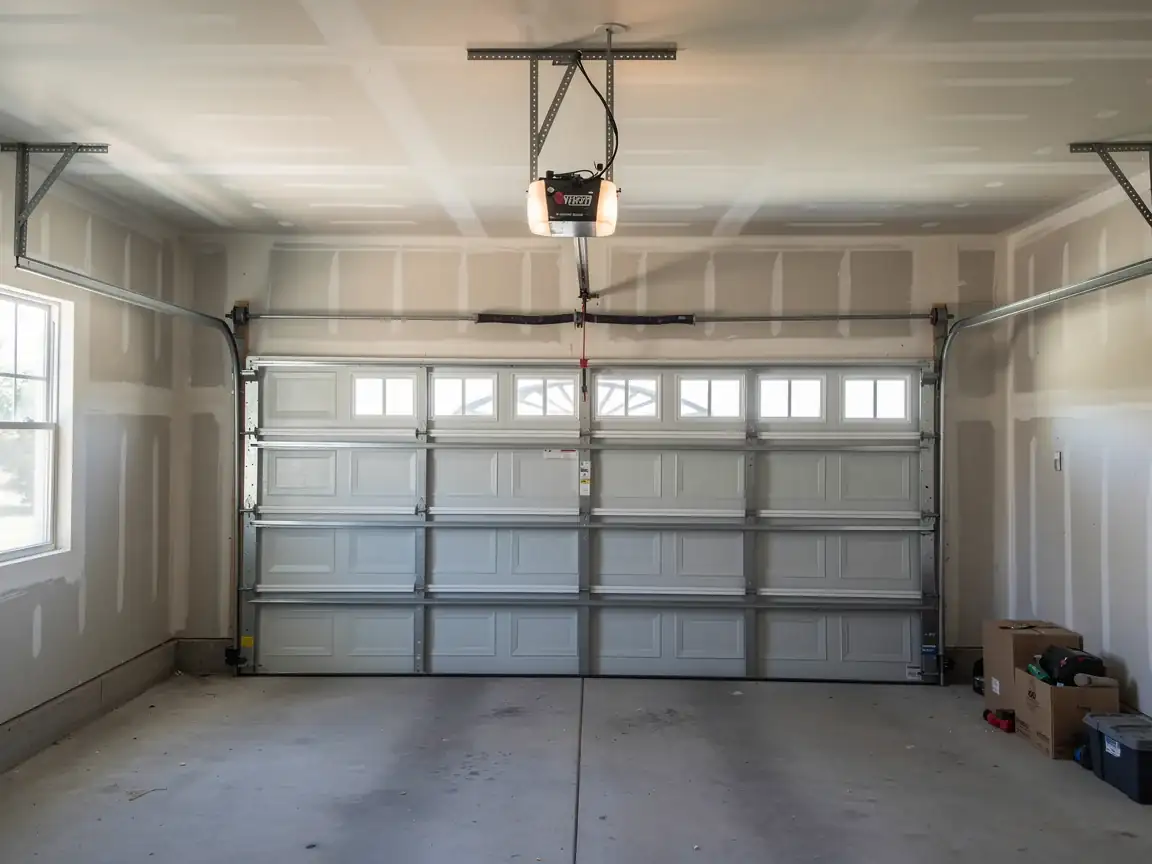
Because the opener population in Naugatuck spans several decades - original units from the early 1970s through whatever got bolted in during a later remodel - we carry a mixed stock rather than one standard kit. That means drive gears and sprockets for older chain-drive units, logic boards and receivers for openers from the 80s and 90s replacement wave, and sensor pairs that fit both older photo-eye brackets and newer universal mounts. Belt-drive parts are a smaller part of what we carry out here, since belt-drive openers are mostly a newer-construction item and Naugatuck's stock skews older. One honest limit: if your opener is a specialty or discontinued model with a proprietary board, we may need to order the part rather than carry it on the truck, and that can add a day or two. We'll tell you that at diagnosis, not after we've already opened the housing.
What the Fix Involves
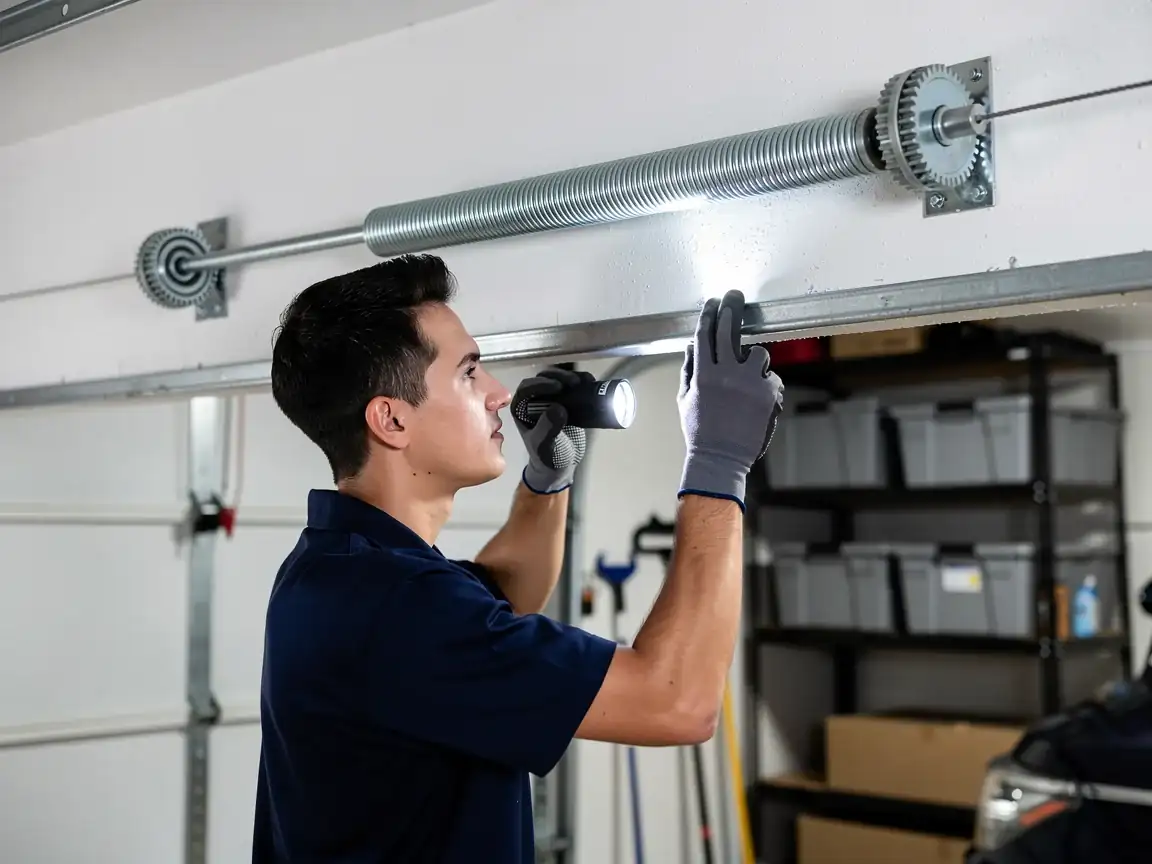
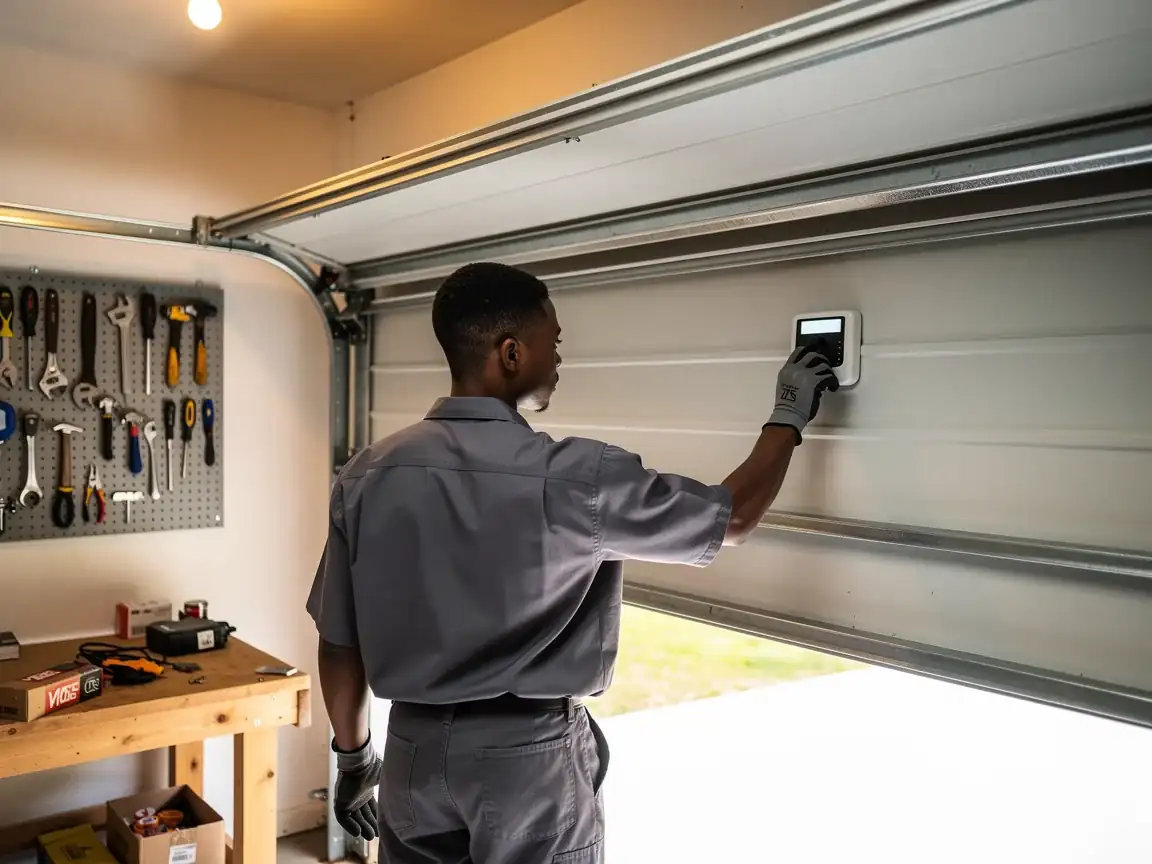
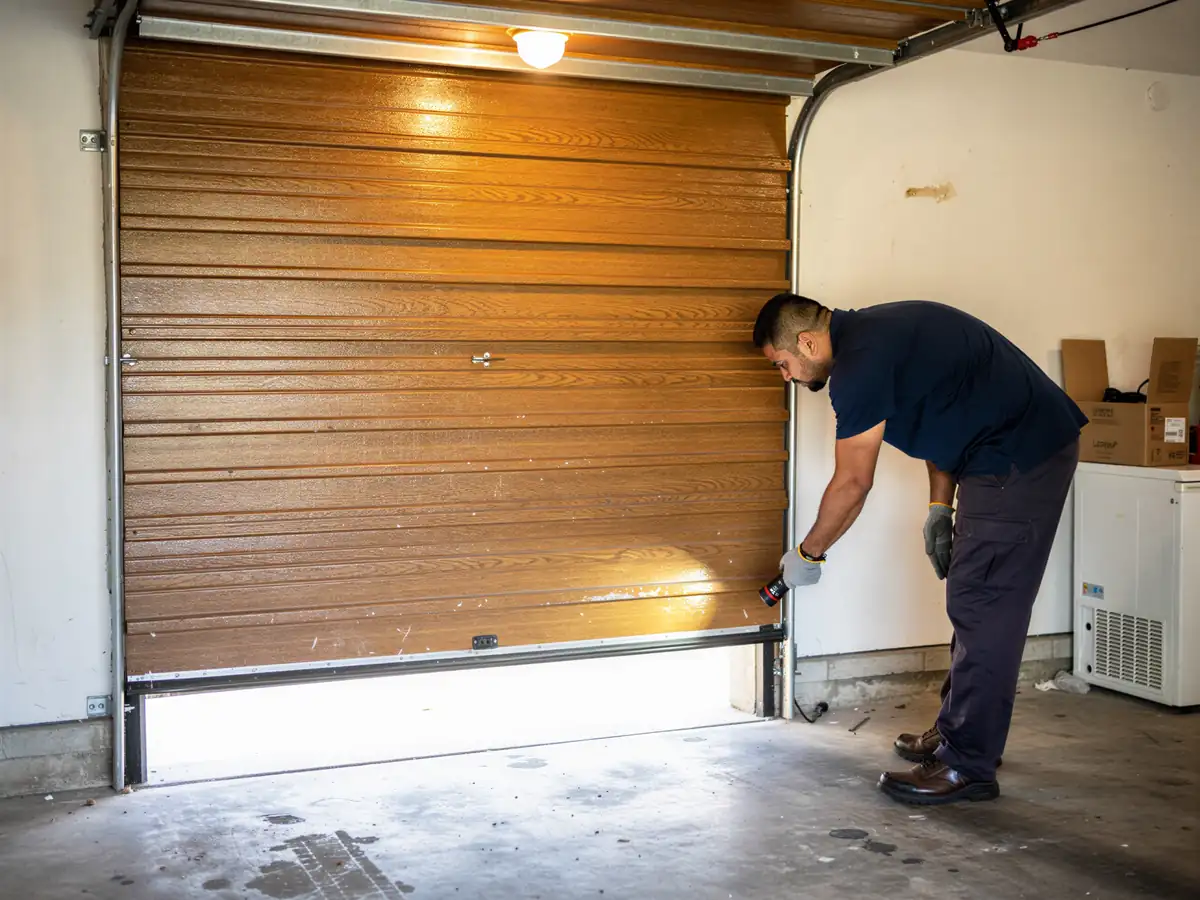
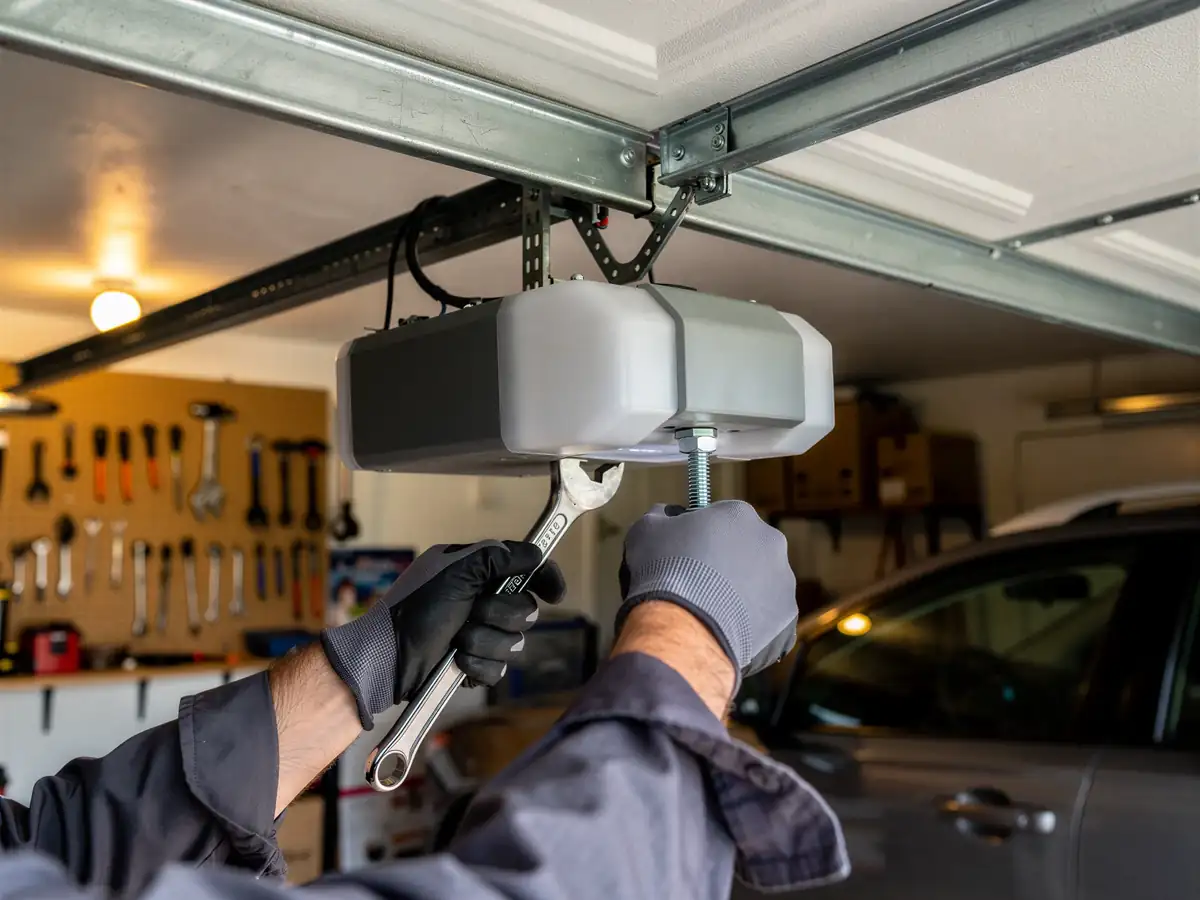
We start by testing the safety sensors and the travel limits, since those cause the majority of reversal and no-close complaints, then move to the drive mechanism if the electronics check out clean. On an opener from the original 1970s build era, we're also checking the condition of the mounting bracket and the rail, since fifty years of seasonal temperature swings can loosen hardware that was never serviced. If the motor itself is drawing excess current or the capacitor is failing - common on chain-drive units from that generation - replacement of the head usually makes more sense than repair, since a new logic board and sensors on an old motor just moves the failure point. We'll show you what we find before we recommend replace over repair; we don't swap parts that are working.
What Can Go Wrong
The biggest risk on an opener job in a house this age is finding damage we didn't expect once the cover is off - cracked gears from decades of wear, or wiring insulation that's gone brittle. We budget extra time for that possibility on any opener we haven't already seen. Another real limitation: with 215,330 households across the territory we cover from Shelton, and Naugatuck's own roughly 12,534 of those, we can't stock every discontinued board model on the truck, so a rare or obsolete unit sometimes means a short parts wait. We'd rather hold the job a day for the right part than install something that won't last. If your opener's circuit board is cracked and the unit is original to a 1971 build, we'll usually tell you straight that replacement costs less over time than chasing parts for it.